HIGHLIGHTS
- Joby Aviation successfully flew Florida’s historic 1914 airline route over a century later, proving eVTOL aircraft capability for modern air mobility
- FAA regulations currently prohibit Joby from charging passenger fares despite aircraft readiness, highlighting the gap between technology and regulatory approval
- Florida’s aerospace ecosystem and aviation heritage position it as the ideal testbed for eVTOL development leading toward commercial operations
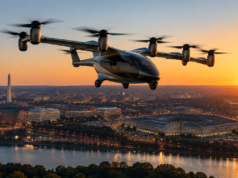
On October 30, 2026, Joby Aviation achieved a historic milestone by recreating Florida’s pioneering 1914 airline route—over a century after the state’s first commercial aviation service. While this symbolic flight represents a significant moment in air mobility history, it also highlights the ongoing regulatory challenges preventing Joby from offering paid passenger services on its electric vertical takeoff and landing (eVTOL) aircraft.
A Century of Florida Aviation Innovation
Florida holds a special place in aviation history as the location of America’s first commercial airline service. In 1914, the St. Petersburg-Tampa Airboat Line operated the world’s first scheduled airline, connecting two major Florida cities with regular passenger flights. This pioneering service lasted only four months but fundamentally changed the trajectory of commercial aviation, proving that air travel could become a viable transportation option.
By recreating this historic route more than a century later, Joby Aviation is drawing a powerful connection between aviation’s origins and the future of personal air mobility. The company’s choice to fly this specific corridor demonstrates the symbolic importance of innovation in Florida and positions Joby as a successor to the visionary entrepreneurs who launched the aviation age.
The recreation flights serve as both a tribute to aviation pioneers and a proof-of-concept for modern electric vertical takeoff technology. Joby’s advanced eVTOL aircraft represent the next evolution in air transportation, just as the St. Petersburg-Tampa Airboat Line represented the first major leap over a century ago.
Current Regulatory Barriers to Commercial Service
Despite successfully conducting these historic flights, Joby remains unable to offer paid fares to passengers. This significant limitation stems from the complex web of federal aviation regulations that govern eVTOL operations in the United States. The Federal Aviation Administration (FAA) continues to develop comprehensive certification standards for electric aircraft, and commercial passenger service requires formal approval that has not yet been fully granted.
The regulatory environment for eVTOL operations has become increasingly sophisticated as multiple companies seek approval for commercial services. The FAA must balance innovation with safety, ensuring that new aircraft types meet rigorous performance, reliability, and operational standards before carrying paying customers. This cautious approach, while necessary for public safety, has created a gap between technological capability and regulatory permission.
Joby’s inability to charge fares for these Florida flights underscores the ongoing tension in the air mobility industry between commercial readiness and regulatory approval. The company has invested heavily in aircraft development, certification efforts, and operational planning, yet cannot monetize these capabilities until regulators provide the necessary authorizations.
Florida’s Emerging Role in eVTOL Development
Florida continues to position itself as a hub for advanced aviation innovation, building on its historical legacy. The state’s favorable weather, robust aerospace ecosystem, and growing urban density make it an ideal location for eVTOL testing and eventual commercial deployment. Multiple companies have established operations in Florida, recognizing the state’s advantages for aircraft development and certification activities.
Joby’s choice to conduct these flights in Florida reflects the state’s appeal to leading air mobility companies. Beyond the historical significance of recreating the 1914 route, Florida offers practical advantages including favorable airspace, established aviation infrastructure, and a population increasingly interested in innovative transportation solutions.
The flights also serve as a public relations and engagement strategy, helping to build awareness and support for eVTOL technology among Florida residents and policymakers. By connecting modern electric aviation with the state’s storied aviation history, Joby can generate enthusiasm for the technology while demonstrating its operational capabilities to regulatory authorities and the public alike.
The Path to Paid Service and Commercial Operations
Industry experts anticipate that regulatory approval for commercial eVTOL operations will gradually expand as manufacturers complete certification processes and demonstrate consistent safety records. Joby and competitors are actively working with the FAA to establish the regulatory framework that will eventually enable paid passenger service. This process involves extensive testing, documentation, and validation of aircraft systems and operational procedures.
Several pathways exist for eVTOL operators to begin monetizing their services, including initial approval for limited operations in specific corridors or under particular conditions. Some companies have explored partnerships with established aviation operators or special flight operations authorizations that allow revenue-generating flights before full commercial certification. Joby’s regulatory strategy likely includes similar approaches to bridge the gap between capability and permission.
The company’s continued investment in operations, infrastructure, and stakeholder engagement demonstrates confidence in the eventual commercialization of eVTOL services. While the Florida flights currently remain demonstration flights without fares, they represent measurable progress toward the day when Joby can offer paid flights on this historic route and other corridors nationwide.
Key Takeaways on Joby’s Historic Florida Flights
- Joby successfully recreated Florida’s first airline route from 1914, demonstrating eVTOL capability over a century later without yet offering commercial fares
- Current FAA regulations prevent Joby from charging passengers until formal commercial certification is granted, despite technical readiness of aircraft systems
- Florida’s historical aviation legacy and modern aerospace infrastructure position it as the ideal location for eVTOL development and eventual commercial service deployment
Joby Aviation’s historic recreation of Florida’s 1914 airline route represents both a celebration of aviation history and a roadmap for the future of personal air mobility. While regulatory barriers currently prevent paid passenger service, these demonstration flights prove that electric vertical takeoff technology is ready for deployment. As the FAA continues to develop comprehensive certification standards, companies like Joby are positioned to transform urban air mobility and finally fulfill the promise that aviation pioneers imagined over a century ago. The connection between the past and future has never been clearer—and the opportunity for commercial service may not be far behind.