HIGHLIGHTS
- Electra’s EL2 hybrid-electric demonstrator successfully achieved its first fixed-wing takeoff and landing, validating critical transition and control systems for commercial air taxi operations.
- Hybrid-electric propulsion offers extended range, built-in safety redundancy, and faster regulatory certification timelines compared to purely battery-electric eVTOL designs.
- The milestone positions Electra for commercial air mobility deployment in major metropolitan markets by the mid-to-late 2020s, pending certification completion.
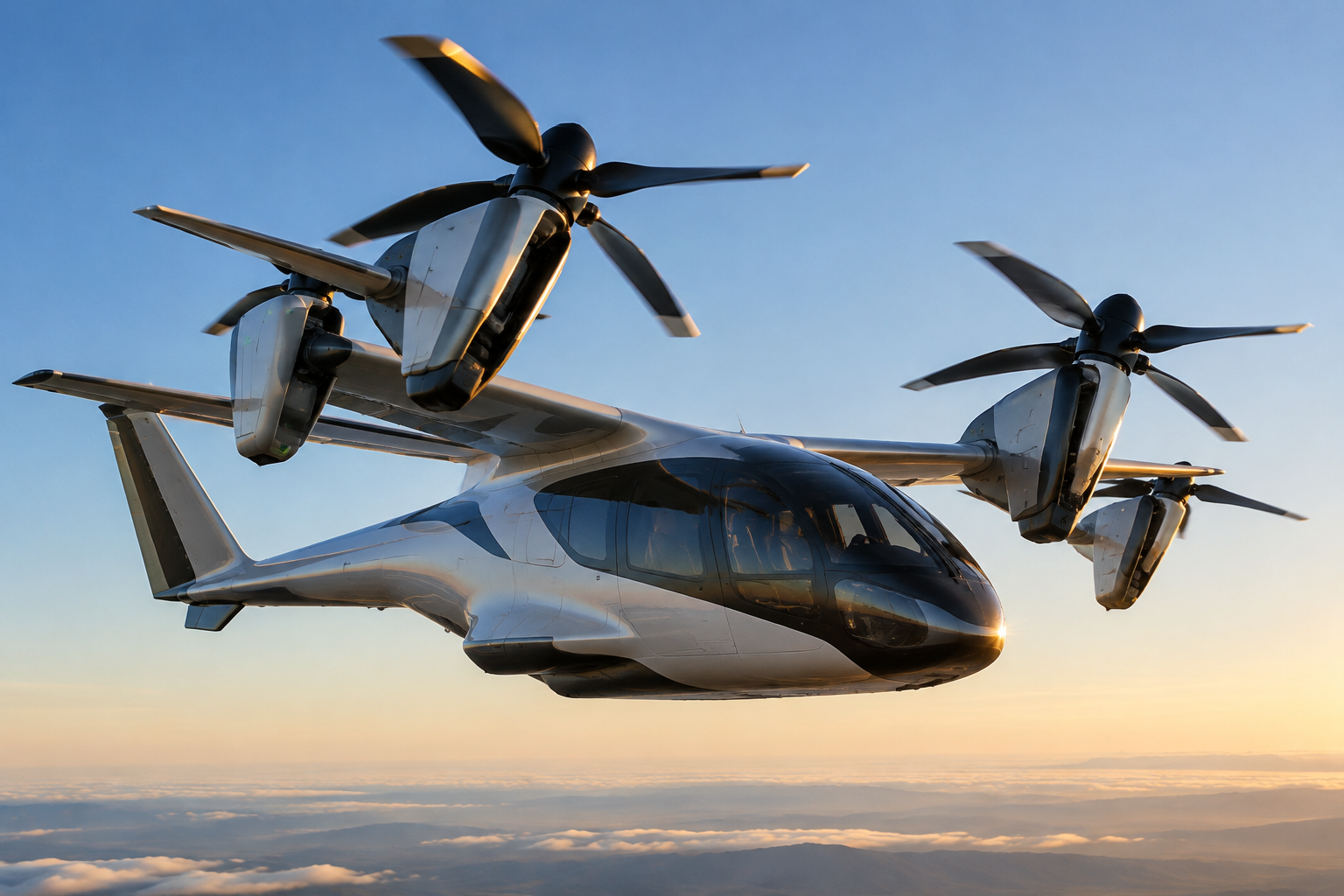
Electra has announced a significant breakthrough in electric vertical takeoff and landing (eVTOL) development: its EL2 hybrid-electric demonstrator has successfully completed its first fixed-wing takeoff and landing. This milestone represents a major step forward in the company’s quest to deliver practical, efficient aircraft for commercial air mobility operations.
The EL2 Demonstrator Program
The Electra EL2 is designed as a technology demonstrator to prove the feasibility of hybrid-electric propulsion in practical, real-world conditions. Unlike purely electric designs, the hybrid architecture combines battery power with traditional engines to extend range and provide redundancy for safety-critical operations. This approach addresses one of the industry’s most pressing challenges: balancing payload capacity, range, and regulatory compliance for passenger transport.
Electra’s hybrid-electric strategy positions the company within a growing segment of eVTOL manufacturers who recognize that pure battery-electric solutions may face limitations in near-term commercial deployments. The EL2’s successful flight envelope expansion demonstrates that the hybrid-electric path is technically viable and operationally sound.
The demonstrator serves as a critical validation platform, allowing Electra’s engineering team to collect flight data, refine control systems, and optimize performance characteristics that will inform future production aircraft designs. Each test milestone brings the company closer to regulatory certification and commercial service approval.
Fixed-Wing Flight Mode Achievement
The first fixed-wing takeoff and landing represents a complex technical achievement. Traditional eVTOL aircraft transition between vertical and horizontal flight modes, requiring sophisticated flight control systems, aerodynamic designs, and propulsion management. The EL2’s successful demonstration proves that Electra’s transition logic, propeller configurations, and flight envelope protection systems function correctly during this critical phase.
Fixed-wing flight mode is essential for efficient forward travel. By tilting rotors or converting from vertical to horizontal configurations, eVTOL aircraft can achieve higher speeds and better fuel (or battery) efficiency than hovering flight alone. For air taxi operations covering urban and metropolitan distances, fixed-wing cruise performance directly impacts operational economics and passenger experience.
The successful execution of this maneuver required coordination across multiple aircraft systems: lift generation, thrust management, control surface actuation, and flight control algorithms. Any single system failure or miscalibration could result in control loss or structural stress. The achievement validates that Electra’s integrated design approach is sound and that the company has sufficient engineering expertise to manage the complexity of hybrid-electric aircraft operations.
Hybrid-Electric Propulsion Benefits
Electra’s choice of hybrid-electric architecture over purely electric designs offers several practical advantages. First, hybrid-electric systems provide extended range, allowing operators to conduct longer flights between charging events. This capability is crucial for commercial air taxi networks that require all-day operational availability without extended turnaround times for battery swaps or recharging.
Second, the hybrid architecture provides redundancy and safety margins essential for passenger operations. If battery performance degrades in extreme conditions or unforeseen circumstances arise, the traditional engine can maintain flight and enable safe diversion to an alternate landing site. This fail-safe capability aligns with commercial aviation safety standards and regulatory expectations.
Third, hybrid-electric systems may offer a smoother regulatory pathway to certification. Regulators such as the FAA are already familiar with hybrid-electric propulsion through manned experimental aircraft programs and military applications. This familiarity could accelerate certification timelines compared to purely novel electric architectures, reducing time-to-market for commercial services.
Pathway to Commercial Service
The EL2’s first fixed-wing flight is one milestone in a longer certification and commercialization roadmap. Electra will need to conduct extensive additional testing, including hot-and-cold weather operations, high-altitude performance validation, failure mode testing, and sustained operation demonstrations. Each test campaign generates flight data that feeds back into design refinement and regulatory documentation.
The company is pursuing certification under the Special Class category for novel aircraft designs, a regulatory pathway established by aviation authorities for innovative vehicles that don’t fit traditional classifications. This approach allows for tailored certification requirements based on the specific design and operational envelope, rather than forcing eVTOL designs into legacy aircraft certification boxes.
Electra has publicly targeted commercial service deployment in the mid-to-late 2020s, positioning the EL2 flights as critical de-risk activities that validate the engineering foundation. If the company maintains this schedule and successfully completes all required certification milestones, Electra’s aircraft could be among the first hybrid-electric eVTOLs to enter paying passenger service in major metropolitan markets.
Key Takeaways from Electra’s EL2 Milestone
- Electra’s EL2 hybrid-electric demonstrator successfully completed its first fixed-wing takeoff and landing, advancing the company’s path toward commercial air taxi certification and deployment.
- The hybrid-electric propulsion architecture provides extended range, built-in safety redundancy, and a potentially faster regulatory certification pathway compared to purely battery-electric alternatives.
- The successful flight envelope expansion validates Electra’s control systems, aerodynamic design, and integrated propulsion management, moving the company closer to near-term commercial air mobility service in urban markets.
Electra’s EL2 fixed-wing flight milestone reflects the accelerating maturation of hybrid-electric eVTOL technology. As multiple companies advance from concept to flight testing, the commercial air mobility industry is reaching critical inflection points where regulatory pathways, certification timelines, and real-world operational data converge. Electra’s successful demonstration reinforces that hybrid-electric propulsion is a viable, practical solution for near-term commercial deployment—and signals that the first passenger air taxis may arrive sooner than many industry skeptics expected. The coming months will reveal which companies can sustain momentum, complete certification requirements, and establish the operational and regulatory frameworks necessary for safe, profitable, long-term air taxi services.