HIGHLIGHTS
- Tekever leverages its autonomous aerial platform expertise to capture the high-growth heavy-lift cargo drone market, a segment projected to exceed $15 billion by 2035.
- The expansion positions Tekever as a multi-capable autonomous systems provider spanning surveillance, delivery, and industrial logistics applications.
- Heavy-lift autonomous drones address critical supply chain challenges in remote locations, infrastructure inspection, and emergency response without human pilot requirements.
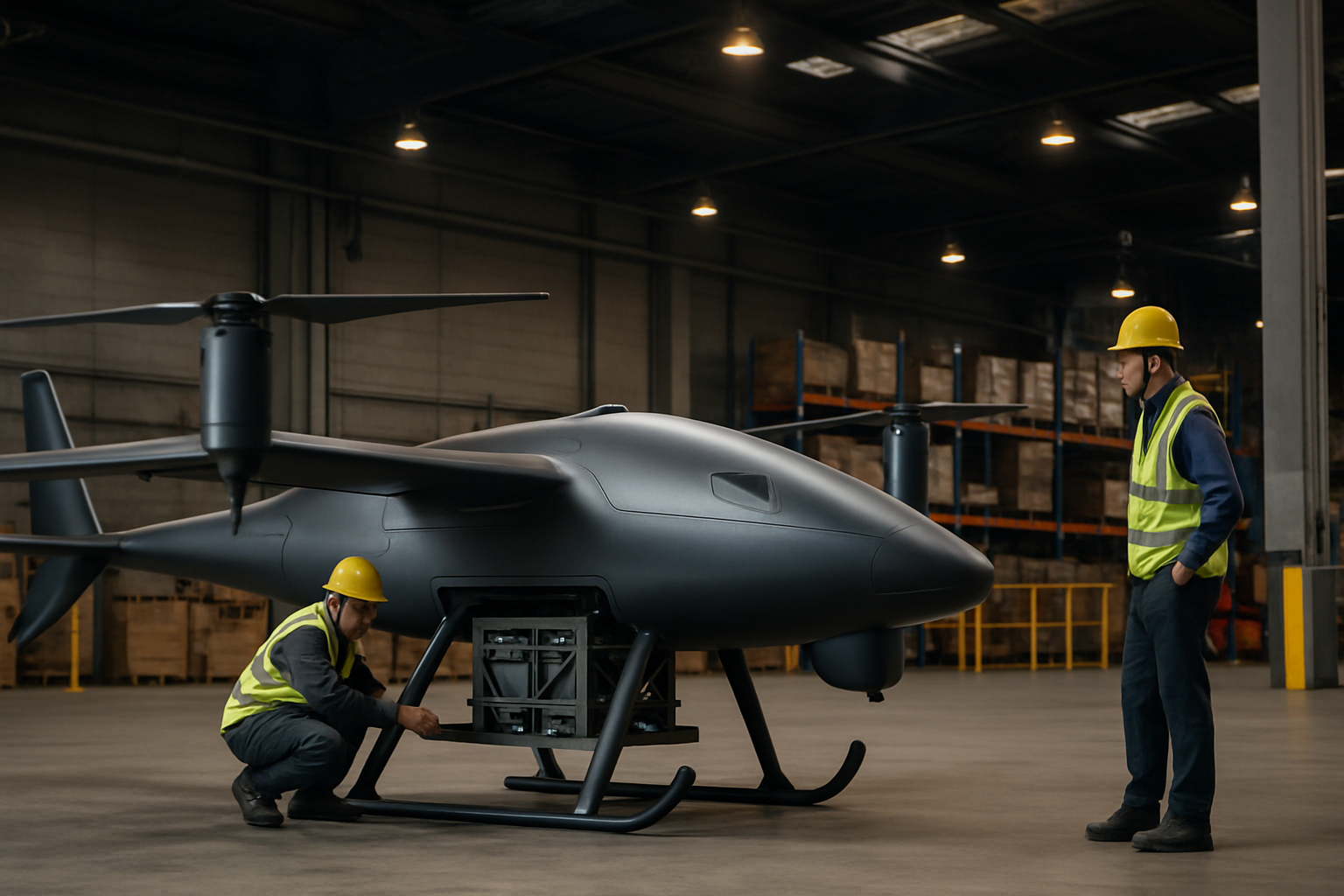
Portuguese aviation technology company Tekever has announced its strategic expansion into the autonomous heavy-lift drone market, marking a significant milestone in the commercialization of electric vertical takeoff and landing (eVTOL) systems for industrial cargo operations. According to Aviation Week reporting, this move positions Tekever among a growing cadre of manufacturers competing to establish leadership in one of the most promising segments within personal air mobility and commercial unmanned systems.
The Autonomous Heavy-Lift Opportunity
The autonomous heavy-lift drone market represents a substantial evolution in commercial aviation, addressing critical gaps in logistics, infrastructure inspection, and emergency supply delivery. Traditional helicopter operations, while proven, involve significant operational costs, regulatory complexity, and pilot training requirements that limit deployment frequency and geographic reach. Electric autonomous systems fundamentally alter this economics equation, enabling on-demand heavy-payload operations without human crew members aboard.
Industry analysts project the autonomous cargo drone segment will experience compound annual growth rates exceeding 18% through the next decade, driven by labor shortages in aviation, rising fuel costs, and corporate sustainability commitments. Heavy-lift variants—capable of transporting payloads from 150 to 500+ kilograms—target industrial enterprises seeking cost-effective solutions for last-mile logistics, construction site resupply, and remote facility servicing.
Tekever’s entry into this market demonstrates confidence in autonomous system maturation and signals investor appetite for specialized eVTOL manufacturers who move beyond consumer delivery applications toward enterprise-grade industrial solutions. The Portuguese company brings valuable heritage, having established operational credibility with its existing autonomous aerial platforms deployed across surveillance, inspection, and strategic defense applications.
Tekever’s Autonomous Platform Legacy and Capabilities
Tekever has built its reputation through development of the ARtIS (Autonomous Reconnaissance and Tactical Intelligence System) platform, which has achieved validated flight hours and operational deployment across multiple geographic markets. This portfolio of autonomous platforms demonstrates the company’s competency in fault-tolerant flight control systems, autonomous navigation algorithms, and regulatory compliance across diverse jurisdictions—critical foundational capabilities required for heavy-lift commercial operations.
The company’s transition into heavy-lift cargo represents vertical expansion of its technical stack rather than market pivot. Scaling autonomous capabilities from surveillance to heavy cargo demands enhanced structural engineering, improved energy density management, and more sophisticated payload stabilization systems. Tekever’s existing autonomous architecture provides a proven foundation for these enhancements, potentially accelerating time-to-market compared to competitors launching heavy-lift programs from preliminary development stages.
By maintaining focus on autonomous-first design philosophy—emphasizing systems-level reliability and fault management rather than pilot-dependent safety margins—Tekever positions its heavy-lift platforms as distinctly different from manned heavy-lift rotorcraft or remotely-piloted systems that require live operators monitoring every flight. This architectural approach aligns with regulatory trends favoring autonomous systems and supports future evolution toward fully autonomous commercial operations.
Market Dynamics and Competitive Positioning
The autonomous heavy-lift segment attracts diverse competitors with varying technical approaches and market focus areas. Traditional aerospace companies including Airbus and Boeing have invested in autonomous cargo variants, while specialized eVTOL manufacturers like Joby Aviation, Archer Aviation, and Lilium pursue passenger-focused vertical mobility solutions. This fragmented competitive landscape creates openings for focused heavy-lift specialists who can demonstrate superior payload capacity, operational efficiency, and regulatory compliance specific to cargo operations.
Tekever’s announcement reflects confidence that specialized focus on autonomous heavy-lift applications provides defensible competitive advantage over generalist eVTOL manufacturers simultaneously pursuing passenger air mobility, regional cargo, and medical delivery. This specialization strategy mirrors successful business models in traditional aviation, where manufacturers often achieve market dominance through mastery of specific aircraft categories rather than attempting simultaneous leadership across diverse platforms.
Geographic expansion strategies also influence competitive dynamics. European-based Tekever possesses inherent advantages in European Union markets where autonomous systems regulations continue advancing rapidly. This regulatory proximity, combined with established relationships with European customers and public entities, provides strong foundation for regional market dominance while establishing export potential to North American and Asian markets where autonomous heavy-lift demand accelerates.
Technical Challenges and Solutions in Heavy-Lift Operations
Autonomous heavy-lift operations present distinct technical challenges compared to lighter delivery drones or passenger aircraft. Increased payload mass generates higher structural stresses, requiring enhanced materials engineering and fatigue analysis across airframe components. Energy management becomes more critical—payload weight directly correlates to power consumption, necessitating advanced battery systems, regenerative capabilities, or hybrid-electric architectures that extend operational range and endurance in commercial service missions.
Autonomous navigation with precision cargo delivery demands improved sensor suites capable of operating in diverse environmental conditions—rain, wind turbulence, electromagnetic interference from industrial facilities. Tekever’s surveillance platform heritage suggests existing investment in robust sensor integration and environmental perception systems that transfer directly to heavy-lift applications. Real-time payload weight distribution management, automated landing precision, and in-flight cargo stabilization represent critical autonomous system functions that differentiate market leaders from marginal competitors.
Safety case development for autonomous heavy-lift operations requires demonstrating acceptable risk across failure scenarios where large payloads transit populated areas or critical infrastructure. Regulatory frameworks including EASA (European Union Aviation Safety Agency) standards establish stringent requirements for autonomous system reliability, redundancy, and failure mitigation strategies. Tekever’s existing regulatory engagement and compliance history accelerates certification pathway compared to companies launching autonomous programs without established regulatory relationships.
Future Growth Vectors and Market Applications
Key Applications Driving Autonomous Heavy-Lift Adoption
- Last-mile logistics for remote industrial facilities, mountain mining operations, and offshore platform resupply missions where weather and distance create economic challenges for traditional helicopter operations
- Infrastructure inspection and construction material delivery for renewable energy projects, telecommunications tower maintenance, and large-scale infrastructure development in geographically challenging regions
- Emergency response supply delivery following natural disasters, including medical equipment, power systems, and humanitarian logistics in locations where ground transportation infrastructure suffers damage
- Agricultural and environmental monitoring combined with targeted payload delivery for forestry management, wildlife habitat restoration, and climate research in protected ecological areas
- Manufacturing supply chain optimization through autonomous internal logistics connecting production facilities, distribution centers, and customer locations without ground vehicle congestion
Tekever’s expansion into autonomous heavy-lift operations positions the company to capture substantial value across these diverse application sectors. International expansion, particularly into North American markets where regulatory frameworks for autonomous systems continue advancing, provides additional growth opportunity as commercial operators evaluate autonomous cargo solutions against traditional helicopter and fixed-wing alternatives.
Strategic partnerships with logistics enterprises, energy companies, and industrial operators will likely characterize Tekever’s market development strategy. Early customer relationships validate technical capabilities, establish operational protocols, and generate performance data supporting regulatory approvals across multiple jurisdictions. Success in demonstration programs accelerates customer acquisition across similar industries facing comparable logistics challenges.
Regulatory Landscape Supporting Autonomous Heavy-Lift Expansion
European regulatory environment, governed by EASA, increasingly supports autonomous aircraft operations beyond current restrictions limiting unmanned systems to visual line-of-sight operations or sparsely populated areas. EASA’s Special Conditions framework enables certification of novel aircraft types, including autonomous heavy-lift systems, establishing precedent-setting regulations that influence global aviation standards. This regulatory openness, combined with European Union commitment to autonomous systems development, creates favorable conditions for Tekever’s market entry and expansion.
United States Federal Aviation Administration (FAA) simultaneously develops regulatory pathways for autonomous aircraft operations, with BVLOS (Beyond Visual Line of Sight) approvals increasingly issued for specialized commercial operators. Tekever’s aspiration toward North American market presence depends on regulatory approval achievement, but established precedent suggests autonomous heavy-lift systems capable of demonstrating safety and reliability comparable to manned alternatives will receive favorable consideration as commercial demand validates business cases.
International Civil Aviation Organization (ICAO) standards harmonization efforts establish common frameworks for autonomous aircraft operations globally, reducing regulatory fragmentation that historically complicated international aircraft deployment. This standardization supports Tekever’s expansion strategy, enabling development of single autonomous platform design meeting multiple regulatory regimes rather than requiring aircraft variant engineering for different jurisdictions.
Tekever’s entry into the autonomous heavy-lift market represents validation that eVTOL technology maturation enables diverse commercial applications beyond initial consumer delivery focus. The Portuguese company’s technical heritage, regulatory experience, and strategic market positioning establish competitive advantages as the autonomous cargo segment transitions from emerging technology demonstration toward mainstream commercial deployment. Industry observers and aviation professionals should monitor Tekever’s program development, certification milestones, and initial customer deployments as indicators of autonomous heavy-lift market acceleration and broader eVTOL commercialization progress.