HIGHLIGHTS
- Hydrogen fuel-cell eVTOLs deliver 2-4 hour flight duration and can refuel in just 5-15 minutes, versus 15-30 minutes battery range and hours of charging for electric aircraft
- Rocket Lab and major aerospace suppliers are accelerating hydrogen fuel-cell development, attracting multi-billion dollar investment and signaling commercial viability within 3-5 years
- Expanding hydrogen infrastructure investments from the EU, US, and Asia combined with emerging FAA and EASA certification standards are creating favorable conditions for regional air mobility deployment
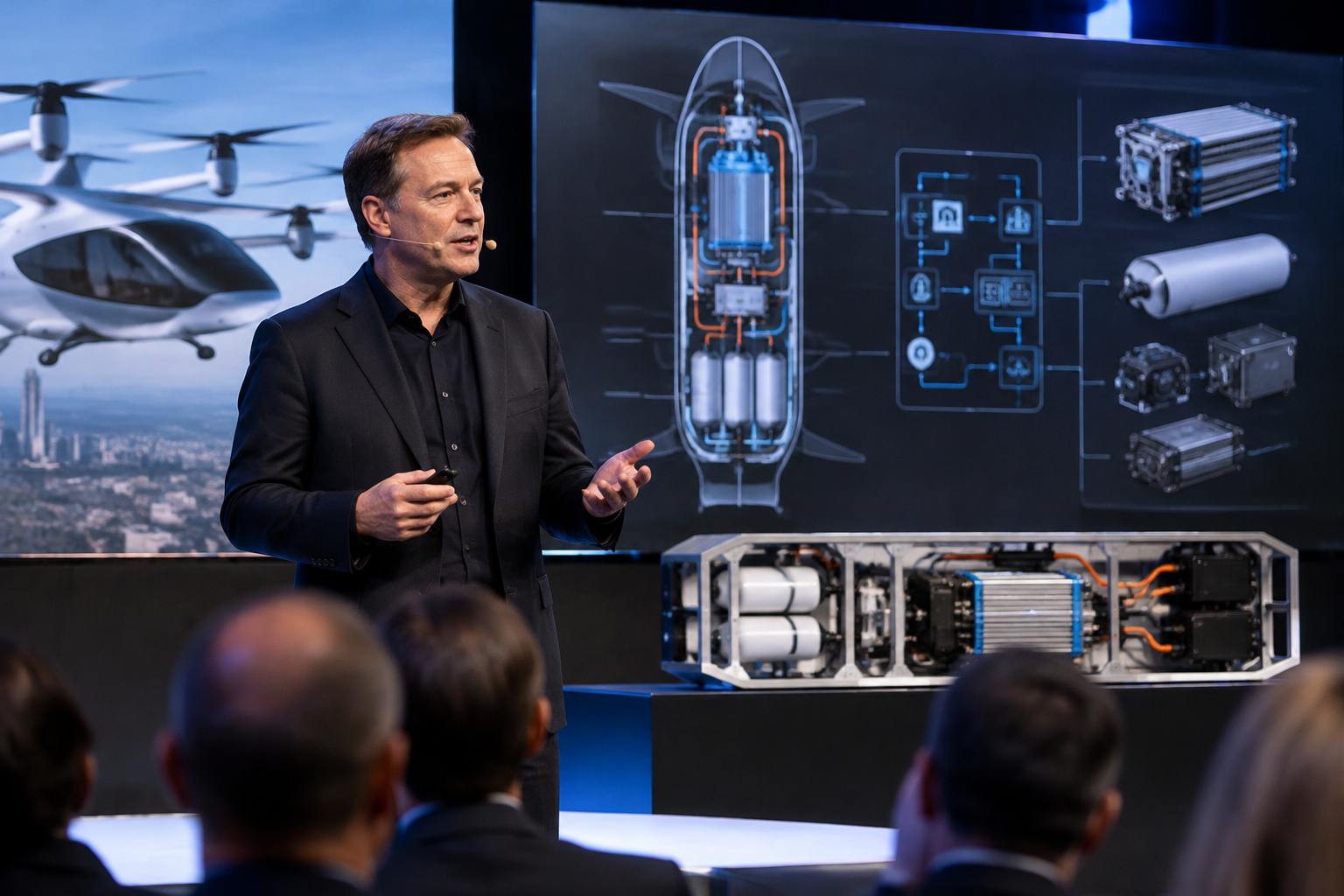
The aviation industry is experiencing a transformative shift in propulsion technology, with hydrogen fuel-cell systems emerging as a leading candidate to power the next generation of electric vertical takeoff and landing (eVTOL) aircraft. Sir Peter Beck, founder and CEO of Rocket Lab, has become a prominent advocate for this technology, recognizing its potential to revolutionize personal air mobility and urban transportation. As the aerospace industry grapples with sustainability requirements and operational limitations of battery-only systems, hydrogen fuel-cell propulsion represents a pivotal breakthrough that could extend flight ranges, reduce charging times, and eliminate carbon emissions entirely.
Understanding Hydrogen Fuel-Cell Technology for eVTOLs
Hydrogen fuel-cell systems generate electricity through an electrochemical reaction between hydrogen gas and oxygen, producing only water vapor as a byproduct. Unlike traditional combustion engines or battery-electric systems, fuel cells offer exceptional energy density while maintaining zero direct emissions, making them ideal for environmental compliance in densely populated urban air mobility corridors. The technology has been proven in automotive applications, with manufacturers like Toyota and Hyundai already operating hydrogen fuel-cell passenger vehicles in select markets.
For eVTOL aircraft, hydrogen fuel cells address one of the most significant limitations of current battery technology: energy density. While lithium-ion batteries have improved dramatically over the past decade, their weight-to-energy ratio remains a constraint for longer missions. Hydrogen, conversely, offers three times the energy density of conventional jet fuel and significantly outperforms batteries on a mass basis, enabling aircraft to carry more payload or extend operational range substantially.
Rocket Lab’s involvement in hydrogen fuel-cell development signals serious industry interest in this pathway. The company’s expertise in advanced propulsion systems and lightweight materials provides a strong foundation for integrating fuel-cell technology into aerial vehicles. As regulatory frameworks continue to evolve and environmental mandates tighten, hydrogen-powered eVTOLs could become the preferred solution for regional air mobility and point-to-point transportation networks.
Industry Momentum Behind Hydrogen Propulsion
The advancement of hydrogen fuel-cell eVTOLs reflects broader industry trends toward sustainable aviation. Organizations including the International Air Transport Association (IATA) and the FAA have recognized hydrogen and hydrogen-derived sustainable fuels as critical elements in achieving net-zero aviation by 2050. Multiple aerospace manufacturers and startups are now developing fuel-cell systems specifically optimized for vertical takeoff profiles and hover operations required by eVTOL designs.
Aviation Week’s coverage of hydrogen fuel-cell propulsion highlights increasing mainstream media attention on the technology. This editorial focus amplifies investor confidence and encourages further R&D investment across the advanced air mobility sector. Companies like ZeroAvia, Pipistrel, and H3 Dynamics are actively testing hydrogen fuel-cell power systems in unmanned and crewed aerial platforms, demonstrating rapid progress toward commercialization.
Supply chain development is accelerating in parallel, with hydrogen production facilities, storage infrastructure, and distribution networks expanding in developed markets. This supporting ecosystem creates favorable conditions for hydrogen-powered eVTOL adoption, particularly in regions with strong environmental policies and government incentives for clean transportation technologies. Early adopters in business aviation and air taxi services are positioned to gain competitive advantages through operational efficiency and sustainability credentials.
Technical Advantages and Performance Metrics
Hydrogen fuel-cell systems deliver compelling performance characteristics for eVTOL operations. A typical fuel-cell stack combined with onboard hydrogen storage can enable flight durations of 2-4 hours compared to 15-30 minutes for battery-only aircraft, fundamentally changing mission planning and operational economics. This extended endurance makes hydrogen-powered eVTOLs viable for intercity transport, medical evacuation, cargo delivery, and other high-value applications currently impractical for battery-electric systems.
Refueling time represents another significant advantage. While battery-electric eVTOLs require several hours of charging, hydrogen fuel-cell aircraft can be refueled in 5-15 minutes, similar to conventional aircraft. This rapid turnaround capability enables higher utilization rates and more efficient fleet operations, reducing per-flight costs and improving profitability for air taxi operators and logistics companies. The economic model becomes substantially more attractive when aircraft spend less time on the ground and more time generating revenue.
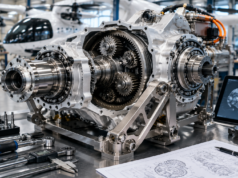
Integration with existing aircraft systems is relatively straightforward for manufacturers with experience in both electric propulsion and fuel-cell technology. The modular nature of fuel-cell stacks allows flexibility in system design, scaling power output to match specific aircraft requirements. Thermal management systems designed for electric motors can be adapted for fuel-cell cooling, and power distribution architectures developed for battery-electric aircraft transition efficiently to fuel-cell platforms.
Regulatory and Infrastructure Considerations
The path to widespread hydrogen eVTOL adoption depends significantly on regulatory frameworks and hydrogen infrastructure development. Aviation authorities including EASA and the FAA are currently establishing certification standards for hydrogen-powered aircraft, creating uncertainty but also opportunity for early innovators to shape regulatory requirements. Clear, performance-based standards will accelerate development and deployment while ensuring safety and environmental compliance.
Hydrogen production and distribution infrastructure remains underdeveloped in most markets, though this situation is improving rapidly. The EU’s hydrogen strategy and similar initiatives in Asia and North America are driving investment in electrolytic hydrogen production facilities powered by renewable electricity. Strategic locations near urban air mobility hubs could establish hydrogen fuel stations, similar to existing aircraft refueling infrastructure at major airports.
Cost parity between hydrogen and battery-electric systems remains uncertain, with hydrogen fuel prices volatile and production scalability unproven at required volumes. However, as hydrogen production scales and costs decline, total cost of ownership calculations increasingly favor fuel-cell systems for high-utilization operations. Government incentives and carbon pricing mechanisms could accelerate this transition by making the environmental and economic benefits more tangible for operators and manufacturers.
Market Implications and Future Outlook
The emergence of hydrogen fuel-cell eVTOLs represents a potential market bifurcation within advanced air mobility. Short-range, point-to-point urban air taxi services might remain battery-electric due to simplicity, cost, and rapid charging infrastructure deployment. Conversely, regional air mobility routes, cargo operations, and long-duration missions could increasingly adopt hydrogen fuel-cell systems, creating distinct market segments with complementary technologies.
Investment from established aerospace and energy companies suggests confidence in hydrogen fuel-cell viability. Rocket Lab’s involvement, combined with major aerospace suppliers developing fuel-cell systems, indicates a multi-billion-dollar opportunity attracting significant capital. This entrepreneurial activity and industrial commitment will likely accelerate development timelines and reduce technological risk for investors and customers.
The next 3-5 years will prove critical for hydrogen eVTOL technology. Successful demonstration flights, regulatory approvals, and initial commercial deployments will validate the technology and establish market acceptance. Early-mover advantages for manufacturers, operators, and infrastructure providers could prove decisive in shaping the future of personal air mobility.
Key Takeaways
- Hydrogen fuel-cell eVTOLs offer 3x the energy density of batteries, enabling 2-4 hour flight durations and 5-15 minute refueling compared to battery-electric limitations
- Rocket Lab and aerospace industry leaders are actively developing hydrogen fuel-cell propulsion systems, signaling serious commercialization momentum and attracting substantial R&D investment
- Infrastructure challenges and regulatory development remain critical factors, but EU and government hydrogen strategies are creating favorable conditions for deployment in regional air mobility and high-value operations
Hydrogen fuel-cell propulsion technology stands at an inflection point in the advanced air mobility revolution. As Sir Peter Beck and other industry pioneers continue advancing this technology, the potential for zero-emission, long-range eVTOL operations becomes increasingly tangible. Whether hydrogen emerges as the dominant propulsion technology or complements battery-electric systems depends on infrastructure investments, regulatory clarity, and continued technological progress. What remains certain is that hydrogen fuel-cell eVTOLs will play a significant role in the future of sustainable aviation.