HIGHLIGHTS
- Hybrid-electric VTOL switches from liquid cooling to air-cooled battery systems for thermal management
- Air-cooled approach reduces system complexity, weight, and maintenance requirements versus liquid systems
- Innovation improves overall efficiency and reliability critical for commercial personal air mobility deployment
The evolution of hybrid-electric vertical takeoff and landing (VTOL) aircraft continues to accelerate, with engineering teams making critical decisions about thermal management systems that will define the next generation of personal air mobility vehicles. A significant development in this space has emerged through the adoption of air-cooled battery technology over traditional liquid cooling systems, marking an important shift in VTOL design philosophy and engineering priorities.
The Case for Air-Cooled Battery Systems
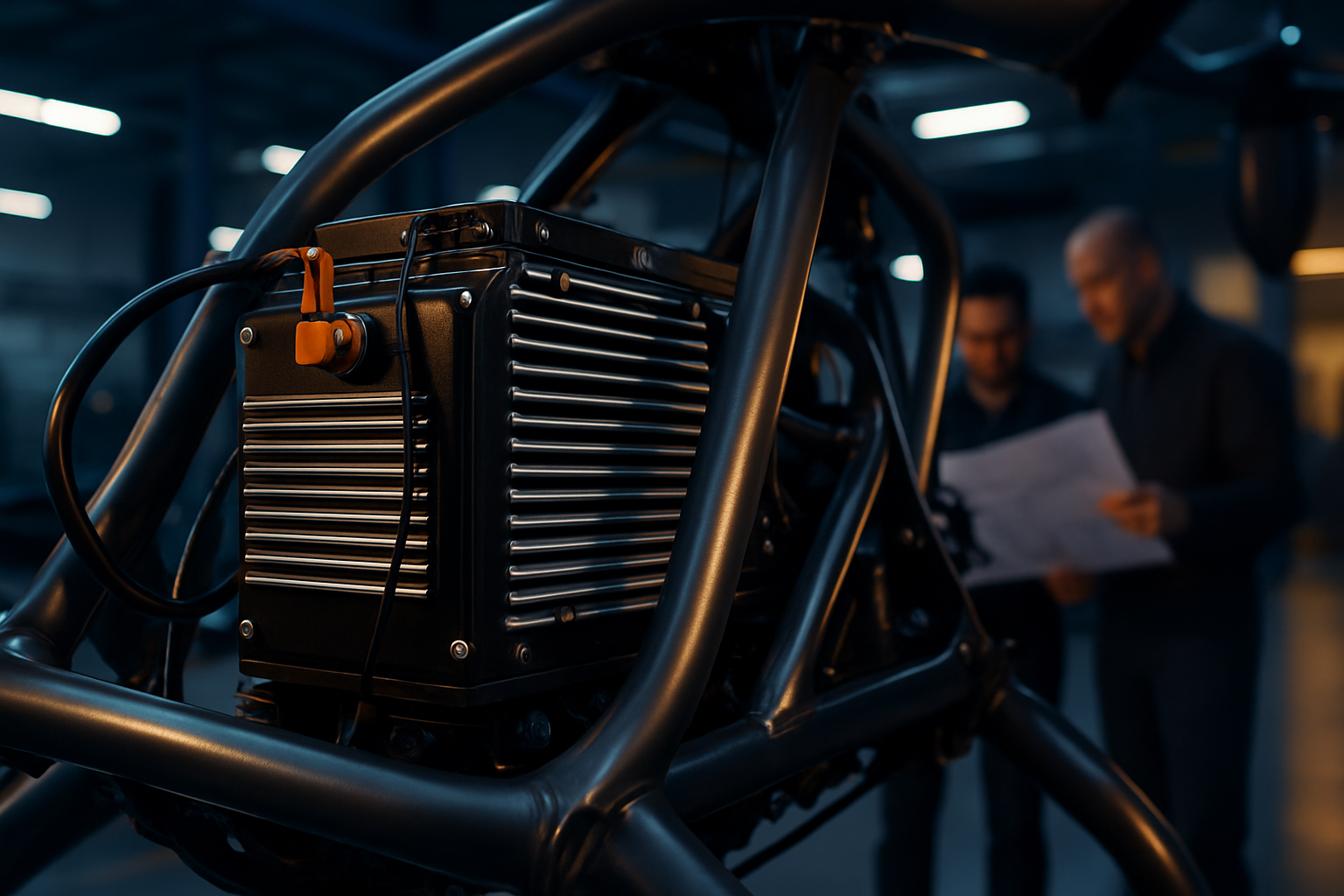
Air-cooled battery systems represent a fundamental rethinking of how thermal energy is managed in hybrid-electric VTOL aircraft. Rather than relying on complex liquid circulation networks with pumps, radiators, and specialized fluid reservoirs, air-cooled systems leverage direct airflow and passive cooling mechanisms to maintain optimal battery operating temperatures. This approach has gained traction among manufacturers seeking to simplify their designs without compromising thermal performance or safety margins.
The transition to air-cooled batteries addresses several critical engineering challenges that have plagued earlier VTOL platforms. Liquid cooling systems introduce potential failure points, including pump failures, fluid leaks, and circulation blockages that could compromise battery performance during critical flight phases. By eliminating these components, engineers reduce the overall complexity of the thermal management architecture, creating more robust and reliable systems suitable for commercial operations.
Modern air-cooling designs benefit from advanced computational fluid dynamics (CFD) simulations and aerodynamic optimization techniques that ensure consistent thermal performance across all flight regimes. Strategic placement of battery modules within the fuselage, combined with optimized intake and exhaust pathways, allows engineers to achieve thermal control comparable to liquid systems while maintaining significantly lower system weight and parasitic drag penalties.
Weight Reduction and System Efficiency Benefits
One of the most compelling advantages of air-cooled battery technology is its substantial weight savings compared to liquid cooling architectures. A typical liquid cooling system for a VTOL battery pack includes the fluid itself, pump assemblies, radiator cores, tubing networks, and integration hardware—components that collectively add 30-50 kilograms or more to the overall vehicle structure. For aircraft operating in the personal air mobility segment, where payload and endurance are critically constrained, these weight reductions directly translate to increased flight time or payload capacity.
The efficiency implications of this shift extend beyond simple weight metrics. Liquid cooling systems consume electrical power to operate the circulation pump, especially during high-demand flight phases when thermal loads are greatest. Air-cooled systems, by contrast, rely primarily on passive convection and active cooling only when airflow alone proves insufficient, reducing parasitic electrical demands and improving overall system efficiency. For hybrid-electric platforms striving to maximize the contribution of battery power while minimizing fuel consumption, this efficiency gain is significant.
System integration becomes substantially simpler with air-cooled architectures. Manufacturing costs decline due to reduced component count and simpler assembly procedures. Maintenance protocols become more straightforward without the need for fluid checks, filter replacements, or pump servicing. These operational advantages make air-cooled systems particularly attractive for commercial air taxi operators and regional air mobility service providers anticipating high flight-hour utilization rates.
Thermal Performance and Safety Considerations
Questions about thermal performance parity between air-cooled and liquid-cooled systems have largely been resolved through modern engineering approaches and advanced materials. Aerodynamic optimization ensures adequate airflow across battery module cooling surfaces even at lower airspeeds or during hover conditions where natural convection is limited. Thermal interface materials, advanced heat spreaders, and strategic fin geometry designs allow engineers to achieve heat dissipation rates that match or exceed legacy liquid systems.
Safety margins in air-cooled battery systems actually benefit from design simplicity. Without pressurized fluid lines or pump-dependent circulation, there are fewer potential failure modes that could lead to localized overheating or thermal runaway conditions. Battery monitoring systems can more readily identify thermal anomalies across distributed air-cooled modules, enabling predictive maintenance and early intervention before critical thresholds are approached.
Reliability testing protocols for air-cooled VTOL battery systems now encompass comprehensive environmental testing across extended temperature ranges, altitude variations, and sustained high-load flight profiles. These tests demonstrate that air-cooled systems maintain consistent thermal performance and battery health across operational envelopes, validating the technology for commercial certification requirements set by aviation authorities worldwide.
Implications for Future VTOL Development
The shift toward air-cooled battery systems signals broader industry confidence in moving beyond the thermal management challenges that constrained early-generation eVTOL prototypes. As hybrid-electric and all-electric architectures mature, thermal efficiency becomes increasingly important for extending endurance and improving energy density utilization. Air-cooled systems offer a pathway to meet these requirements without introducing unnecessary complexity into platforms targeting regulatory approval and commercial operations.
Future VTOL designs will likely accelerate this adoption trend, with new programs incorporating air-cooled batteries from the concept phase rather than retrofitting systems developed around liquid cooling paradigms. This represents a maturation of the industry’s understanding of optimal thermal management strategies and a commitment to engineering simplicity and reliability over over-engineered complexity.
The competitive landscape for personal air mobility will increasingly reward manufacturers who can deliver robust, maintainable aircraft with extended range and payload capacity. By embracing air-cooled battery technology, hybrid-electric VTOL developers position themselves advantageously for certification, production scaling, and operational deployment in the rapidly evolving urban air mobility market.
Regulatory bodies are beginning to recognize the operational advantages of simpler, more reliable thermal systems, potentially accelerating certification timelines for platforms that eliminate failure-prone liquid cooling infrastructure. This regulatory alignment further incentivizes the industry-wide transition to air-cooled approaches.
Key Engineering Takeaways
- Air-cooled systems eliminate pump failures, fluid leaks, and circulation blockages inherent to liquid cooling designs
- Weight savings of 30-50 kg per vehicle directly enhance endurance, payload, and operational efficiency metrics
- Simplified thermal architecture reduces manufacturing costs, maintenance complexity, and total system risk exposure
- Modern CFD optimization and aerodynamic design ensure thermal parity with legacy liquid cooling approaches
The adoption of air-cooled battery technology in hybrid-electric VTOL aircraft represents a maturing decision-making process within the personal air mobility industry. As manufacturers navigate the complex trade-offs between system performance, reliability, weight, and operational cost, air-cooled approaches emerge as the preferred pathway for next-generation platforms. This shift will accelerate the industry’s progress toward commercially viable, scalable personal air mobility solutions ready for widespread deployment in urban and regional transportation networks. The engineering community’s embrace of this technology validates years of research into thermal management optimization and positions the entire sector for significant growth and market expansion in the coming years.