HIGHLIGHTS
- Regulatory bottlenecks continue to delay eVTOL certification and airspace integration in most jurisdictions worldwide.
- Battery technology and energy density limitations restrict practical flight ranges and payload capacity for commercial viability.
- Infrastructure requirements for vertiports, charging networks, and air traffic management systems remain underdeveloped and capital-intensive.
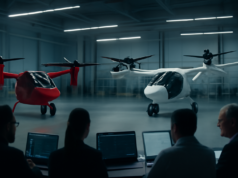
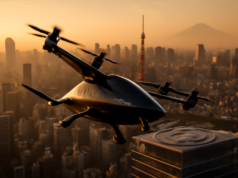
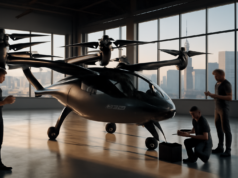
Since the earliest days of aviation, the vision of personal flying vehicles has captivated human imagination. From 1950s concept art depicting families commuting via jetpacks to modern eVTOL prototypes, the promise of urban air mobility has never felt more tangible—yet flying cars remain conspicuously absent from our skies in 2026. Despite incredible technological breakthroughs, substantial investment, and regulatory progress, fundamental barriers continue to delay the realization of mainstream personal air mobility. Understanding these obstacles is essential for anyone following the evolution of transportation technology.
The Persistent Technical Challenge
Battery technology remains the primary technical constraint preventing flying cars from entering mass production. Current lithium-ion batteries, despite remarkable improvements over the past decade, cannot deliver the energy density required for practical urban air mobility. An eVTOL aircraft designed to carry four passengers across a 100-kilometer urban corridor requires battery packs weighing several hundred kilograms, reducing available payload and limiting operational flexibility. Engineers continue pursuing solid-state batteries, lithium-metal variants, and alternative chemistries, but these solutions remain years away from commercial readiness at scale.
Beyond batteries, propulsion system efficiency presents an equally formidable challenge. Most eVTOL designs rely on electric motors driving multiple rotors or propellers, each requiring sophisticated control systems to maintain stability and safety. The engineering complexity of distributing power across six, eight, or even twelve independent electrical motors while managing redundancy, thermal dissipation, and electromagnetic interference exceeds the performance of current systems. Flight testing reveals that real-world efficiency falls significantly short of theoretical projections, reducing achievable range and useful load capacity.
Structural materials and manufacturing processes also lag behind requirements for economically viable production. Aircraft-grade composites and aluminum alloys capable of meeting certification standards for human passenger transport demand precision manufacturing techniques that currently limit production rates to dozens or hundreds of units annually, not the thousands needed for commercial viability. Scaling manufacturing without compromising safety margins or inflating costs remains an unsolved engineering and logistics challenge.
Regulatory Gridlock and Certification Barriers
Aviation regulations worldwide treat eVTOL aircraft with justifiable caution. Most regulatory bodies, including the FAA in the United States and EASA in Europe, classify electric vertical takeoff and landing vehicles as aircraft requiring full certification. This means manufacturers must satisfy rigorous design, manufacturing, and operational standards originally developed for larger, heavier aircraft. The certification process demands hundreds of thousands of flight hours, extensive failure analysis, and demonstration of equivalent safety levels to traditional aviation—a timeline measured in years and budgets exceeding hundreds of millions of dollars.
The patchwork nature of global air traffic regulations creates additional complexity for manufacturers seeking to commercialize vehicles internationally. China, the European Union, the United States, and emerging markets each maintain distinct certification frameworks, aircraft classification schemes, and airspace management philosophies. A single-pilot eVTOL certified in Singapore may face years of additional testing and redesign before certification in the United States or Europe. This fragmentation raises development costs and delays global market entry, making manufacturers dependent on securing adequate funding for multiple parallel certification campaigns.
Beyond aircraft certification, regulators grapple with operational approval challenges that lack established precedent. How should low-altitude airspace be managed when hundreds of autonomous or piloted eVTOLs operate simultaneously in dense urban environments? What pilot training and qualifications should apply to eVTOL operators? How can liability be assigned when aircraft malfunctions occur over populated areas? These fundamental questions lack answers in most jurisdictions, creating uncertainty that deters investment in the operational infrastructure necessary for commercialization.
Infrastructure and Economic Viability
Establishing a functional eVTOL network demands infrastructure investments on a scale rarely discussed in promotional materials. Vertiports—landing facilities with charging infrastructure, maintenance capabilities, and passenger amenities—represent only the beginning. Urban areas contemplating eVTOL integration require distributed networks of dozens or hundreds of vertiports, creating conflicts with existing land use and raising questions about who bears construction costs and operational liabilities. Cities considering eVTOL adoption must also invest in advanced air traffic management systems capable of coordinating aircraft movements at low altitudes while maintaining separation from traditional rotorcraft, fixed-wing aircraft, and obstacles.
The economic case for early eVTOL services remains uncertain. Operational costs—including pilot compensation (for non-autonomous flights), aircraft maintenance, energy consumption, and vertiport fees—suggest ticket prices of $3-8 per kilometer for point-to-point urban mobility. This pricing makes eVTOL transit uncompetitive with existing ground transportation for most travelers, limiting addressable markets to wealthy passengers or time-critical use cases. Until battery costs decline further and manufacturing scales to support competitive operating margins, eVTOL operators will struggle to achieve profitability outside niche applications like emergency medical transport or corporate charter services.
Insurance and liability frameworks remain underdeveloped, imposing additional cost burdens on operators. Aviation insurance for eVTOL operations currently commands premiums 10-20 times higher than comparable commercial rotorcraft services, reflecting underwriter uncertainty about accident rates and damage exposure. This insurance cost directly flows to operational expenses, further inflating passenger ticket prices and compressing profit margins. Resolution of liability frameworks and establishment of historical safety data may gradually reduce insurance costs, but early operators face significant financial headwinds from this reality.
Market Adoption and Public Acceptance
Consumer demand for eVTOL services remains speculative rather than demonstrated. Urban travelers accustomed to reliable ground transportation may prove reluctant to embrace flights offering comparable convenience without the comfort, luggage capacity, or social normalcy of established transportation modes. Safety concerns—justified or otherwise—may deter adoption if early eVTOL operations experience accidents receiving heavy media coverage. The psychological barrier to accepting small aircraft operated in low-altitude airspace over residential neighborhoods should not be underestimated; noise complaints and safety concerns may trigger regulatory restrictions limiting operational flexibility.
Workforce training and pilot availability present additional adoption barriers often overlooked in early projections. Commercial eVTOL operations—particularly at the scale envisioned for urban air mobility—require thousands of trained pilots, maintenance technicians, vertiport staff, and air traffic controllers. Educational institutions have only recently begun developing training programs for these specializations. The shortage of qualified personnel will constrain service capacity and inflate labor costs during the crucial early commercialization phase, further limiting profitability.
Public perception increasingly reflects skepticism about flying car promises. Decades of unfulfilled projections regarding autonomous vehicles, hyperloop transportation, and advanced mobility solutions have created justified cynicism about technology entrepreneur claims. Early eVTOL services that fail to deliver promised frequencies, reliability, or pricing may damage public confidence in the entire sector, regardless of long-term technical potential. Managing expectations and delivering on initial service commitments will prove essential for sustained market development.
Key Barriers Limiting Flying Car Adoption
- Energy density limitations require battery technology breakthroughs before achieving sufficient range and payload for mainstream transportation applications
- Regulatory certification timelines, when combined with fragmented international standards, create multi-year approval delays and substantial development costs
- Vertiport infrastructure, air traffic management systems, and pilot training represent capital investments in hundreds of millions of dollars before service operations can scale
Flying cars remain aspirational rather than imminent primarily because the combination of technical, regulatory, infrastructure, and economic challenges creates a formidable barrier to commercialization. While continued innovation will gradually address each constraint, the realistic timeline for widespread personal air mobility adoption likely spans decades rather than years. Early eVTOL services will emerge in specific markets and use cases, but the transformation of transportation systems promised by flying car enthusiasts remains genuinely distant. Understanding this gap between potential and reality should inform expectations as the personal air mobility sector continues its deliberate march toward commercial maturity.