HIGHLIGHTS
- Autonomous VTOL aircraft technology unveiled simultaneously at Oshkosh and Farnborough aerospace events in July 2026
- Electric vertical takeoff capabilities demonstrated publicly for first time at two major international aviation venues
- Dual-location debut signals accelerated commercialization timeline for autonomous urban air mobility solutions
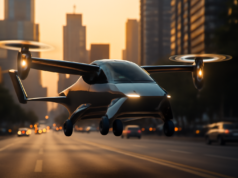
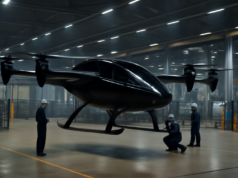
The aviation industry reached a significant milestone in July 2026 as autonomous vertical takeoff and landing (VTOL) aircraft technology made its public debut at two of the world’s most prestigious aerospace events: Oshkosh AirVenture in Wisconsin and the Farnborough International Airshow in the United Kingdom. This simultaneous unveiling represents a watershed moment for electric vertical takeoff technology, demonstrating that the industry has moved decisively from theoretical concepts to practical, demonstrable aircraft systems ready for evaluation by aviation professionals and regulatory bodies.
The Historic Dual Debut at Oshkosh and Farnborough
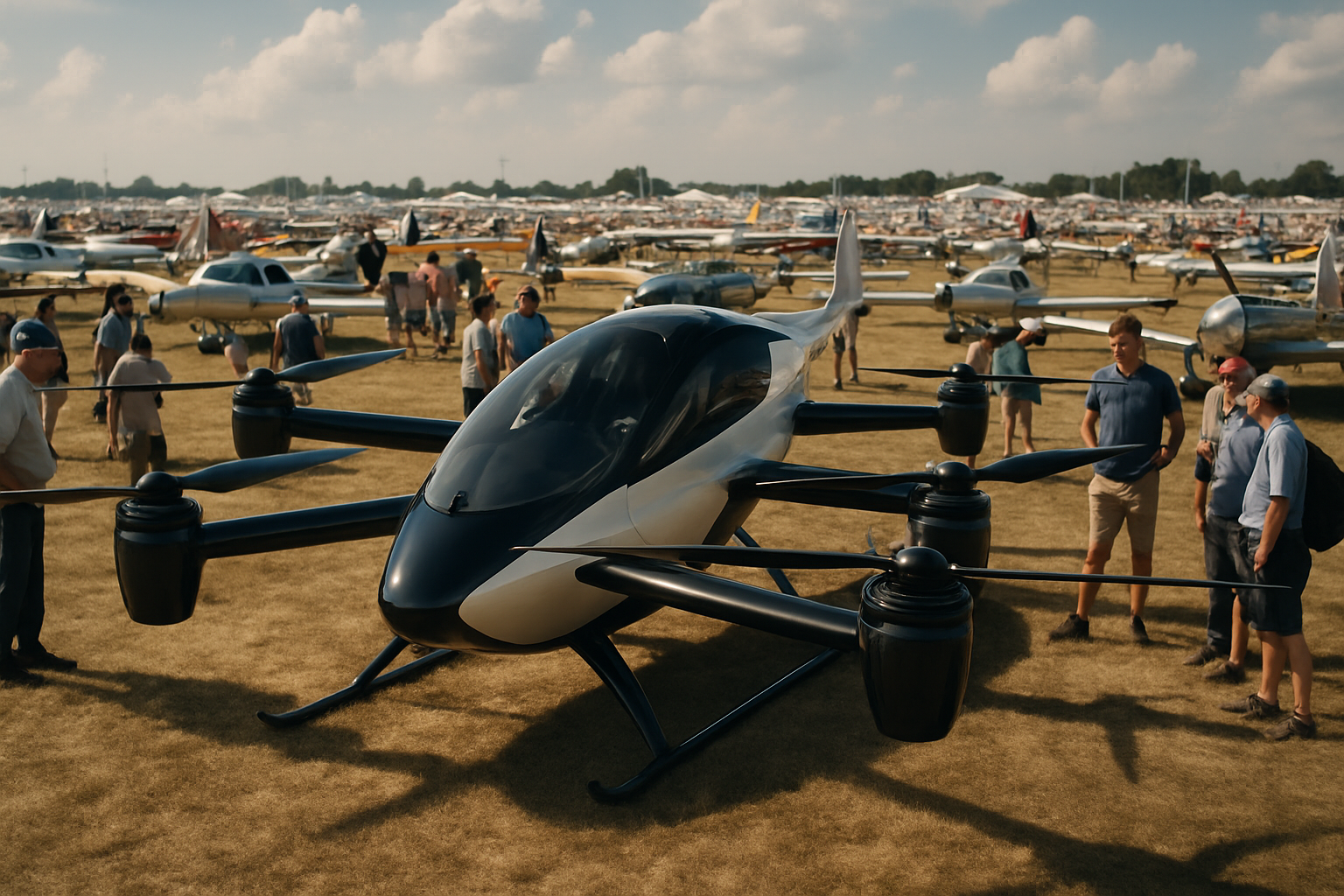
The decision to premiere autonomous VTOL technology at both Oshkosh and Farnborough simultaneously underscores the global significance of this technological breakthrough. Oshkosh AirVenture, held annually in Oshkosh, Wisconsin, attracts over 600,000 aviation enthusiasts, pilots, and industry professionals from around the world. The Farnborough International Airshow, equally prestigious and held biennially near London, serves as the primary venue for aerospace innovation in Europe and attracts thousands of aviation industry stakeholders, government officials, and potential investors. By presenting autonomous VTOL aircraft at both venues in the same timeframe, manufacturers signaled their confidence in the technology’s readiness and their intent to capture global market attention.
The timing of this dual debut carries profound implications for the personal air mobility (PAM) ecosystem. Both events are carefully curated showcases where only the most mature technologies are typically presented. The fact that autonomous VTOL systems were deemed ready for public display suggests that developers have successfully navigated critical technical hurdles related to flight stability, autonomous navigation systems, and safety protocols. Aviation enthusiasts and industry professionals attending these events reported witnessing detailed technical presentations, possibly including static displays and possibly flight demonstrations or high-fidelity simulations of autonomous operations.
This coordinated international launch strategy reflects a calculated approach by technology developers to build credibility and market momentum simultaneously across North American and European markets. By unveiling at Oshkosh, developers tap into the enthusiast and general aviation markets, while Farnborough provides access to military, commercial, and government aerospace procurement officials. This dual-market approach maximizes exposure to decision-makers who will ultimately influence adoption rates and regulatory frameworks for autonomous VTOL operations.
Autonomous Systems: The Critical Innovation
The autonomous capabilities of the debuted VTOL aircraft represent perhaps the most significant advancement in electric vertical takeoff technology to date. Unlike remotely piloted or manually operated aircraft, fully autonomous systems eliminate the need for onboard or remote pilots, fundamentally reducing operational costs and expanding the potential use cases for urban and regional air mobility. Autonomous flight systems utilize sophisticated sensor arrays—including LiDAR, radar, and camera systems—combined with artificial intelligence and machine learning algorithms to enable aircraft to navigate, avoid obstacles, and respond to dynamic environmental conditions without human intervention.
The development of reliable autonomous systems for VTOL aircraft has required overcoming substantial technical challenges. VTOL aircraft must operate in complex three-dimensional airspace, often at lower altitudes where weather conditions, ground obstacles, and other aircraft present constant hazards. The autonomous systems demonstrated at Oshkosh and Farnborough likely incorporate redundant sensors, fail-safe protocols, and real-time decision-making capabilities that meet or exceed aviation safety standards. The successful public presentation of these systems suggests that developers have achieved a level of maturity and reliability that previously seemed years away.
Beyond technical achievement, the debut of autonomous VTOL systems at these major events demonstrates developer confidence in earning regulatory approval. Aviation regulatory bodies, including the Federal Aviation Administration (FAA) in the United States and the European Union Aviation Safety Agency (EASA) in Europe, have been closely monitoring autonomous aircraft development. The decision to publicly showcase autonomous capabilities suggests that developers believe their technology can satisfy or will soon satisfy regulatory requirements for commercial operation in controlled airspace.
Electric Propulsion: Enabling the Vision
Electric propulsion systems form the technological foundation enabling viable VTOL aircraft designs. Traditional combustion engines are too heavy, too inefficient, and too environmentally damaging to support the operational economics of urban air mobility. Electric motors, combined with advanced battery systems and regenerative energy management, provide the power density and environmental benefits necessary to make frequent, short-hop urban and regional flights economically sustainable. The VTOL aircraft debuted at Oshkosh and Farnborough undoubtedly feature state-of-the-art electric propulsion architectures designed to maximize efficiency and range while minimizing noise and emissions.
The evolution of battery technology has been critical to enabling viable electric VTOL systems. Modern lithium-ion battery systems offer energy densities that were inconceivable just five years ago, allowing aircraft designers to reduce payload penalties while maintaining operational flexibility. Additionally, fast-charging technologies and smart battery management systems enable quick turnaround times between flights—critical for commercial operations. The VTOL systems presented at Oshkosh and Farnborough likely incorporate the latest generation of battery technology, potentially including advanced chemistries or innovative thermal management systems that optimize performance in diverse environmental conditions.
Electric propulsion also enables the distinctive multi-rotor or distributed electric propulsion architectures that characterize modern VTOL aircraft designs. Unlike traditional helicopters that rely on a single or dual main rotor system, many VTOL aircraft feature multiple electrically driven rotors or propellers that can be controlled independently. This distributed propulsion approach offers significant advantages in terms of redundancy, control precision, and overall efficiency. The aircraft demonstrated at these major events likely showcased these advanced propulsion architectures, highlighting the sophisticated engineering required to manage multiple electric motors and propellers in coordinated flight.
Market Implications and Industry Timeline
The public debut of autonomous VTOL aircraft at Oshkosh and Farnborough carries substantial implications for the timeline toward commercial operations. Industry analysts have long debated when autonomous electric VTOL systems would transition from laboratory environments to real-world operation. The July 2026 debut at these major events suggests that commercial introduction is no longer a distant prospect but rather an imminent development, likely occurring within the next 2-5 years. Companies displaying their autonomous VTOL systems at these venues are signaling to investors, partners, and regulators that they have moved beyond the research and development phase toward commercialization and market entry.
The competitive dynamics of the personal air mobility industry will intensify following these debuts. Multiple companies have been developing autonomous VTOL systems, and the public demonstration of working prototypes at Oshkosh and Farnborough effectively launches a global race to secure regulatory approvals, establish operational partnerships, and capture early market share. First-movers who achieve regulatory certification and establish operational networks will gain substantial competitive advantages, while laggards risk losing market position to more aggressive competitors. This competitive intensity should accelerate technological progress and reduce the time required for subsequent generations of autonomous VTOL systems to reach commercial viability.
Geographic considerations will play an important role in near-term market development. Regulatory frameworks for autonomous aircraft operations vary significantly between the United States, Europe, Asia-Pacific, and other regions. The simultaneous unveiling at Oshkosh (serving the North American market) and Farnborough (serving the European and global market) demonstrates developer awareness of these geographic nuances and their commitment to pursuing approvals in multiple regulatory jurisdictions. Companies that successfully navigate regulatory requirements in multiple regions will be positioned to capture larger global market opportunities compared to competitors focused exclusively on single markets.
Regulatory and Safety Considerations
Key Regulatory Milestones and Pathway to Certification
- FAA and EASA pathway toward Type Certification for autonomous VTOL aircraft expected within 18-36 months following Oshkosh/Farnborough debuts
- Safety standards for autonomous flight operations still under development; industry prototyping at major events informs regulatory framework discussions
- Public demonstration builds stakeholder confidence necessary for regulatory agencies to establish baseline performance requirements for commercial autonomous operations
The unveiling of autonomous VTOL technology at Oshkosh and Farnborough represents more than a technical achievement; it marks a transition point in how regulatory bodies and the public perceive autonomous aircraft technology. Prior to these demonstrations, autonomous VTOL systems existed primarily in laboratory settings and computer simulations. The public presentation of working prototypes at prestigious international events legitimizes the technology and demonstrates developer commitment to transparency and safety. This positive reception at major aviation venues should accelerate regulatory discussions and provide regulators with concrete examples of autonomous capabilities to inform their framework development.
Safety remains the paramount concern in autonomous aircraft development and certification. Regulatory bodies will require demonstrated reliability far exceeding current automotive autonomous systems standards, as aircraft accidents carry catastrophic risk profiles. The autonomous VTOL systems displayed at Oshkosh and Farnborough likely incorporate redundant systems, fail-safe mechanisms, and extensive testing documentation demonstrating their reliability under diverse operational conditions. Regulatory agencies will scrutinize this documentation carefully before granting commercial operation approvals, but the professional presentation of these systems suggests that developers believe they can meet or exceed regulatory safety requirements.
Conclusion
The July 2026 debut of autonomous VTOL aircraft at Oshkosh AirVenture and the Farnborough International Airshow marks a watershed moment for personal air mobility technology. The simultaneous unveiling at two of the world’s most prestigious aerospace venues signals that electric vertical takeoff systems have matured from theoretical concepts to practical, demonstrable technologies ready for regulatory evaluation and eventual commercial deployment. The autonomous capabilities demonstrated at these events represent a quantum leap in system sophistication, enabling operational models that were previously considered speculative. As regulatory frameworks take shape and developers accelerate toward certification and market entry, the aviation industry stands on the threshold of a profound transformation in how people and goods move through urban and regional airspace. The next 2-5 years will be critical in determining which companies successfully navigate regulatory approval processes and establish operational networks, but the trajectory toward commercially viable autonomous electric VTOL operations is now unmistakable.