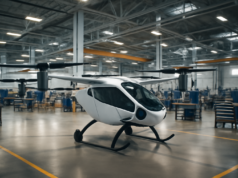

The urban air mobility landscape is experiencing a significant shift as three major players in the electric vertical takeoff and landing industry announce a groundbreaking partnership. Archer Aviation, BETA Technologies, and Macquarie Capital have joined forces to establish ACES, a collaborative initiative poised to accelerate the development and commercialization of eVTOL aircraft. This strategic alliance represents a pivotal moment for the personal air mobility sector, combining the technical expertise, operational experience, and financial resources necessary to bring electric aircraft to mainstream adoption.
Understanding the ACES Alliance Partnership
The formation of ACES marks a turning point in how eVTOL companies approach market development and regulatory compliance. Rather than competing in isolation, these three organizations have recognized the mutual benefits of collaboration. Archer Aviation brings its proven certification pathway and manufacturing capabilities, BETA Technologies contributes its operational expertise from existing commercial operations, and Macquarie Capital provides the financial infrastructure and capital solutions needed to scale these innovative aircraft platforms.
This partnership demonstrates a mature approach to industry development. By pooling resources and expertise, the three entities can address common challenges more efficiently than individual competitors. The alliance focuses on standardization, regulatory alignment, and infrastructure development—areas where competition could fragment the industry and delay widespread adoption. Instead, ACES positions itself as a unifying force that can benefit the entire eVTOL ecosystem.
The timing of this announcement is particularly significant given the current state of regulatory frameworks globally. As aviation authorities in the United States, Europe, and Asia continue to develop certification standards for eVTOL aircraft, having a collaborative body that can interface with regulators proves invaluable. ACES can serve as a unified voice advocating for reasonable, performance-based regulations that encourage innovation while maintaining safety standards.
Archer Aviation’s Role in the Alliance
Archer Aviation, one of the most publicly visible eVTOL manufacturers, brings substantial momentum to ACES. The company has been at the forefront of eVTOL development, with significant progress toward obtaining certification from the FAA. Archer’s four-passenger Midnight aircraft represents a practical solution for urban air mobility, designed specifically for point-to-point transportation in metropolitan areas. By joining ACES, Archer gains access to operational insights and financial mechanisms that can accelerate its path to commercial service.
The company’s contribution to the alliance extends beyond its aircraft platform. Archer has developed proprietary manufacturing techniques and supply chain relationships that can benefit partner organizations. Additionally, Archer’s regulatory engagement with the FAA positions ACES to benefit from firsthand knowledge of certification requirements and expectations. This insider perspective proves invaluable for all alliance members as they navigate the complex approval process.
Archer’s participation also signals confidence in collaborative approaches to industry challenges. Rather than hoarding proprietary technology, the company recognizes that the eVTOL market’s success depends on solving systemic issues like charging infrastructure, airspace management, and public acceptance. These challenges transcend individual company capabilities, making partnership essential.
Key Contributions from Archer
- Advanced aircraft design and engineering expertise with proven FAA engagement
- Manufacturing scalability experience and supply chain optimization
- Market validation through pre-orders and customer partnerships
- Regulatory pathway knowledge from ongoing certification efforts
BETA Technologies’ Operational Expertise
BETA Technologies brings a unique dimension to ACES—real-world operational experience. Unlike many eVTOL startups focused purely on design and certification, BETA has already deployed electric aircraft in commercial operations. This hands-on experience with actual flying operations, maintenance protocols, and customer interactions is invaluable for informing industry standards and best practices. BETA’s operational data directly improves the entire eVTOL sector’s understanding of how these aircraft perform in realistic conditions.
The company’s focus on electric vertical and short takeoff and landing aircraft addresses a slightly different market segment than traditional eVTOLs, but the underlying technology and operational challenges overlap significantly. BETA’s solutions for battery management, thermal regulation, and crew training directly apply to the broader eVTOL industry. By sharing operational insights through ACES, BETA accelerates learning across the entire sector while gaining access to complementary expertise from partners.
BETA’s inclusion in ACES particularly strengthens the alliance’s credibility with regulators and operators. Aviation authorities can observe proven operational concepts and gather performance data rather than relying solely on simulations and projections. This evidence-based approach to regulation benefits all ACES members by demonstrating that eVTOL aircraft can operate safely and reliably in commercial service.
Operational Contributions to ACES
- Real-world flight operational data and performance metrics
- Proven maintenance and support protocols for electric aircraft
- Crew training and qualification pathways
- Customer acceptance and commercial deployment insights
Macquarie Capital’s Financial Infrastructure
Macquarie Capital’s participation represents recognition that eVTOL commercialization requires sophisticated financial structures beyond traditional venture capital. The investment bank brings expertise in large-scale infrastructure financing, which proves essential for developing the charging networks, maintenance facilities, and vertiport infrastructure that eVTOL operations require. Macquarie’s involvement elevates ACES from purely a technical collaboration to a commercially viable platform with institutional financial backing.
The capital markets expertise that Macquarie provides addresses one of the eVTOL industry’s most pressing needs—sustainable financing for continued development and deployment. Beyond funding aircraft development, the infrastructure required for commercial operations demands billions in investment. Macquarie’s relationships with institutional investors, development banks, and private equity firms position ACES members to access capital markets more effectively than independent competitors.
Macquarie’s financial engineering capabilities also enable creative solutions for infrastructure development and operational funding. The firm can structure deals that optimize risk allocation between manufacturers, operators, and investors. This financial innovation accelerates the timeline for eVTOL commercialization by reducing capital constraints and regulatory uncertainty that typically delay new transportation technologies.
Industry Impact and Future Implications
The ACES alliance signals a maturing eVTOL industry transitioning from startup competition to strategic collaboration. This shift reflects growing recognition that the market’s success depends on solving shared infrastructure, regulatory, and operational challenges. As eVTOL companies progress toward commercial service, the need for industry-wide standards and coordinated development becomes increasingly apparent.
The partnership likely influences how other eVTOL manufacturers approach their own strategic positioning. Companies may seek similar alliances, potentially creating multiple industry consortia that compete on service quality and innovation rather than fragmented approaches. This evolution toward strategic partnerships strengthens the entire sector by creating pressure for excellence and meaningful differentiation. The competitive dynamics shift from binary success or failure to more nuanced market positioning based on service offerings, aircraft capabilities, and operational reliability.
Regulatory agencies worldwide will likely view ACES favorably as evidence of industry maturity and self-organization. Regulators often prefer working with industry consortia that can speak authoritatively about technical standards and safety practices. ACES positions itself as a valuable partner for aviation authorities developing certification frameworks and operational regulations for eVTOL aircraft. This collaborative regulatory approach, in turn, accelerates approval timelines and reduces uncertainty for all members.
Strategic Implications for the eVTOL Sector
- Industry consolidation moving toward strategic partnerships rather than pure competition
- Accelerated regulatory approval through coordinated industry engagement
- Shared infrastructure development reduces individual company capital requirements
- Standardization of operational procedures and safety protocols
- Enhanced access to capital markets through institutional financial participation
The launch of ACES by Archer Aviation, BETA Technologies, and Macquarie Capital represents a watershed moment for the eVTOL industry. By combining technical expertise, operational experience, and financial resources, the alliance addresses fundamental challenges that no single company can solve independently. As eVTOL aircraft move from development toward commercial deployment, initiatives like ACES prove essential for building the integrated ecosystem—regulatory framework, physical infrastructure, operational standards, and financial mechanisms—that sustainable urban air mobility requires. The coming years will reveal whether ACES becomes the industry standard-setting organization for eVTOL commercialization or spawns competing alliances. Either way, the partnership demonstrates that the eVTOL industry has matured beyond the startup phase and is preparing for serious commercial operations.