
HIGHLIGHTS
- Archer Aviation represents a disruptive eVTOL technology play competing directly against Boeing’s traditional aerospace business model and market dominance.
- Investment in electric vertical takeoff aircraft offers growth potential in urban air mobility, a market projected to transform regional transportation within the next decade.
- Boeing’s established supply chain, regulatory relationships, and aircraft manufacturing expertise present competitive advantages, but Archer’s agility and innovation position it as an alternative growth opportunity.
The aerospace industry is witnessing a generational shift as electric vertical takeoff and landing (eVTOL) technology emerges as a transformative force. Archer Aviation, a leading innovator in electric aviation, has captured investor attention as a modern alternative to Boeing, the century-old aerospace titan. This comparison raises a critical question for portfolio managers and aviation enthusiasts alike: Is an electric plane upstart a better investment than an established aerospace powerhouse? Understanding the competitive dynamics, market opportunities, and risk profiles of both companies reveals the evolving landscape of aviation technology.
Archer Aviation’s eVTOL Revolution and Market Position
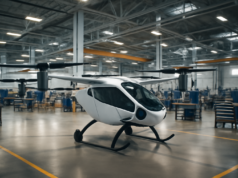
Archer Aviation has positioned itself at the forefront of urban air mobility (UAM) with its Midnight aircraft, a four-seat, all-electric eVTOL designed for regional commuting and point-to-point transportation. The Midnight platform combines innovative tilt-rotor technology with battery-electric propulsion, offering a dramatically different approach to aviation compared to Boeing’s traditional fixed-wing and rotorcraft designs. Archer’s development trajectory has been marked by significant milestones, including receiving special airworthiness certification and conducting extensive testing toward type certification.
The company’s business model focuses on rapid market entry into the emerging UAM sector, targeting operations in major metropolitan areas where congestion and travel times create significant demand for alternative transportation. Archer’s partnerships with operators, municipalities, and infrastructure providers demonstrate a comprehensive strategy for creating an integrated air mobility ecosystem. Unlike Boeing, which serves primarily commercial airlines, defense agencies, and cargo operators, Archer addresses a nascent market segment with limited established players.
Archer’s technological advantage lies in its purpose-built eVTOL design optimized for electric propulsion from the ground up. The company’s engineering approach avoids legacy constraints inherent in retrofitting existing platforms, enabling superior energy efficiency, lower operating costs, and improved passenger experience. This greenfield development advantage positions Archer to capture early market share in a sector anticipated to generate hundreds of billions in revenue within two decades.
Boeing’s Aerospace Legacy and Competitive Strengths
Boeing stands as one of the world’s largest aerospace and defense companies, with more than a century of aviation heritage, regulatory relationships, and manufacturing expertise. The company’s portfolio spans commercial aircraft, defense systems, space exploration, and emerging technologies, providing diverse revenue streams and risk mitigation across market cycles. Boeing’s manufacturing infrastructure, supply chain relationships, and proven ability to scale production represent formidable competitive advantages difficult for startups to replicate.
Boeing’s regulatory maturity cannot be overstated. The company navigates federal and international certification requirements with established processes, government relationships, and compliance frameworks refined over decades. Type certification for aircraft represents one of aviation’s most rigorous processes, and Boeing’s experience accelerates its ability to bring new platforms to market compared to emerging competitors. Additionally, Boeing’s customer base of major airlines and defense agencies provides immediate distribution channels for any eVTOL or advanced air mobility platform it chooses to develop or acquire.
However, Boeing’s traditional business model faces headwinds from industry disruption and electric propulsion technology. The company’s success in commercial aviation hinges on large-scale aircraft operations, while eVTOL markets demand fundamentally different operational models, fleet management, and regulatory approaches. Boeing’s organizational size and legacy processes can slow innovation cycles relative to purpose-built startups. Recent operational challenges and reputational concerns have also affected investor confidence, creating an opening for alternative aviation technology players to capture market attention.
Market Growth Projections and Investment Potential
The urban air mobility and regional electric aviation markets represent one of aerospace’s most compelling growth opportunities. Industry analysts project the global eVTOL market could exceed $100 billion annually by the 2040s, driven by urbanization, congestion mitigation, sustainability pressures, and technological maturation. Cities worldwide are developing regulatory frameworks and infrastructure to support commercial eVTOL operations, signaling genuine market development beyond speculative interest.
Archer Aviation’s upside potential derives from early positioning in a high-growth market segment where competitive entry remains limited by technical complexity, regulatory barriers, and capital requirements. Successful execution of type certification, followed by commercial operations, could establish Archer as a category leader with strong margins and recurring revenue from aircraft sales, operations, and platform services. Early movers in transformative technology markets often capture disproportionate shareholder value regardless of initial company size.
Boeing’s participation in electric aviation would leverage existing strengths while diversifying revenue beyond challenged commercial aircraft programs. However, Boeing’s smaller allocation of capital to next-generation air mobility compared to eVTOL-focused companies suggests a less aggressive market capture strategy. For growth-oriented investors seeking exposure to electric aviation’s transformative potential, pure-play eVTOL companies offer concentrated upside, while Boeing provides diversified aerospace exposure with modest electric aviation exposure.
Risk Considerations and Long-Term Viability
Archer Aviation faces execution risks inherent to any capital-intensive hardware startup: regulatory delays, technical challenges, market adoption uncertainty, and cash runway management. Type certification timelines remain unpredictable despite company progress. Scaling production to meet anticipated demand requires substantial capital investments with no guaranteed customer base. Supply chain disruptions for battery technology, advanced materials, and specialized components could delay commercialization or increase unit costs, eroding competitive advantages.
Market adoption risk represents another critical consideration. While projections for eVTOL demand are optimistic, actual consumer willingness to pay premium prices for air taxi services remains unproven at scale. Regulatory uncertainty regarding airspace integration, pilot certification, and noise standards could constrain operations more severely than anticipated. Archer’s financial sustainability depends on reaching operational profitability before capital reserves deplete—a timeline that remains uncertain.
Boeing’s risks differ but warrant consideration. The aerospace giant faces cyclical commercial aviation demand, defense budget constraints, and competitive pressure from Airbus and emerging manufacturers. Boeing’s legacy program challenges, manufacturing quality issues, and regulatory scrutiny have eroded investor confidence. However, Boeing’s diversified portfolio and cash generation capability provide financial stability despite current headwinds. Boeing’s longer-term viability appears more assured, though near-term stock performance remains clouded by operational recovery needs.
Key Investment Considerations
- Market opportunity: Archer targets an emerging $100+ billion market, while Boeing participates in mature markets showing modest growth
- Risk profile: Archer offers high-risk, potentially transformative returns; Boeing provides established aerospace exposure with execution uncertainty
- Timeline: Archer requires 3-5 years for commercial maturity; Boeing’s results depend on current program performance and recovery initiatives
- Competitive positioning: Archer leads purpose-built eVTOL design; Boeing brings manufacturing scale and regulatory relationships
- Capital requirements: Archer demands substantial ongoing investment; Boeing generates cash despite current challenges
The Archer Aviation versus Boeing comparison ultimately reflects a choice between transformative growth in an emerging market and established exposure to evolved aerospace businesses. Archer Aviation represents a concentrated bet on electric aviation’s successful commercialization, offering potential for exceptional returns if execution succeeds. Boeing provides diversified aerospace exposure with reduced technology risk but more limited electric aviation upside. Neither company is objectively “better”—investor preference depends on risk tolerance, investment timeline, and conviction in urban air mobility’s commercialization trajectory. Sophisticated investors may consider exposure to both, balancing growth opportunity against stability and proven execution capability.