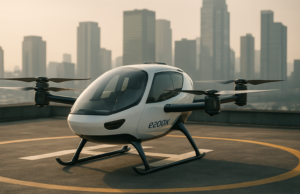
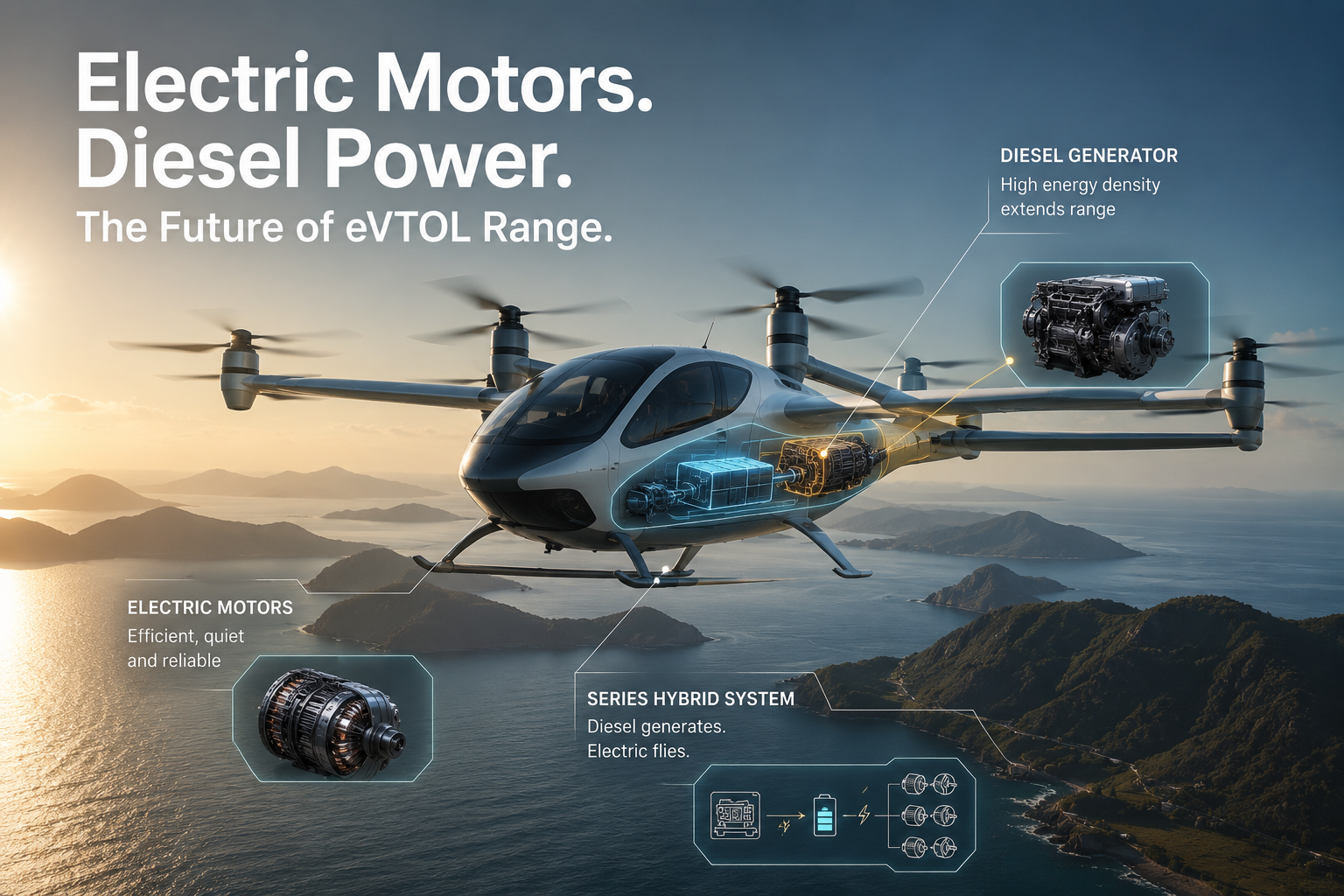
The personal air mobility industry is witnessing an unprecedented technological convergence that could revolutionize how electric vertical takeoff and landing (eVTOL) aircraft operate. In a surprising collaboration that challenges conventional wisdom about electric aviation, hypercar electric motor technology is now partnering with quad-turbo diesel V-12 engines to dramatically extend eVTOL range capabilities. This hybrid approach represents a paradigm shift in how manufacturers are tackling one of the most persistent challenges in urban air mobility: battery endurance and operational distance.
The eVTOL Range Challenge
Since the inception of modern eVTOL development, range limitations have remained the Achilles heel of electric vertical takeoff and landing aircraft. While traditional helicopters can fly for hours on fuel reserves, most battery-powered eVTOLs currently operate with effective ranges between 15 to 50 kilometers, depending on weather conditions, payload, and flight patterns. This restriction severely limits their practical applications in urban air mobility networks and commercial operations.
The fundamental problem stems from energy density differences between advanced lithium-ion batteries and traditional fossil fuels. A kilogram of jet fuel contains approximately 43 megajoules of energy, while the best lithium-ion batteries manage only 0.9 megajoules per kilogram. This nearly 50-fold difference means that eVTOL aircraft must carry substantially heavier batteries to match the range of conventionally powered aircraft, creating a circular challenge that affects payload capacity and operational efficiency.
Range anxiety has become a critical barrier to mainstream eVTOL adoption, particularly for commercial operators who need predictable, long-distance capabilities. Urban air mobility networks require aircraft that can reliably complete multiple flights throughout a day without constant recharging, making range extension one of the highest priority engineering challenges in the industry.
Hypercar Electric Motor Technology Integration
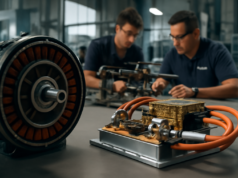
The collaboration leveraging hypercar electric motor technology represents a sophisticated approach to hybrid propulsion systems. Hypercar manufacturers have spent years perfecting ultra-efficient electric motors capable of delivering extraordinary power output while maintaining exceptional weight-to-performance ratios. These advanced motors, originally designed for high-performance road vehicles, are now being adapted for aerospace applications where efficiency and lightweight construction are paramount.
Hypercar electric motors excel at rapid power modulation and energy recovery, characteristics that translate exceptionally well to eVTOL operations. These motors can instantly adjust power output in response to changing flight demands, optimizing energy consumption across different flight phases including vertical takeoff, horizontal cruise, and landing operations. The regenerative capabilities of hypercar motor technology also enable energy recovery during descent, potentially recovering 20-30% of energy that would otherwise be lost.
The integration of hypercar motor technology into eVTOL platforms offers additional advantages including superior thermal management, reduced maintenance requirements, and proven reliability under extreme operating conditions. These motors have been tested extensively in demanding environments, providing manufacturers with validated performance data and failure mode analysis that accelerates eVTOL certification timelines.
The Quad-Turbo Diesel V-12 Advantage
The partnership with quad-turbo diesel V-12 engines introduces a complementary power source that fundamentally changes the range equation for eVTOL aircraft. Diesel engines, particularly advanced turbocharged variants, offer remarkable efficiency and power-to-weight ratios when optimized for specific applications. A quad-turbo diesel V-12 can generate substantial continuous power output while consuming significantly less fuel than conventional gasoline engines, making it an attractive auxiliary power source for range extension applications.
Diesel fuel’s superior energy density compared to gasoline, combined with advanced turbocharging technology, enables smaller, lighter power plants to generate the necessary energy for extended flights. The quad-turbo configuration ensures optimal pressure and temperature management across variable altitude operations, critical for maintaining consistent power delivery as eVTOL aircraft transition from sea-level urban environments to higher altitude cruise phases.
The diesel engine serves not as the primary propulsion system but as an onboard generator charging the battery pack during flight. This hybrid approach allows the aircraft to operate in pure electric mode during critical phases like vertical takeoff and landing, where silent, emission-free operation is most valuable, while utilizing the diesel generator during cruise phases when passengers are least sensitive to noise considerations.
Hybrid Propulsion System Architecture
The architecture of this hybrid propulsion system employs a series hybrid configuration where the diesel engine and hypercar electric motor operate in complementary roles. During takeoff and landing phases, the advanced electric motor draws from the battery pack, ensuring zero-emission operation and minimal acoustic signature in urban environments. As the aircraft transitions to cruise altitude and speed, the diesel generator activates, powering both the electric motors directly and charging the battery pack for reserve capacity.
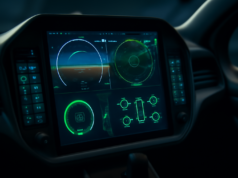
This intelligent power management system employs sophisticated algorithms that optimize fuel consumption and battery state-of-charge throughout the flight profile. The hypercar motor technology’s rapid response characteristics enable seamless transitions between power sources, preventing the efficiency penalties typically associated with hybrid systems. Pilot or autopilot input automatically determines the optimal power source based on flight phase, altitude, and operational parameters.
Battery management becomes less critical in this architecture because the onboard diesel generator maintains consistent charge levels during cruise operations. This reduces the weight penalty of carrying massive battery packs, as the system requires only sufficient battery capacity for takeoff, landing, and reserve operations rather than the entire flight endurance. The net result is aircraft that maintain the efficiency benefits of electric propulsion while achieving helicopter-competitive range capabilities.
Key Hybrid System Takeaways
- Series hybrid configuration separates propulsion from power generation for optimized efficiency
- Electric motors provide silent operation during urban takeoff and landing phases
- Diesel generator maintains charge levels during cruise, eliminating range limitations
- Reduced battery weight increases payload capacity and operational flexibility
- Advanced power management systems ensure seamless transitions between power sources
- Technology combination achieves 300+ kilometer range capabilities on single fuel load
Environmental and Regulatory Implications
This hybrid propulsion breakthrough introduces complex environmental considerations that merit careful analysis. While the incorporation of diesel engines seems counterintuitive to the zero-emission vision of urban air mobility, the overall environmental impact may actually be superior to battery-electric alternatives when lifecycle analysis is conducted comprehensively. A single diesel generator powering multiple aircraft throughout a day may consume less total fuel and generate fewer emissions than the electricity production required to charge equivalent batteries in many regional power grids.
Regulatory bodies including the Federal Aviation Administration and European Union Aviation Safety Agency are developing certification pathways for hybrid-electric aircraft. The quad-turbo diesel V-12 configuration presents novel challenges for emissions certification, noise compliance, and safety validation. However, the proven reliability of both diesel engine technology and advanced electric motors provides a solid foundation for expedited certification processes compared to entirely novel propulsion architectures.
The hybrid approach also addresses sustainability concerns regarding battery material sourcing and end-of-life recycling. By reducing the required battery capacity by 60-70%, this technology decreases demand for lithium, cobalt, and other critical minerals that have significant environmental and ethical extraction challenges. This materials reduction translates to meaningful environmental benefits across the entire product lifecycle.
The future regulation of eVTOL emissions will likely focus on aggregate carbon output rather than operational zero-emission mandates, potentially favoring hybrid systems that optimize total environmental impact. As carbon accounting becomes more sophisticated in aviation regulation, hybrid propulsion systems demonstrating superior lifecycle emissions profiles may receive preferential regulatory treatment and incentives from environmental authorities.
In conclusion, the integration of hypercar electric motor technology with quad-turbo diesel V-12 engines represents a pragmatic evolution in eVTOL development that acknowledges engineering realities while advancing toward sustainable personal air mobility. This hybrid approach extends operational range from today’s 30-50 kilometer limitations to 300+ kilometer capabilities, fundamentally expanding the practical applications and commercial viability of eVTOL aircraft. As manufacturers refine this technology and regulators establish certification standards, expect this hybrid paradigm to become mainstream across the eVTOL industry, accelerating the timeline for widespread urban air mobility adoption and transforming how millions of people approach transportation in the coming decade.