HIGHLIGHTS
- Ampaire secures $19 million in Series funding to accelerate hybrid-electric aircraft certification and commercial deployment
- Hybrid-electric systems achieve 30-50% fuel savings and emissions reductions versus conventional turboprop aircraft
- First production certifications expected within 2-3 years, enabling commercial availability for regional airlines and air-taxi operators
Ampaire, a pioneer in hybrid-electric aircraft propulsion, has announced a significant $19 million funding round, positioning the company to accelerate its development of sustainable aviation solutions. This capital injection represents a major vote of confidence in the hybrid-electric aircraft market and signals growing investor interest in decarbonizing aviation at scale. The funding will enable Ampaire to expand its engineering capabilities, advance certification pathways, and bring innovative propulsion systems to market faster.
Strategic Funding for Hybrid-Electric Innovation
The $19 million fundraising round underscores the increasing momentum behind hybrid-electric propulsion as a near-term solution for reducing aviation emissions. Unlike pure electric aircraft that face range and battery limitations, hybrid-electric systems combine conventional engines with electric motors and batteries, offering greater flexibility for regional and commercial operations. Ampaire’s approach targets existing aircraft platforms, enabling operators to retrofit proven airframes with cleaner propulsion technology rather than waiting for entirely new designs.
This funding arrives at a critical juncture for aviation decarbonization. Regulators and airline operators worldwide are seeking practical pathways to meet net-zero emissions targets, and hybrid-electric technology offers a pragmatic bridge solution. The capital will support expanded research, development of next-generation battery systems, and demonstration flights that can validate performance and safety across diverse operational scenarios.
Ampaire’s investors clearly recognize the commercial opportunity within the sustainability imperative. The hybrid-electric market is projected to expand significantly over the next decade as regional airlines, cargo operators, and air-taxi services seek to reduce operational costs while meeting environmental mandates. By securing substantial funding now, Ampaire positions itself to capture market share before the sector consolidates.
Technical Advancements and Certification Progress
The company has already demonstrated hybrid-electric capability through multiple flight test programs, including successful flights of modified Cessna aircraft and experimental platforms. These proof-of-concept demonstrations prove that hybrid systems can operate reliably in demanding aviation environments while delivering measurable fuel savings and emissions reductions. The new funding accelerates the path from experimental platforms to certified, production-ready systems.
Certification represents one of the most critical challenges facing hybrid-electric aviation. The Federal Aviation Administration (FAA) and international regulators have established rigorous standards that new propulsion systems must meet before commercial deployment. Ampaire’s engineering team is working closely with certification authorities to develop standardized testing protocols and safety requirements. The $19 million investment enables the company to build the technical infrastructure needed to support comprehensive certification programs without financial constraints.
Battery technology and thermal management are core technical frontiers where Ampaire’s funding will drive innovation. Hybrid-electric aircraft demand batteries that deliver high power density, exceptional cycle life, and reliable performance across varying altitude and temperature conditions. Advances in battery chemistry, integration with electric motors, and real-time power management systems will directly determine the viability and efficiency of next-generation aircraft. The capital allows Ampaire to invest in specialized testing facilities and partnerships with battery manufacturers.
Market Opportunity and Commercial Timeline
The global market for hybrid-electric aircraft is emerging from the laboratory and research phase into early commercialization. Regional airlines operating routes of 500-1,000 miles represent an ideal near-term market segment, as these operations can benefit significantly from hybrid-electric efficiency without requiring breakthrough battery technology. Airlines face mounting pressure to reduce fuel costs and emissions, creating strong economic incentives to adopt proven hybrid solutions once certification is complete.
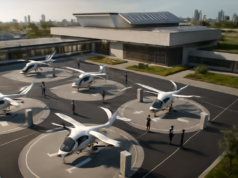
Air taxi and urban air mobility (UAM) operators also represent a significant opportunity for Ampaire’s technology. As the eVTOL sector transitions from prototype demonstrations to commercial deployment, hybrid-electric propulsion offers operators flexibility and extended range that pure electric systems cannot currently provide. Several eVTOL developers are already exploring hybrid architectures, recognizing the operational advantages for dense urban networks.
The commercial timeline suggests hybrid-electric aircraft certifications could begin emerging within 2-3 years, with early operator deliveries following shortly thereafter. This accelerated timeline depends on sustained funding, which Ampaire has now secured. The $19 million injection positions the company to meet aggressive development milestones and capitalize on the expanding market window for sustainable aviation solutions.
Sustainability Impact and Emissions Reduction
Hybrid-electric aircraft represent a tangible pathway to significant aviation emissions reductions without compromising safety, range, or operational flexibility. Industry analysis suggests that first-generation hybrid-electric regional aircraft could reduce fuel consumption and CO₂ emissions by 30-50% compared to conventional turboprop aircraft. As battery technology matures, future hybrid systems may achieve even greater efficiency gains, approaching the environmental profile of pure electric aircraft while maintaining the operational versatility necessary for commercial aviation.
The broader aviation sector produces approximately 2-3% of global CO₂ emissions, with this share projected to increase as other transportation sectors electrify. Hybrid-electric aircraft offer an intermediate technology that can contribute meaningfully to the sector’s decarbonization roadmap. By deploying proven hybrid systems across regional airline fleets over the next decade, the aviation industry could avoid hundreds of millions of tons of CO₂ emissions while maintaining economic viability.
Ampaire’s funding success sends an important signal to the broader sustainability community that hybrid-electric aviation is transitioning from speculative concept to investable reality. This confidence attracts additional capital to the sector, creating positive momentum for competing technologies and spurring innovation across the entire air mobility ecosystem. The company’s ability to secure $19 million validates the commercial and technical viability of hybrid-electric propulsion as a near-term climate solution.
Key Takeaways
- Ampaire secures $19 million funding to accelerate hybrid-electric aircraft development and certification pathways
- Hybrid-electric propulsion offers 30-50% emissions and fuel reductions versus conventional aircraft, with near-term commercial viability for regional airlines
- First commercial hybrid-electric aircraft certifications expected within 2-3 years, positioning early operators to gain competitive and environmental advantages
Ampaire’s $19 million funding round marks an inflection point for hybrid-electric aviation. As the company advances certification and commercialization timelines, the aviation industry gains a practical, proven technology platform for meaningful emissions reductions. For investors, operators, and sustainability advocates, this funding demonstrates that hybrid-electric propulsion is no longer a distant possibility—it is an imminent commercial reality reshaping the future of aviation.