HIGHLIGHTS
- Vertical Aerospace’s VX4 aircraft could achieve regulatory certification within 18-24 months, marking a pivotal milestone for commercial eVTOL deployment.
- CEO Simpson reveals multi-market expansion strategy targeting urban air taxi services, regional business travel, and emergency medical transport operations.
- Strategic partnerships with airlines, airport operators, and technology providers are essential to the company’s roadmap for scaling manufacturing and integrating with existing aviation infrastructure.
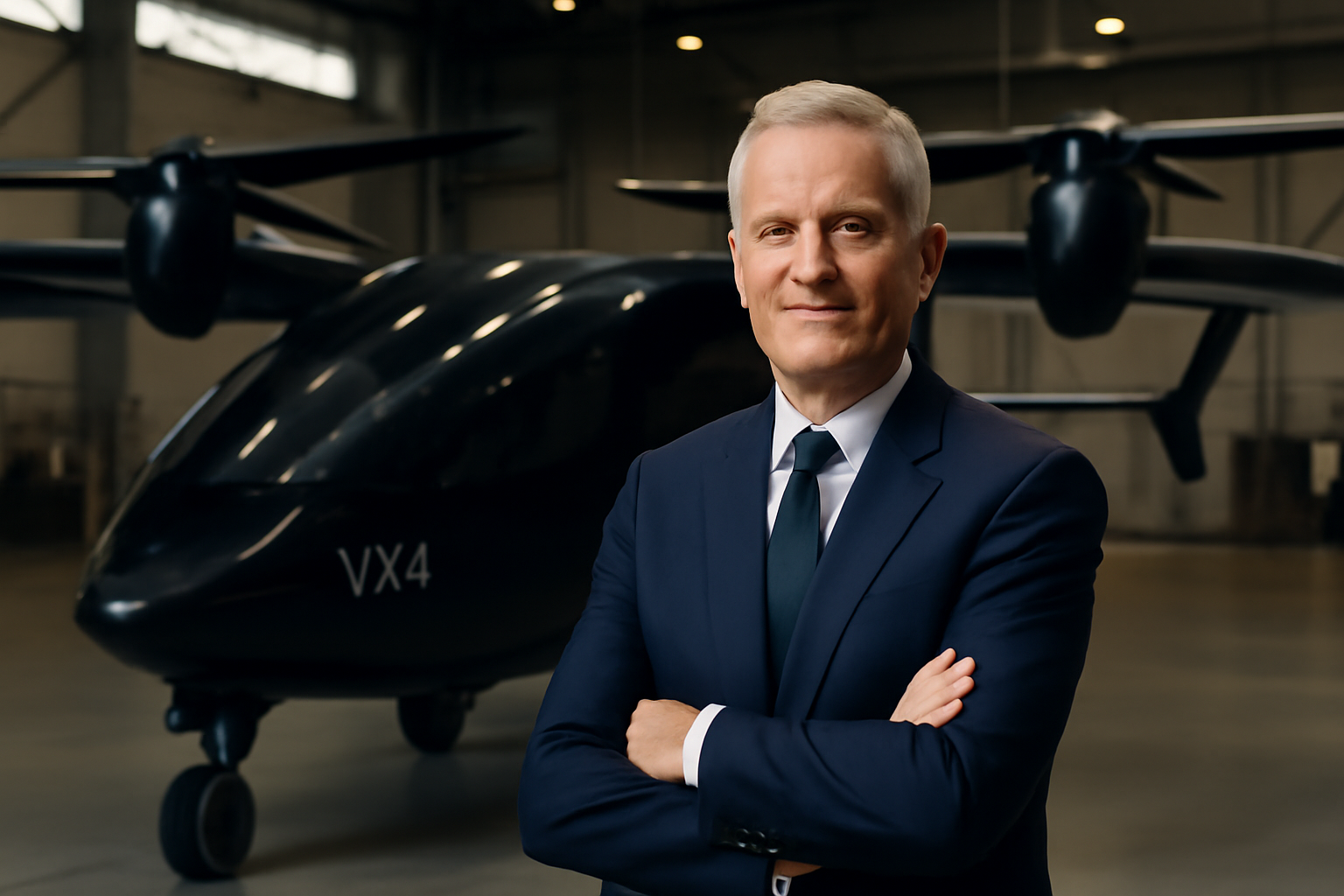
Vertical Aerospace, one of the leading developers of electric vertical takeoff and landing (eVTOL) aircraft, has outlined its ambitious roadmap for the coming years. In a recent interview with Vertical Magazine, CEO Stuart Simpson discussed the company’s strategic priorities, including regulatory certification milestones, scaling operations, and forming critical partnerships that will accelerate the commercialization of personal air mobility. As the eVTOL industry races toward mainstream adoption, Vertical Aerospace’s path forward offers valuable insights into the challenges and opportunities reshaping aviation.
Accelerating the Certification Timeline
Stuart Simpson emphasized that securing regulatory approval is the cornerstone of Vertical Aerospace’s near-term strategy. The company has been working closely with aviation authorities to navigate the complex certification process for its VX4 aircraft, a four-seat eVTOL designed for regional air taxi services. Simpson highlighted that certification is not merely a bureaucratic hurdle but a critical validation of safety, performance, and manufacturability standards that will define industry credibility.
The regulatory landscape for eVTOL aircraft remains in flux, with different jurisdictions adopting varying approval frameworks. Vertical Aerospace’s multi-jurisdictional approach ensures that its aircraft can eventually operate across multiple markets—including Europe, the United States, and beyond. Simpson noted that proactive engagement with regulators has been instrumental in shaping certification standards that are both rigorous and achievable, positioning the company ahead of competitors still struggling with regulatory uncertainty.
Timeline estimates suggest that certification could arrive within the next 18 to 24 months, a critical milestone that would validate investor confidence and open doors for commercial operations. Simpson’s confidence in meeting these targets underscores the company’s technical maturity and operational readiness. Success here would represent a watershed moment for the entire eVTOL sector, demonstrating that these aircraft can meet real-world safety and performance expectations.
Strategic Growth and Market Expansion
Beyond certification, Simpson outlined Vertical Aerospace’s strategy for scaling manufacturing and expanding its addressable market. The company is investing heavily in production infrastructure to move from prototype development to series manufacturing, a critical transition that requires significant capital investment, supply chain development, and workforce scaling. Simpson emphasized that growth must be disciplined and sustainable, avoiding the pitfalls that have derailed overly ambitious aerospace ventures in the past.
Vertical Aerospace is targeting multiple market segments, including air taxi operations in congested urban corridors, regional transportation for business travelers, and emergency medical services. This diversified approach reduces dependence on any single market segment and maximizes revenue potential as different use cases reach maturity at different rates. Simpson highlighted that the company’s aircraft design flexibility allows it to adapt configurations and capabilities to meet specific customer requirements across these varying applications.
The global eVTOL market is projected to grow exponentially over the next decade, with estimates ranging from tens of billions of dollars by 2035. Vertical Aerospace’s early-mover advantage in certification and its established technology platform position it to capture meaningful market share as demand accelerates. Simpson’s growth strategy reflects a realistic understanding of market dynamics while maintaining focus on the fundamentals of safety, reliability, and customer value.
Building Strategic Partnerships
Simpson stressed that no single company can successfully navigate the eVTOL ecosystem alone. Vertical Aerospace has been actively cultivating partnerships with airlines, airport operators, technology providers, and infrastructure developers. These relationships are essential for ensuring that eVTOL aircraft have access to charging infrastructure, landing sites, and integration with existing air traffic management systems. Strategic partnerships also provide critical validation, funding, and market access that accelerate commercialization.
Airlines and air taxi operators represent crucial partners for Vertical Aerospace, as they will ultimately deploy and operate the company’s aircraft. Simpson noted that these partnerships go beyond simple procurement relationships—they involve collaborative design input, operational planning, and long-term fleet commitments that provide revenue visibility and support product development priorities. By embedding customer feedback into the development process, Vertical Aerospace ensures its aircraft meet real operational requirements rather than theoretical specifications.
Technology partnerships with software companies, battery manufacturers, and propulsion specialists also strengthen Vertical Aerospace’s competitive position. Simpson emphasized that the company’s willingness to work with best-in-class partners across different technology domains accelerates innovation while reducing the burden of in-house development for non-core capabilities. This ecosystem approach has become standard practice in the eVTOL industry, reflecting the complexity and breadth of expertise required to bring these aircraft to market.
Addressing Industry Challenges
Simpson acknowledged that the eVTOL industry faces significant headwinds, including battery technology limitations, airspace integration challenges, and the need for new ground infrastructure. Rather than minimizing these obstacles, he framed them as catalysts for innovation and collaboration. Vertical Aerospace’s investments in battery partnerships and its engagement with regulators on airspace management reflect a proactive approach to solving industry-wide problems that affect the entire ecosystem.
Investor sentiment toward eVTOL companies has shifted considerably since 2022, with many firms facing funding challenges and valuation pressures. Simpson emphasized that Vertical Aerospace’s path to profitability and its tangible progress on certification provide foundation for sustained investor confidence. The company’s ability to demonstrate technical achievement and regulatory progress differentiates it from competitors that remain distant from commercialization. Simpson’s communications reflect confidence grounded in concrete milestones rather than speculative promises.
The eVTOL industry continues to consolidate as weaker players exit and stronger competitors emerge. Simpson positioned Vertical Aerospace as one of the few companies with the technical maturity, financial resources, and strategic clarity to reach commercial scale. His leadership emphasizes disciplined execution, realistic timelines, and customer-centric innovation—qualities that will increasingly separate winners from losers in this high-stakes industry race.
Key Takeaways: Vertical Aerospace’s Path Forward
- Vertical Aerospace is on track for eVTOL certification within 18-24 months, with a multi-jurisdictional regulatory strategy that positions the VX4 aircraft for global deployment and commercial air taxi operations.
- CEO Simpson’s growth strategy targets diversified market segments including urban air mobility, regional transportation, and emergency services, with disciplined scaling of manufacturing and supply chain capabilities.
- Strategic partnerships with airlines, infrastructure providers, and technology companies are foundational to Vertical Aerospace’s commercialization roadmap, ensuring aircraft integration with real operational ecosystems.
Vertical Aerospace stands at an inflection point where technical achievement meets regulatory validation and market readiness. CEO Stuart Simpson’s articulate roadmap for certification, growth, and partnerships reflects a company that understands the complexity of commercializing revolutionary aviation technology. As the eVTOL industry matures from concept phase to operational reality, Vertical Aerospace’s progress will serve as a bellwether for investor confidence, regulatory alignment, and the broader viability of personal air mobility as a transformative transportation solution.