HIGHLIGHTS
- Eve Air Mobility and FlyBIS finalize binding agreement for up to 12 eVTOLs in Southern Brazil, advancing commercial deployment in Latin America
- FlyBIS’s major fleet commitment signals operator confidence in eVTOL technology and validates the market’s transition from development to commercial operations
- Partnership will drive infrastructure investments in pilot training, maintenance facilities, and ground support systems across Brazil’s aviation ecosystem
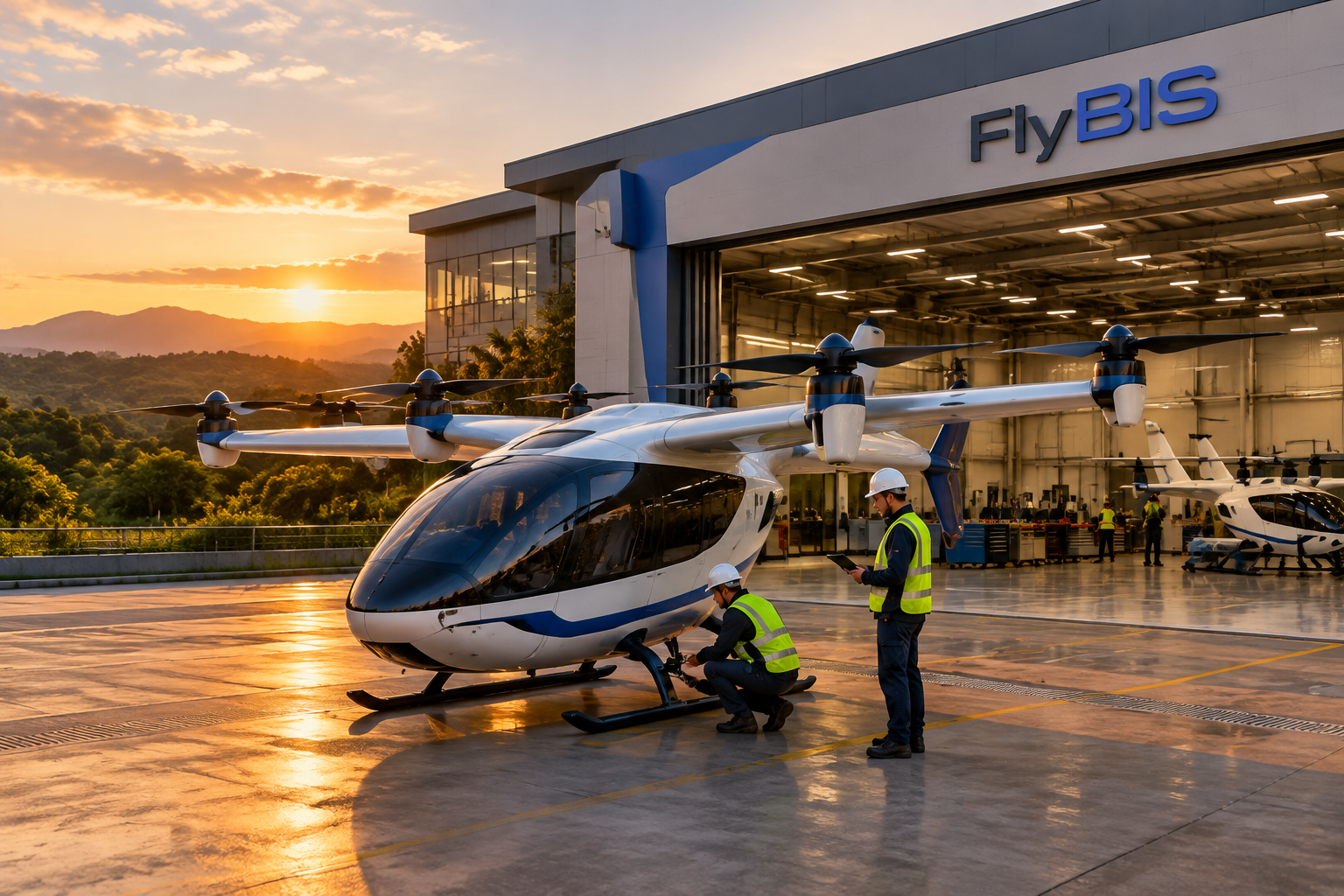
Eve Air Mobility and FlyBIS have announced a binding agreement that represents a major milestone for personal air mobility in South America. The partnership enables FlyBIS to procure up to 12 eVTOL aircraft from Eve, cementing Brazil’s position as a key market for electric vertical takeoff and landing vehicles. This agreement underscores growing commercial demand for sustainable aviation solutions in Latin America and demonstrates Eve’s expanding global reach beyond North America and Europe.
Understanding the Eve-FlyBIS Partnership
Eve Air Mobility, a leading manufacturer of electric vertical takeoff and landing aircraft, has formalized its commitment to the Brazilian market through this binding agreement with FlyBIS. The deal represents a strategic investment in regional air mobility infrastructure, with FlyBIS positioned to become a significant operator of Eve’s cutting-edge eVTOL technology. This partnership reflects the growing confidence among regional aviation operators in the viability and commercial potential of electric aircraft for passenger transport.
FlyBIS, as the partner operator, will be responsible for deploying Eve’s aircraft across Southern Brazil, a region with significant geographic challenges that make air mobility particularly valuable. The binding nature of the agreement signals serious commitment from both parties, moving beyond preliminary interest to actual procurement contracts. This type of formal commitment is crucial for validating the eVTOL market and attracting further investment from other operators and manufacturers.
The partnership also establishes a foundation for regulatory collaboration and operational excellence in Brazil. As FlyBIS prepares to introduce eVTOL services, it will work alongside Brazilian aviation authorities to establish operational procedures, safety protocols, and infrastructure requirements necessary for commercial eVTOL operations. This cooperative approach strengthens the entire ecosystem around personal air mobility in South America.
Regional Expansion and Market Significance
Southern Brazil presents unique opportunities for eVTOL deployment due to its sprawling geography, growing urban centers, and limited ground transportation infrastructure in certain regions. The agreement with FlyBIS allows Eve to tap into these market conditions and demonstrate the practical value of electric vertical takeoff aircraft in underserved regions. By establishing operations in Southern Brazil, FlyBIS creates a model that other regional operators across Latin America may wish to replicate.
The 12-aircraft order represents substantial commercial demand and suggests confidence in the near-term availability and certification of Eve’s eVTOL platform. This volume commitment indicates that FlyBIS is preparing for scaled operations rather than limited pilot programs, signaling genuine market readiness. The scale of this agreement could influence other operators in the region to evaluate eVTOL adoption for their own networks.
Latin America represents one of the fastest-growing aviation markets globally, with increasing demand for premium mobility solutions connecting major cities and suburban centers. Eve’s strategic positioning through FlyBIS positions the company to capture a significant share of this emerging market segment. The Brazilian agreement also demonstrates Eve’s commitment to geographic diversification, reducing dependence on any single market and building a more resilient global business model.
Eve Air Mobility’s Global Growth Trajectory
Eve Air Mobility has established itself as one of the leading independent eVTOL manufacturers, competing alongside other major players in the commercial aircraft space. The company’s design-to-production approach has enabled it to maintain aggressive timelines for aircraft development and certification. The FlyBIS agreement adds to Eve’s growing portfolio of commercial commitments from operators across multiple continents and regulatory jurisdictions.
The company’s strategy focuses on securing binding agreements with regional operators willing to commit to fleet purchases before complete regulatory certification is achieved. These partnerships provide manufacturing volume visibility and help Eve optimize production scaling and supply chain development. Each regional operator agreement brings unique insights into market demands, regulatory requirements, and operational preferences that inform Eve’s aircraft design and feature development.
Eve’s ability to attract major commitments in diverse markets—from North America to Europe to Latin America—validates its aircraft design and manufacturing capabilities. The Brazilian deal strengthens Eve’s position as a truly global manufacturer with the capacity to serve operators across different regulatory frameworks and geographic contexts. This geographic diversification also provides revenue stability and reduces the company’s vulnerability to delays or setbacks in any single market.
Implications for the Broader eVTOL Market
The FlyBIS agreement serves as an important signal to the eVTOL industry about market readiness and operator confidence. When established aviation operators commit substantial capital to eVTOL fleets, it validates that the technology is transitioning from development to commercial deployment. This binding agreement demonstrates that operators are willing to place significant financial commitments on the assumption that regulatory certification will be achieved and aircraft will be delivered as planned.
For industry observers and investors, the Eve-FlyBIS partnership reinforces the narrative that eVTOL commercialization is progressing on a realistic timeline. While skepticism about delivery schedules and regulatory approval remains warranted, formal commitments like this one suggest that at least some portion of the anticipated market demand will materialize. The agreement also highlights the importance of regional and niche operators in driving early eVTOL adoption, rather than waiting for massive urban air mobility networks to emerge.
The deal carries broader implications for supply chain development, manufacturing capacity, and workforce training throughout South America. FlyBIS will need to invest in pilot training, maintenance infrastructure, ground support systems, and battery charging facilities to support its eVTOL operations. These investments stimulate economic activity and create a foundation upon which the entire regional air mobility ecosystem can develop and mature.
Looking Forward: What Comes Next
The binding agreement between Eve and FlyBIS establishes clear milestones and timelines for aircraft delivery, pilot training, and operational launch. FlyBIS will likely announce specific deployment timelines and route plans in the coming months as preparations advance. These operational details will provide further insight into how operators envision integrating eVTOLs into their existing transportation networks and customer service models.
Regulatory approval remains a critical path item for both companies. Brazilian aviation authorities will need to complete certification reviews of Eve’s aircraft design, safety systems, and operational procedures. The partnership with FlyBIS accelerates this process by providing a concrete operator partner and specific operational scenarios for regulators to evaluate. International regulatory cooperation—particularly between Brazilian authorities and those in other jurisdictions where Eve operates—will help establish consistent safety and performance standards.
The success of FlyBIS’s eVTOL operations will likely inspire other Brazilian operators and regional carriers throughout Latin America to evaluate eVTOL adoption. If FlyBIS can demonstrate reliable operations, passenger satisfaction, and economic viability, it will create a compelling case study that accelerates adoption across the region. Conversely, any significant operational challenges or delays would likely dampen regional enthusiasm for eVTOL investments.
Key Takeaways
- Eve Air Mobility and FlyBIS have signed a binding agreement for up to 12 eVTOLs, marking a significant commercial commitment to electric aviation in Southern Brazil’s regional market.
- The partnership validates growing operator confidence in eVTOL technology and accelerates the transition from development to commercial deployment in Latin America’s fastest-growing aviation region.
- FlyBIS’s fleet commitment will drive substantial investments in pilot training, maintenance infrastructure, and ground support systems, establishing the foundation for scaled eVTOL operations throughout the region.
The binding agreement between Eve Air Mobility and FlyBIS represents a watershed moment for personal air mobility in Latin America. By securing a commitment for up to 12 aircraft, Eve demonstrates its ability to attract serious commercial operators willing to place substantial capital at risk. FlyBIS, in turn, positions itself as a pioneer in regional eVTOL operations, ready to bring electric aviation to Southern Brazil’s underserved markets. As this partnership progresses toward aircraft delivery and operational launch, it will provide valuable lessons for the broader eVTOL industry about market viability, regulatory pathways, and the real-world economics of electric vertical takeoff aircraft. The success or challenges that FlyBIS encounters in launching these operations will directly influence how rapidly the rest of Latin America adopts eVTOL technology.