
HIGHLIGHTS
- Joby Aviation launches free public simulator at San Jose International Airport to introduce residents to eVTOL air taxi technology before commercial service begins.
- Airport-based simulator programs build consumer demand, regulatory approval, and ground infrastructure readiness for near-term eVTOL commercialization in California.
- San Jose’s initiative positions Silicon Valley as a competitive hub for urban air mobility adoption and vertiport network development in the coming years.
San Jose International Airport has taken a significant step toward introducing residents to the future of urban transportation by hosting a free public access simulator for Joby Aviation’s advanced eVTOL air taxi. This initiative marks a crucial bridge between cutting-edge aviation technology and community engagement, allowing hundreds of visitors to experience the sensation of electric vertical takeoff and landing aircraft without ever leaving the ground. The move reflects growing momentum in California’s push to establish itself as a global hub for personal air mobility innovation and commercial eVTOL operations.
What Is Joby Aviation’s eVTOL Air Taxi?
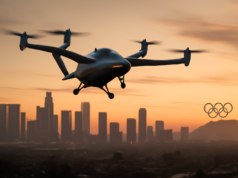
Joby Aviation has emerged as one of the leading developers of all-electric vertical takeoff and landing aircraft designed specifically for urban air mobility. Their flagship eVTOL aircraft combines cutting-edge electric propulsion technology with innovative aerodynamic design to create a vehicle capable of carrying multiple passengers over medium distances without noise pollution or emissions. The aircraft represents years of research, development, and testing aimed at creating a practical solution for urban congestion and last-mile transportation challenges.
The Joby aircraft is engineered to operate from distributed vertiports—small landing hubs that can be positioned throughout cities rather than requiring massive airport infrastructure. This distributed network approach fundamentally changes the economics and accessibility of air transportation, enabling point-to-point travel that bypasses ground-level congestion entirely. With electric powertrains replacing traditional combustion engines, the aircraft operates at significantly reduced noise levels, making it suitable for integration into urban environments where noise restrictions have previously prevented helicopter operations.
Joby’s development timeline has included extensive flight testing, regulatory collaboration with the Federal Aviation Administration, and strategic partnerships with established aviation operators. The company’s pathway to commercialization demonstrates the accelerating maturity of eVTOL technology, moving from theoretical concepts to imminent real-world deployment. San Jose Airport’s simulator showcase reflects confidence in the near-term viability of these systems and their role in transforming metropolitan transportation networks.
Public Access to Flight Simulation Technology
The free simulator experience at San Jose International Airport represents a powerful educational and engagement tool for introducing the general public to eVTOL technology. Rather than relying on theoretical explanations or marketing materials, potential customers and curious citizens can physically interact with control systems, experience spatial navigation challenges, and gain intuitive understanding of how these aircraft feel to operate. This hands-on approach builds public confidence and familiarity with technology that many residents may find unfamiliar or even intimidating at first encounter.
Flight simulators have long been critical tools for pilot training and aircraft development, but their deployment as public engagement instruments is relatively novel in the eVTOL sector. By offering free access, Joby Aviation and San Jose Airport are democratizing exposure to the technology, ensuring that economic barriers don’t prevent community members from developing informed perspectives on air mobility’s future. This approach fosters grassroots support for regulatory approval and infrastructure investment, as residents who’ve experienced the simulator firsthand become advocates for the technology’s successful integration into their region.
The simulator’s presence at a major airport facility also reinforces institutional legitimacy. When passengers waiting for their commercial flights encounter a Joby eVTOL simulator operated by airport officials, the association with established aviation infrastructure creates psychological anchoring that positions electric air taxis as a natural evolution of transportation rather than speculative science fiction. This normalization effect is crucial for building social license in communities where new transportation modes face initial skepticism.
San Jose Airport’s Strategic Role in eVTOL Adoption
San Jose International Airport’s decision to host this initiative positions the facility as a forward-thinking participant in California’s emerging air mobility ecosystem. The airport faces unique pressures and opportunities: serving the heart of Silicon Valley means constant exposure to transportation challenges, environmental concerns, and technological innovation. By proactively engaging with eVTOL technology through public simulators, airport management demonstrates commitment to sustainable transportation solutions and positions San Jose as an early adopter community.
Airport-based vertiport infrastructure will likely prove essential for eVTOL networks’ initial deployment phases. Established airports offer existing security protocols, air traffic integration capabilities, ground transportation connections, and passenger facilities that can support point-to-point air taxi services. San Jose’s engagement with Joby today may foreshadow vertiport development tomorrow, creating early competitive advantages for the region in capturing air mobility commerce as the industry scales. The simulator program functions as both community engagement and market research, gathering data on public interest and comfort levels with the technology.
Furthermore, San Jose’s silicon valley location carries symbolic weight in the transportation technology sector. Investors, engineers, and innovators worldwide view Silicon Valley as the epicenter of technological disruption and commercialization. When major mobility initiatives launch in this region, they attract disproportionate attention from industry stakeholders, potential partners, and regulatory agencies. The simulator at San Jose International thus serves not only local residents but also amplifies messaging about California’s leadership in eVTOL development to a global audience of decision-makers.
Regulatory and Commercial Implications
Joby Aviation’s simulator deployment occurs within a rapidly evolving regulatory landscape. The Federal Aviation Administration has been developing Special Conditions and operating guidelines for eVTOL aircraft, working toward commercial certification pathways that could enable revenue service within the next two to three years. Public engagement initiatives like the San Jose simulator program provide valuable data about passenger comfort and acceptance levels, information that informs both operator decision-making and regulatory policy development. The more citizens who interact positively with eVTOL simulators, the stronger the political mandate for infrastructure investment and operational approval.
The commercial case for Joby’s air taxi service depends heavily on rapid market adoption in early deployment cities. San Jose, located in a region with extreme traffic congestion and high-income populations capable of affording premium air transportation, represents an ideal initial market. The simulator program begins building the customer pipeline months or years before commercial operations launch, educating potential passengers and creating anticipation for service availability. This pre-commercial engagement model may become standard practice as other eVTOL operators prepare for market entry.
From an industry perspective, the simulator’s visibility raises awareness among aerospace suppliers, ground infrastructure developers, and financial investors that eVTOL commercialization is advancing from laboratory stages to public-facing operations. This momentum attracts capital and talent to the sector, accelerating development timelines for supporting technologies including autonomous flight systems, vertiport designs, and urban air traffic management infrastructure. San Jose’s relatively modest simulator initiative thus catalyzes broader ecosystem development extending far beyond a single airport facility.
Future of Urban Air Mobility in California
Key Takeaways on eVTOL Market Development
- Joby Aviation’s free public simulator at San Jose International Airport introduces residents to eVTOL technology before commercial operations launch, building market demand and social acceptance.
- Airport-based vertiport infrastructure paired with community engagement positions San Jose as a competitive early-adopter hub for electric air taxi services in California.
- Public access to flight simulation technology accelerates regulatory approval timelines by demonstrating passenger comfort and generating grassroots support for air mobility infrastructure investment.
California’s position as the global center of transportation technology innovation extends naturally into the eVTOL sector, where entrepreneurial companies, established aerospace manufacturers, and government agencies collaborate on creating sustainable solutions to urban congestion. San Jose Airport’s simulator program exemplifies this ecosystem at work, combining private sector innovation (Joby’s technology), public infrastructure (airport facilities), and community participation (free public access) into a unified movement toward commercialization. As more Californians experience eVTOL simulators and witness technology demonstrations, political support for necessary regulatory changes and infrastructure investment will intensify. Within the next five years, what currently feels like science fiction at a simulator console may become routine reality at vertiports throughout the Silicon Valley and beyond, with roots tracing back to this free public access program’s role in building societal readiness for air mobility’s transformation of urban transportation.