HIGHLIGHTS
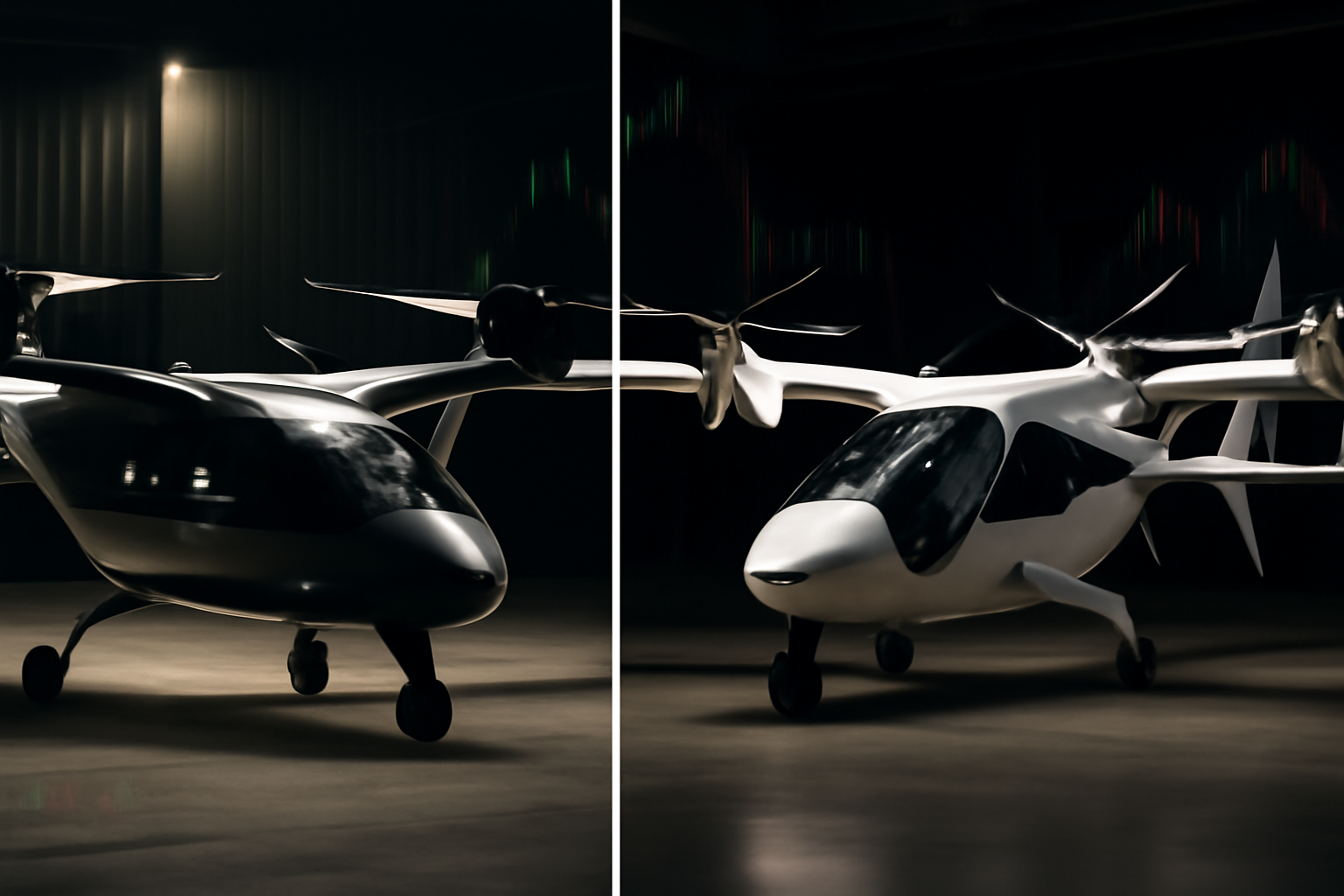
- Archer Aviation targets 2025-2026 commercial operations with its four-passenger Midnight aircraft, while Eve Holding’s six-passenger eVTOL and Embraer heritage offer larger-scale market potential but longer certification timelines.
- FAA certification timing is the dominant stock driver for both ACHR and EVEX; test flight progress and regulatory filings will determine near-term upside and execution risk.
- Archer prioritizes speed-to-market with airline partnerships, while Eve leverages aerospace manufacturing expertise and financial strength; investors should choose based on risk tolerance and commercialization timeline conviction.
The race to commercialize electric vertical takeoff and landing (eVTOL) aircraft is heating up, and investors are closely watching two major contenders: Archer Aviation (ACHR) and Eve Holding (EVEX). As both companies advance their aircraft toward certification and market entry, analysts are weighing which stock offers more upside potential. Understanding the differences between these two competitors—their technology, timeline, partnerships, and financial positions—is critical for stakeholders betting on the future of urban air mobility.
Archer Aviation’s Path to Market Leadership
Archer Aviation has positioned itself as a rapid-commercialization player, with aggressive timelines for deliveries and deployment. The company’s Midnight aircraft represents a four-passenger, electric eVTOL designed for point-to-point urban transport, targeting initial operations in major metropolitan areas. Archer’s strategy emphasizes speed to market and real-world demonstrations, leveraging partnerships with ride-hailing operators and airports to accelerate adoption.
The company’s manufacturing footprint and supply chain partnerships give it a competitive edge in scaling production once certification arrives. Archer has also secured strategic backing from major players including United Airlines, which has pre-ordered aircraft and committed to operations, signaling confidence in the platform. This demand signal from a tier-one airline operator provides tangible proof of market readiness and reduces execution risk.
Financially, Archer’s stock performance has reflected investor optimism about near-term milestones, though volatility remains as the company navigates certification hurdles. The path to profitability hinges on achieving FAA certification and ramping production volume, both expected to accelerate through 2026 and beyond. Analyst estimates suggest significant upside if the company executes on its delivery roadmap.
Eve Holding’s Technology and Production Scale
Eve Holding, a spin-off from Embraer, brings 50+ years of aerospace manufacturing expertise and an established supply chain network. Unlike Archer’s four-passenger focus, Eve has designed the eVTOL to carry up to six passengers, targeting a broader addressable market and higher revenue per flight. This capacity advantage aligns Eve’s platform with operator preferences for increased profitability and efficiency on popular routes.
Eve’s connection to Embraer provides significant advantages in terms of regulatory experience, manufacturing discipline, and institutional knowledge of certification processes. The company operates with the backing of a legacy aerospace manufacturer, reducing uncertainty around production quality and scaling capabilities. Eve has also secured partnerships and letters of intent from operators globally, demonstrating international market interest.
The eVTOL market benefits from Eve’s modular design philosophy and proven ability to manage complex aircraft programs. The company’s manufacturing readiness and heritage in aircraft certification position it well for rapid scaling post-approval. However, Eve’s stock trajectory will depend on timely certification and the ability to convert LOIs into firm orders, key metrics analysts are monitoring closely.
Technology, Certification, and Timeline Comparison
Both Archer and Eve are pursuing FAA certification, but their technological approaches differ in payload capacity, battery efficiency, and noise reduction. Archer’s lighter, smaller footprint enables faster iteration and potential certification advantages in certain regulatory pathways, while Eve’s larger capacity requires managing more complex systems but appeals to operators seeking higher margins per sortie.
Timeline represents a critical differentiator in investor analysis. Archer has publicly committed to earlier initial operations, targeting 2025-2026 timelines for commercial service in select cities. Eve’s timeline extends further into the commercialization window, reflecting the additional development and testing required for a larger, six-passenger aircraft. Both timelines remain subject to FAA regulatory decisions, introducing execution risk for investors.
Certification pathways also matter strategically. Archer’s smaller aircraft may qualify for alternative certification standards, potentially accelerating approval. Eve benefits from Embraer’s regulatory precedent with larger aircraft, though the certification process for any novel electric aircraft remains uncharted territory. Analysts monitor FAA engagement and test flight progress closely as leading indicators of certification probability and timing.
Market Positioning and Financial Upside
Market capitalization, cash burn rates, and capital adequacy are decisive factors in eVTOL investment analysis. Archer and Eve differ significantly in their financial structures, burn rates, and runway to profitability. Archer’s relatively lean operation may achieve cash flow breakeven faster if commercialization proceeds on schedule, but burns capital quickly during the pre-revenue phase. Eve’s larger balance sheet and Embraer backing provide additional financial cushion, though the company faces greater cash consumption supporting a larger manufacturing footprint and workforce.
Competitive positioning in key markets shapes long-term upside potential. Both companies are targeting major U.S. cities, Asia-Pacific corridors, and European hubs simultaneously, implying overlap in addressable markets. Differentiation increasingly depends on regulatory approval timing, operator partnerships, and the ability to demonstrate safe, reliable, and economically viable operations. First-mover advantages in real-world demonstrations could significantly impact brand perception and fleet adoption rates.
Analyst ratings and price targets for ACHR and EVEX reflect divergent views on execution risk, market timing, and long-term market share potential. Conservative estimates price in regulatory delays and slower-than-expected adoption, while bullish scenarios assume rapid certification, robust operator demand, and multiple expansion as commercialization becomes real. Individual investor risk tolerance and conviction in eVTOL market penetration should guide stock selection between these two leaders.
Regulatory Landscape and Industry Momentum
The FAA’s evolving stance on eVTOL certification remains the single most important variable driving near-term stock performance. Recent FAA communications and special conditions issued to manufacturers signal growing operational readiness, but the agency’s approval timeline continues to surprise markets. Both Archer and Eve are tracking closely with regulators, but unexpected technical requirements or testing delays could materially impact stock valuations.
Beyond certification, the regulatory environment for operations in urban airspace—including noise limits, traffic management systems, and insurance frameworks—remains in development. Cities and regional authorities are establishing corridors and approval processes for commercial eVTOL services, and this regulatory patchwork creates both opportunities and challenges. Companies that navigate local and federal requirements most effectively will gain early-market advantages and operational flexibility.
Industry momentum broadly supports both players, with aircraft manufacturer partnerships, airport infrastructure investments, and operator interest all accelerating. The broader eVTOL ecosystem—including air traffic management, charging networks, and maintenance infrastructure—benefits from development by multiple competitors, reducing single-company risk. This ecosystem maturation improves odds of successful market entry for any well-capitalized, competent manufacturer.
Key Investment Considerations
- Archer’s faster timeline and lighter aircraft design may enable earlier certification and commercialization, creating near-term stock catalysts and first-mover operational advantages.
- Eve’s six-passenger capacity, aerospace heritage, and larger financial cushion position the company for sustainable scaling once certified, potentially supporting long-term market share growth.
- FAA certification timing and successful initial commercial operations remain the dominant drivers of stock upside; investors should monitor regulatory filings and test flight announcements as leading indicators.
The choice between Archer Aviation and Eve Holding ultimately depends on investor risk tolerance, conviction in near-term commercialization timelines, and views on long-term market structure. Archer offers upside from faster execution and first-mover advantages, while Eve provides downside protection through financial strength and manufacturing prowess. Both stocks are leveraged bets on eVTOL market viability; individual positions should reflect broader portfolio exposure to the emerging air mobility sector and personal conviction in regulatory approval timelines. As 2026 progresses, quarterly updates on certification progress, test flight results, and operator partnerships will increasingly clarify which company is better positioned to lead the eVTOL revolution.