HIGHLIGHTS
- Vertical Aerospace has filed a patent infringement lawsuit against Archer Aviation, escalating disputes in the competitive eVTOL industry.
- The legal challenge underscores how intellectual property protection is becoming critical as eVTOL manufacturers race toward commercial certification and market entry.
- Patent disputes signal a maturing sector where technology differentiation and proprietary designs increasingly determine competitive advantage in urban air mobility.
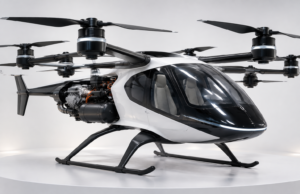
The competitive landscape of the electric vertical takeoff and landing (eVTOL) industry just became significantly more adversarial. Vertical Aerospace, one of the leading developers of passenger electric aircraft, has initiated a patent infringement claim against Archer Aviation, another prominent player in the urban air mobility sector. This legal action marks an escalation in the already intense rivalry between eVTOL manufacturers and signals a critical inflection point for an industry approaching commercial certification and market deployment. The lawsuit underscores how intellectual property protection has become as important as engineering excellence in the race to establish dominant positions in personal air mobility.
The Patent Infringement Claim and Its Significance
Vertical Aerospace’s patent infringement claim against Archer Aviation has sent shockwaves through the eVTOL community. Both companies are among the most advanced developers of electric aircraft for urban air mobility, with each having secured substantial funding and regulatory attention. The specifics of the patent dispute reflect the highly technical nature of eVTOL design, where innovations in aerodynamics, battery systems, propulsion architecture, and structural efficiency determine performance and competitive advantage. Vertical’s legal action suggests that Archer’s aircraft design or manufacturing processes may infringe on one or more patents held by Vertical Aerospace, a claim that carries serious implications for both companies’ business strategies and market timelines.
The timing of this legal challenge is particularly notable, as both companies are in critical phases of their regulatory certification processes with aviation authorities including the FAA. A prolonged patent dispute could delay development timelines, increase legal costs, and distract engineering teams during crucial testing phases. For investors and industry observers, the lawsuit raises questions about the robustness of intellectual property portfolios across the eVTOL sector and whether emerging manufacturers have adequately assessed freedom-to-operate risks before committing billions of dollars to aircraft development programs.
Patent disputes in aerospace and advanced transportation sectors are not uncommon, but this conflict within the eVTOL space signals that the industry has reached a maturity threshold where legal protections for proprietary technology are being actively enforced. This transition from a speculative phase to a competitive one reflects growing confidence that commercial air mobility operations will soon become reality, making technology differentiation and proprietary designs increasingly valuable assets that warrant aggressive legal defense.
Intellectual Property Wars in Urban Air Mobility
The intellectual property landscape for eVTOL technology is extraordinarily complex and crowded. Multiple companies—including Vertical Aerospace, Archer Aviation, Joby Aviation, Lilium, EHang Holdings, and numerous others—have been filing patents related to electric aircraft design, battery management, noise reduction, autonomous control systems, and distributed electric propulsion architectures. These patent portfolios represent years of research and development investment and constitute significant assets in corporate valuations and licensing negotiations. When disputes arise, as they have between Vertical and Archer, they can expose vulnerabilities in how startups navigate the existing patent landscape and develop technologies that may inadvertently overlap with competitors’ intellectual property claims.
The Vertical-Archer dispute likely centers on specific technical innovations rather than broad concepts, as modern patent systems generally protect specific implementations and novel approaches rather than entire product categories. Potential areas of contention could include proprietary designs for electric motor integration, battery pack configurations, avionics systems, structural materials or manufacturing techniques, or aerodynamic features that provide efficiency or safety advantages. Each patent claim would need to demonstrate non-obviousness and a clear technical advantage over prior art, making the strength of Vertical’s allegations a critical factor in determining the lawsuit’s outcome and its broader implications for the industry.
Beyond the Vertical-Archer case, other eVTOL manufacturers are likely monitoring this dispute closely. If Vertical’s patents are found to be valid and infringed, it could establish legal precedent for other IP assertions in the sector. Conversely, if Archer successfully defends against the claims, it might embolden other companies to press forward with designs that sail close to existing patents, assuming they can argue sufficient innovation or differentiation. The resolution of this case will likely influence how aggressively companies enforce their patent portfolios and how defensive newer entrants approach technology development to avoid infringement risks.
Regulatory Certification and Market Dynamics Under Legal Cloud
Both Vertical Aerospace and Archer Aviation are pursuing FAA certification for their aircraft, a process that demands intensive engineering validation, flight testing, safety documentation, and regulatory engagement over an extended timeline. A patent infringement lawsuit adds a significant burden to these companies’ regulatory efforts, requiring executive attention, legal resources, and potentially financial settlements or licensing arrangements that were not originally planned. The uncertainty introduced by patent litigation can also complicate funding rounds, partnership negotiations, and strategic planning for market entry and operational deployment, as investors and potential partners assess the risk profile of companies engaged in active legal disputes.
The presence of patent disputes in the eVTOL sector may also prompt regulatory authorities to scrutinize intellectual property clearance and freedom-to-operate assurances more carefully during certification reviews. Aviation regulators are accustomed to overseeing well-established manufacturers with deep patent portfolios and licensing agreements, but the eVTOL industry comprises many newer, well-funded startups operating in a space with unclear patent ownership and overlapping claims. If a company’s aircraft is found to infringe on competitors’ patents after certification or after operations begin, it could trigger recalls, design modifications, or even regulatory sanctions, making IP clearance an underappreciated aspect of eVTOL certification readiness.
Market timelines are already compressed in urban air mobility, with companies targeting initial commercial operations in the late 2020s. Patent litigation introduces schedule risk that could impact the race to achieve meaningful operational milestones and prove the business model viability of air taxi and urban cargo services. Companies that successfully navigate patent disputes and maintain development momentum may gain competitive advantages by reaching certification and market entry ahead of competitors hampered by legal entanglements. This dynamic could reshape industry consolidation patterns, as stronger companies acquire weaker ones to secure patent portfolios and remove IP threats simultaneously.
Implications for the Broader eVTOL Ecosystem
The Vertical-Archer patent dispute is a watershed moment for the eVTOL industry, signaling a transition from the “build it first” startup mentality to a more mature legal and competitive posture reminiscent of traditional aerospace and automotive sectors. As eVTOL companies scale up, secure more capital, and approach commercialization, they are adopting the legal and protective practices of established industries. This professionalization is healthy for market stability and investor confidence but also introduces friction and potential delays that emerging companies must navigate carefully. Patent disputes are now expected costs of doing business in advanced technology sectors, and eVTOL players must build legal expertise and IP strategy into their corporate operations.
The lawsuit also highlights the importance of due diligence and patent landscape analysis for investors and acquirers entering the eVTOL space. Companies with weak IP positions, poor freedom-to-operate assessments, or exposure to patent litigation risks represent hidden liabilities that could impair valuations or trigger deal terminations. Conversely, companies with strong, defensible patent portfolios, clear licensing agreements, and low litigation risk become more attractive strategic assets. This trend may accelerate consolidation in the sector, as well-capitalized players with strong IP positions acquire smaller competitors or their technologies to de-risk their own patent portfolios and eliminate threats from rivals.
Looking ahead, the eVTOL sector should expect more patent disputes as the industry matures, regulatory clarity improves, and commercial operations approach. Companies must invest in robust patent prosecution, freedom-to-operate analysis, and license negotiations as core elements of their business strategies. Industry consortia and standard-setting organizations may also play a role in establishing clearer IP frameworks and cross-licensing arrangements that facilitate innovation while protecting individual company interests. Ultimately, how the Vertical-Archer dispute and similar conflicts are resolved will shape the competitive structure of urban air mobility for decades to come.
Key Takeaways for the eVTOL Industry
- Patent disputes are becoming competitive tools in the maturing eVTOL sector, where intellectual property differentiation now matches engineering excellence in importance.
- Companies pursuing FAA certification must account for IP litigation risks and freedom-to-operate clearance as critical path items in their regulatory and business timelines.
- Industry consolidation and investor scrutiny of IP positions will likely accelerate as eVTOL manufacturers approach commercial operations and face legal, regulatory, and market pressures simultaneously.
The patent infringement claim filed by Vertical Aerospace against Archer Aviation is far more than a routine legal skirmish; it is a harbinger of the sector’s evolution from a venture-capital-backed innovation race into a mature, competitive industry governed by intellectual property law, regulatory oversight, and market dynamics similar to traditional aerospace. As eVTOL companies continue their march toward certification and commercial deployment, those with strong IP positions, experienced legal teams, and clear freedom-to-operate strategies will be better positioned to navigate the challenges ahead and establish lasting competitive advantages in urban air mobility. The coming years will determine not only who wins the technology race but also who wins the legal and strategic battles that increasingly define success in advanced transportation sectors.