HIGHLIGHTS
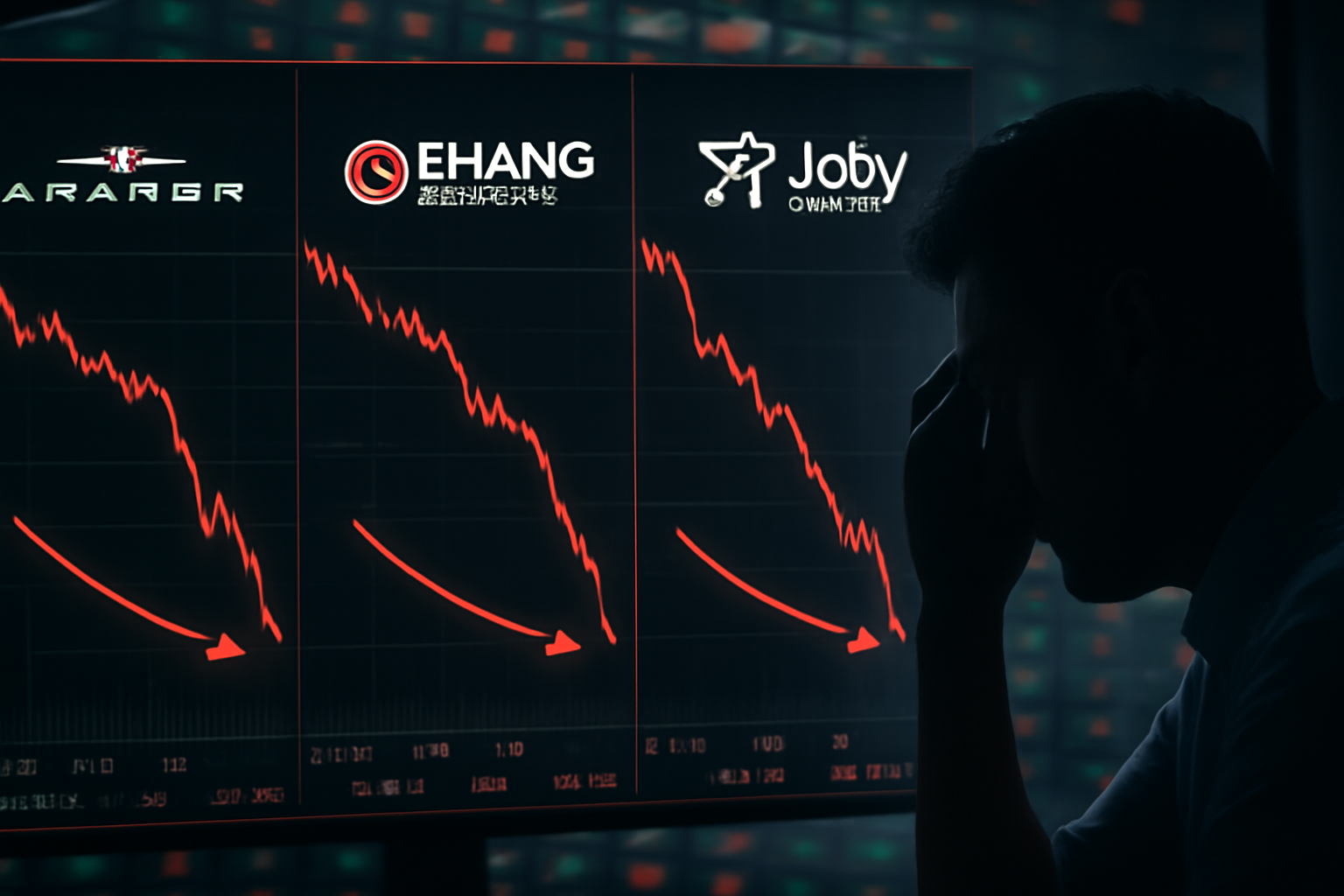
- Archer Aviation dropped 7%, EHang sank 6%, and Joby Aviation fell 4% in a coordinated market downturn affecting the air taxi sector.
- The simultaneous declines across multiple eVTOL leaders signal broader investor concerns about the viability and timeline of commercial air taxi operations.
- Market volatility in the air mobility sector reflects ongoing regulatory uncertainties and delays in achieving profitable certification and deployment milestones.
The air taxi sector experienced a notable market correction on August 20, 2026, as three of the industry’s most prominent eVTOL companies saw their stock prices decline significantly. Archer Aviation led the losses with a 7% drop, followed by EHang Holdings at 6%, and Joby Aviation at 4%. This coordinated downturn signals growing investor concerns about the near-term profitability and operational viability of urban air mobility services, even as these companies advance toward commercial deployment.
Archer Aviation’s Market Setback
Archer Aviation, one of the leading contenders for launching commercial air taxi operations in North America, saw its stock decline 7% as market sentiment shifted toward caution. The company has been working aggressively to complete certification of its Midnight eVTOL aircraft and establish infrastructure for operations in cities like Los Angeles and New York. The stock decline may reflect investor concerns about timelines, regulatory approval uncertainty, or competitive pressures from well-funded rivals.
Archer has secured significant backing from institutional investors and strategic partnerships with aircraft leasing companies, which had buoyed confidence in earlier trading sessions. However, the complexity of securing FAA Part 135 air carrier certification, combined with the operational challenges of launching a new transportation mode, has raised questions among market analysts about when the company can achieve sustainable revenue. The 7% drop suggests some investors may be reassessing their expectations for near-term profitability.
The company’s pre-revenue status and substantial capital requirements for fleet production and infrastructure development make it sensitive to shifts in market sentiment. Any delays in regulatory approval or competitive announcements from rivals could intensify selling pressure, particularly if institutional investors begin rotating capital toward more established transportation sectors.
EHang’s Chinese Market Exposure Risk
EHang Holdings, the Chinese eVTOL manufacturer that has been operating commercial sightseeing flights and cargo operations, experienced a 6% stock decline amid broader concerns about the Asian air mobility market and geopolitical factors affecting China-listed companies. Despite EHang’s operational head start compared to Western competitors, the stock movement reflects investor caution about expansion timelines and regulatory support for commercial air taxi services in Asia.
EHang has secured multiple certifications and conducted demonstration flights for autonomous passenger and cargo operations, positioning it as the closest to sustained commercial revenue among global eVTOL makers. However, the company faces challenges scaling operations internationally and navigating regulatory frameworks outside China. The stock decline may indicate investors are questioning the pace of geographic expansion and the sustainability of current operations in the face of operational costs and safety requirements.
Currency fluctuations, geopolitical trade tensions, and questions about Chinese government support for foreign investment in the sector could all be contributing to the market pressure on EHang. International investors may be reassessing their exposure to Chinese-listed technology companies, even those with demonstrated operational capabilities in their home market.
Joby Aviation’s Valuation Concerns
Joby Aviation, which achieved public listing through a SPAC merger and has been aggressively pursuing California air taxi operations, saw its stock decline 4%—a relatively modest but notable shift that reflects mixed sentiment about the company’s path to commercialization. Joby has been conducting flight tests for its six-passenger eVTOL aircraft and working with regulators on Part 135 certification pathways, but the company remains several years away from commercial operations.
Joby’s post-merger valuation reflected significant investor optimism about the air taxi market’s long-term potential, but the reality of lengthy certification timelines and substantial capital expenditures required for infrastructure development may be causing some reassessment. The stock decline, while smaller in percentage terms than competitors, could suggest investors are becoming more selective about which eVTOL makers they view as likely success stories in a crowded market.
The company’s recent partnerships with military and government agencies have provided some revenue diversification and validation of its technology, but the core air taxi business model remains unproven at commercial scale. A 4% decline may represent rational profit-taking after earlier gains or a shift toward waiting for more concrete milestones before increasing positions.
Broader Sector Headwinds
The simultaneous declines across Archer, EHang, and Joby Aviation point to sector-wide concerns rather than company-specific problems. Key headwinds include regulatory timelines that may be extending beyond initial projections, operational cost structures that could challenge profitability assumptions, and increased competitive intensity as more players enter the market. Investors are becoming more realistic about the time and capital required to establish sustainable air taxi operations.
Safety incidents or regulatory setbacks at any of the major eVTOL manufacturers could have contagion effects across the sector, causing broad-based selling. Additionally, macroeconomic factors—including interest rate levels, travel demand forecasting, and capital allocation toward emerging technologies—can impact investor appetite for pre-revenue companies in the mobility sector. The August 20 market movement may reflect a rotation from high-growth technology stocks to more established aerospace and transportation plays.
The air taxi sector’s dependence on certification milestones, infrastructure development, and regulatory approval means that any delays or disappointing announcements can trigger rapid repricing of valuations. Investors who backed these companies during earlier enthusiasm may be taking profits or de-risking positions as reality sets in about the multiyear path to commercial operations at scale.
What’s Next for eVTOL Investors
The market reaction on August 20 underscores the importance of patience and realistic timelines for investors in the air mobility sector. Companies like Archer, EHang, and Joby are pursuing a massive new transportation market, but the path from prototype to sustainable commercial operations is proving longer and more complex than some early promoters suggested. Regulatory certifications, safety demonstrations, infrastructure buildout, and demand validation all remain critical milestones ahead.
Going forward, eVTOL stock performance will likely be driven by concrete milestones: FAA certification approval, first commercial revenue flights, operational safety records, and unit economics that prove the business model can work. Until these achievements are announced, investors should expect continued volatility as market sentiment swings between optimism about long-term potential and skepticism about near-term viability.
For the air taxi sector to regain investor confidence, companies will need to demonstrate not just technological capability but also a realistic path to profitability. The August declines remind investors that even well-funded, technically advanced eVTOL makers face significant execution risk and market unknowns that can shift sentiment rapidly.
Key Takeaways for Air Mobility Investors
- Major eVTOL makers face cyclical market pressure as investors reassess profitability timelines and regulatory uncertainty.
- Each company—Archer, EHang, Joby—faces unique challenges: certification delays, geographic expansion limits, and pre-revenue financial structures.
- Concrete operational milestones, safety records, and unit economics will determine sector recovery and investor confidence in 2026 and beyond.
The August 20 stock declines in Archer Aviation, EHang Holdings, and Joby Aviation represent a healthy market correction in a sector that has seen substantial hype and early investor enthusiasm. While these companies remain technologically advanced and well-funded, the reality of scaling commercial air taxi operations is proving more demanding than some projections suggested. Investors should monitor regulatory developments, operational milestones, and financial performance closely as the industry works toward the next critical phase of commercialization and market validation.