HIGHLIGHTS
- Vertiport infrastructure is the primary bottleneck limiting eVTOL market expansion—aircraft technology has advanced faster than the required ground infrastructure.
- Individual vertiports cost $50–$150 million; public-private partnerships with diverse revenue streams are essential to bridge investment gaps.
- Strategic placement near transit hubs and international regulatory harmonization are critical for vertiport networks to support commercial eVTOL operations.
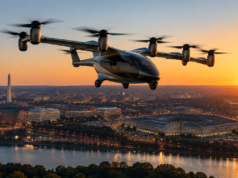
The emergence of electric vertical takeoff and landing aircraft represents a transformative shift in urban transportation, but their success depends on a critical—and often overlooked—piece of infrastructure: vertiports. According to recent analysis from Kings Research, the development and strategic placement of vertiport networks are not merely supportive infrastructure but rather fundamental enablers of eVTOL market expansion. Without adequate vertiport infrastructure, even the most advanced aircraft will struggle to achieve commercial viability and widespread adoption.
The Infrastructure Bottleneck in eVTOL Deployment
The eVTOL industry has made remarkable strides in aircraft design and certification, with leading manufacturers like Joby Aviation, Lilium, and Archer already conducting advanced flight trials. However, this technological progress has exposed a critical gap: the lack of purpose-built vertiport infrastructure. Traditional airports are not suitable for eVTOL operations, as these aircraft require specialized landing pads, energy management systems, and ground support facilities designed specifically for electric vertical mobility.
Kings Research’s analysis highlights that vertiports must serve as integrated transportation hubs that seamlessly connect urban areas with air mobility networks. Unlike conventional heliports, modern vertiports need sophisticated charging infrastructure, passenger processing facilities, noise mitigation systems, and emergency response capabilities. The complexity and cost of developing these facilities have created a chicken-and-egg scenario: airlines are hesitant to order large fleets without operational vertiports, while operators delay construction without confirmed demand.
This infrastructure bottleneck is particularly acute in major metropolitan areas where land scarcity and regulatory complexity compound construction challenges. Cities like New York, Los Angeles, and London are exploring vertiport concepts, but progress remains slow without coordinated government investment and public-private partnerships. The research emphasizes that resolving this bottleneck is essential before eVTOL services can transition from experimental demonstrations to scheduled commercial operations.
Strategic Vertiport Placement and Urban Integration
Effective vertiport networks require strategic planning that extends far beyond simply placing landing pads at convenient locations. Kings Research identifies several key factors that determine vertiport success: proximity to transit hubs, compatibility with existing urban infrastructure, accessibility for ground transportation, and integration with city planning objectives. Vertiports positioned near airports, train stations, and central business districts offer the highest utility and potential for high passenger volumes.
Urban integration also involves addressing community concerns about noise, safety, and visual impact. Modern vertiports must be designed as architecture that complements urban environments rather than appearing as intrusive industrial facilities. Cities like Singapore and São Paulo have begun exploring vertiport designs that incorporate noise-dampening technology, green spaces, and retail amenities. These integrated facilities create mixed-use developments that generate revenue beyond pure air mobility services, improving financial viability.
Kings Research notes that successful vertiport networks will likely follow a hub-and-spoke model, with major vertiports serving as primary transportation nodes and smaller landing zones distributed throughout metropolitan areas. This distributed network approach reduces congestion at central hubs while improving accessibility for passengers in outlying neighborhoods. However, coordinating such networks requires unprecedented collaboration between municipal governments, transportation authorities, and private operators—a challenge that varies significantly across jurisdictions.
Technology and Operational Requirements of Modern Vertiports
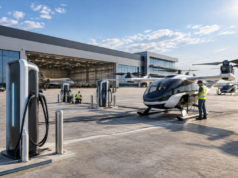
Twenty-first-century vertiports are far more technologically sophisticated than traditional heliports. They must incorporate advanced battery charging systems capable of repowering aircraft between flights, often within 15 to 30 minutes. This requires vertiports to have robust electrical infrastructure with backup power systems and smart grid integration to manage peak demand periods. Kings Research emphasizes that vertiport charging capacity directly constrains eVTOL service frequency and route availability.
Beyond charging, vertiports require integrated air traffic management systems that coordinate takeoffs and landings for multiple aircraft simultaneously. These systems must ensure safe separation distances, manage noise protocols, and communicate with municipal airspace authorities. Weather monitoring stations are essential for real-time assessment of wind speeds, precipitation, and visibility—critical factors for eVTOL safety. Additionally, vertiports need sophisticated passenger processing infrastructure including ticketing, security screening, and baggage handling adapted for air mobility operations.
Emergency response capabilities represent another critical technological requirement. Vertiports must have immediate access to medical facilities, firefighting equipment, and trained personnel capable of handling aircraft incidents specific to eVTOL operations. Kings Research highlights that these safety systems add significant costs to vertiport development but are non-negotiable for regulatory approval and public confidence in air mobility services.
Financial Models and Investment Strategies for Vertiport Development
Developing vertiport networks requires substantial capital investment—estimates suggest individual vertiports may cost between $50 million to $150 million depending on urban location and facility sophistication. Kings Research analysis reveals that traditional business models where operators build and monetize vertiports through landing fees may not generate adequate returns on investment. Instead, successful vertiport economics will likely require diverse revenue streams including passenger fees, aircraft charging services, retail and dining operations, corporate meeting spaces, and ground transportation partnerships.
Public-private partnerships (PPPs) are emerging as the most viable funding mechanism. Governments contribute land and regulatory support while private operators manage construction and daily operations. Joby Aviation’s partnerships with airports and municipalities, along with Lilium’s strategic investments in vertiport development, demonstrate this model in practice. However, Kings Research cautions that PPP success depends on clear regulatory frameworks, transparent risk-sharing agreements, and alignment of public transportation objectives with private profitability requirements.
Investment timing is critical—vertiports built too early risk empty facilities, while delayed construction creates bottlenecks when aircraft become commercially available. Kings Research suggests a coordinated approach where regulatory authorities, aircraft manufacturers, and infrastructure developers align construction timelines. Government subsidies and tax incentives may be necessary to bridge the gap between actual operating costs and revenue projections, particularly during the nascent phase of eVTOL commercialization.
Regulatory Frameworks and Vertiport Certification
The absence of standardized vertiport regulations creates significant uncertainty for infrastructure developers. Aviation authorities including the FAA and EASA are still establishing design standards, operational protocols, and safety requirements specific to eVTOL vertiports. Kings Research emphasizes that clarity in regulatory frameworks is essential before major capital deployment. Developers need to understand exactly what noise limits apply, which building codes govern construction, how air traffic integration will function, and what insurance and liability arrangements are required.
International variation in regulatory approaches compounds these challenges. European vertiport standards may differ from American or Asian requirements, complicating multinational operator strategies. Some jurisdictions treat vertiports as airports requiring extensive certification, while others employ lighter-touch regulations suitable for smaller facilities. This regulatory fragmentation slows vertiport development and increases compliance costs. Kings Research advocates for international harmonization of vertiport standards to accelerate infrastructure deployment and reduce costs for global operators.
Community approval processes also intersect with regulatory frameworks. Noise concerns frequently trigger opposition to proposed vertiport developments, necessitating sound mitigation measures that increase costs and complexity. Regulatory authorities must balance community concerns with eVTOL industry needs, a tension that Kings Research identifies as critical to resolving in major urban centers where vertiports are most needed.
Key Takeaways: Vertiport Infrastructure as an eVTOL Market Catalyst
- Vertiport infrastructure development is the limiting factor for eVTOL market scaling—aircraft technology advances have outpaced the physical infrastructure required for commercial operations.
- Strategic vertiport placement near transit hubs and integration with urban planning creates mixed-use facilities that improve financial viability while enhancing city mobility networks.
- Public-private partnerships funded through diverse revenue streams and coordinated regulatory frameworks are essential to bridging the investment gap and accelerating vertiport deployment across major metropolitan areas.
Kings Research’s analysis concludes that vertiports are not auxiliary infrastructure but rather the primary catalyst for eVTOL market expansion. As aircraft manufacturers move toward commercial certification and service launch, the availability of operational vertiports will determine which markets achieve early success and which face delays. Cities and nations that prioritize vertiport development—through coordinated planning, regulatory clarity, and innovative financing—will capture the substantial economic and transportation benefits of urban air mobility. The next phase of eVTOL growth depends not on additional technological breakthroughs but on building the physical infrastructure that connects innovative aircraft with the passengers and markets they serve.