HIGHLIGHTS
- Jetson’s H1-X moves closer to full FAA certification as one of the first American consumer-focused personal eVTOL aircraft
- Full certification demonstrates the H1-X meets rigorous safety standards for electric vertical takeoff, redundant flight controls, and novel propulsion systems
- Market entry within 1-2 years could catalyze broader adoption of personal air mobility and validate demand for consumer-grade eVTOL vehicles
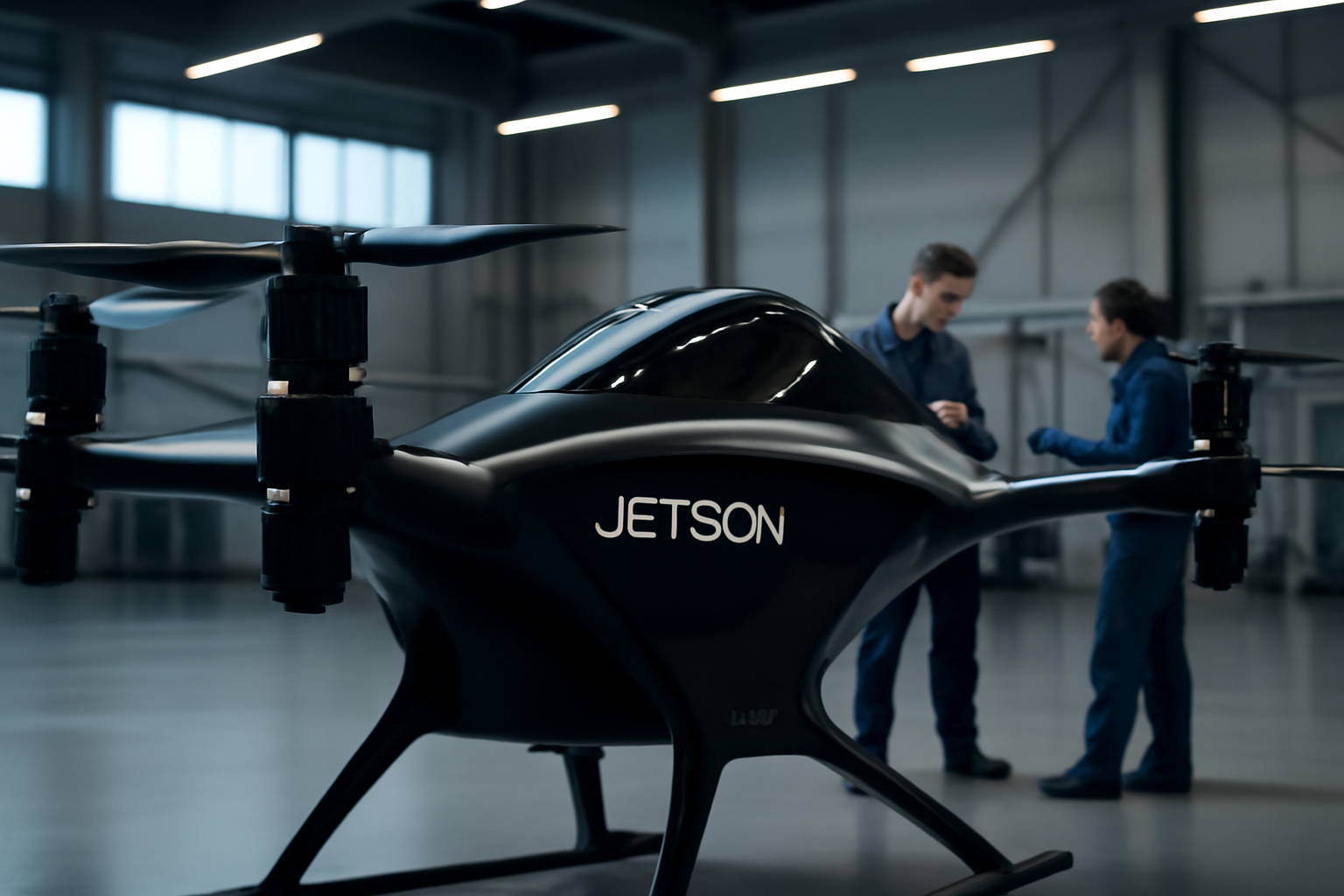
The H1-X, an American personal eVTOL aircraft from Jetson, has reached a critical juncture in its development journey. As regulatory pathways become clearer and certification requirements are systematically addressed, this innovative aircraft is moving one significant step closer to full regulatory approval. This progress marks an important moment for the personal air mobility industry, signaling that American manufacturers are successfully navigating the complex landscape of eVTOL certification and bringing consumer-grade flying vehicles closer to reality.
Understanding the H1-X and Its Design Philosophy
The H1-X represents a new generation of personal eVTOL aircraft engineered specifically for American consumers and market conditions. Unlike many competing designs focused on air taxi operations or logistics, the H1-X was conceived from the ground up as a personal aircraft—a vehicle designed to be operated by individual pilots rather than commercial fleet operators. This distinction shapes every aspect of its engineering, safety systems, and certification pathway.
The aircraft’s design prioritizes accessibility and practical utility for private owners. Its lightweight construction, electric propulsion system, and innovative vertical takeoff and landing capability combine to create a vehicle that could fundamentally change how individuals think about personal transportation. The H1-X’s performance envelope, including range, payload capacity, and endurance metrics, has been optimized for real-world applications that extend beyond experimental demonstration flights.
Jetson’s commitment to the H1-X reflects broader industry confidence that personal eVTOL aircraft represent a viable market segment. While much attention has focused on commercial air taxi services, the personal eVTOL category promises shorter development timelines, more direct regulatory pathways, and immediate market applications for enthusiasts and early adopters.
The Certification Challenge and Regulatory Progress
Certification of eVTOL aircraft in the United States operates under a framework that blends traditional general aviation standards with new special conditions required for electric and hybrid-electric propulsion systems. The Federal Aviation Administration (FAA) has developed special conditions and approval criteria for eVTOL aircraft that address unique safety considerations associated with electric powertrains, battery systems, and novel flight control architectures. The H1-X’s progression through these regulatory checkpoints demonstrates that American manufacturers can meet these elevated safety standards.
Each step toward full certification requires extensive testing, documentation, and demonstration of compliance with dozens of regulatory requirements. The H1-X’s advancement suggests that Jetson has successfully passed critical milestones, including design review gates, performance verification testing, and safety analysis documentation. These steps provide independent verification that the aircraft meets or exceeds all applicable safety and performance standards before it reaches the market.
The regulatory pathway for personal eVTOL aircraft differs meaningfully from that of commercial air taxi services. Personal eVTOLs typically fall under different certification categories that allow for more flexible operational requirements while maintaining robust safety standards. This distinction has proven advantageous for manufacturers like Jetson, who can leverage existing general aviation approval frameworks while adding specific provisions for electric propulsion technologies.
Market Implications and Competitive Positioning
The H1-X’s progress toward certification carries significant implications for the broader personal air mobility market. Jetson is positioning itself as a pioneering company in a segment that many industry analysts believe will mature faster than commercial air taxi operations. If full certification is achieved, the H1-X could become one of the first commercially available personal eVTOL aircraft marketed directly to consumers in the United States, establishing first-mover advantages in brand recognition and market share.
Competing manufacturers pursuing similar goals include established aircraft companies, automotive manufacturers exploring diversification, and specialized eVTOL startups. The race to certification has intensified as companies recognize the substantial market opportunity represented by personal flying vehicles. Jetson’s advancement signals that the company’s engineering approach, regulatory strategy, and business model are aligned with industry standards and customer expectations. Success here could validate the entire personal eVTOL market segment, attracting investment and encouraging additional manufacturers to pursue similar certifications.
Pricing, delivery timelines, and operational costs will ultimately determine market success, but regulatory approval remains the necessary first step. Once the H1-X achieves full certification, Jetson can shift focus toward manufacturing scale-up, supply chain optimization, and customer acquisition—activities that signal an industry transition from experimental development to commercial manufacturing reality.
Technical Specifications and Performance Characteristics
While specific technical details of the H1-X continue to evolve during the certification process, the aircraft is designed to deliver performance metrics aligned with practical personal transportation use cases. Estimated specifications include seating capacity optimized for individual or dual-occupant operations, battery range sufficient for metropolitan transportation needs, and charging infrastructure requirements compatible with existing residential and commercial electrical systems. These parameters reflect engineering decisions made to balance performance, safety, affordability, and practical usability.
The H1-X’s electric propulsion architecture offers significant advantages over traditional combustion engines, including simplified maintenance requirements, dramatically reduced operating costs, inherently lower noise signatures, and zero direct emissions. These benefits address key value propositions that personal air mobility advocates have promoted for years, making electric propulsion not simply an environmental preference but an operational and economic advantage for users.
Safety systems integrated into the H1-X’s design include redundant flight control architectures, ballistic parachute recovery systems, and advanced monitoring systems that continuously verify aircraft health and operational parameters. These systems exceed typical general aviation requirements and reflect lessons learned from international eVTOL development programs and rigorous certification testing protocols.
Timeline and Expected Market Entry
While the exact timeline for full certification remains subject to regulatory review cycles and testing completion schedules, Jetson’s progress suggests that market introduction could occur within timeframes that are aggressive by aerospace standards but realistic given the company’s engineering maturity. Industry observers estimate that full certification could be achieved within one to two years, contingent on successful completion of remaining test protocols and regulatory approval processes.
Market entry will likely follow a measured rollout that prioritizes early adopter communities and geographies with favorable operating conditions and regulatory environments. Jetson may pursue a strategy that begins with limited geographic availability, comprehensive customer training and support infrastructure, and gradual expansion as manufacturing capacity increases and operational experience accumulates. This approach has proven successful for other specialized aviation manufacturers introducing novel aircraft types.
Pre-orders, reservation systems, and customer commitment programs may begin before full certification is complete, allowing Jetson to validate market demand and secure funding for manufacturing facility expansion. Early customers will become ambassadors and case studies that influence broader market adoption and demonstrate real-world operational value of personal eVTOL technology.
Key Takeaways
- The H1-X represents one of the most advanced personal eVTOL aircraft approaches toward FAA full certification, potentially becoming the first consumer-available model in this category.
- Regulatory approval of the H1-X validates Jetson’s engineering standards, safety systems, and compliance framework across dozens of FAA requirements specific to electric vertical takeoff aircraft.
- Market introduction of a certified personal eVTOL aircraft could catalyze the broader commercial adoption of urban air mobility and accelerate development timelines for competing manufacturers worldwide.
The H1-X’s progression toward full certification represents a defining moment for personal air mobility as an industry. Jetson’s success in navigating the complex regulatory environment demonstrates that American manufacturers possess the engineering capability, safety discipline, and business acumen to bring eVTOL aircraft to market. As this milestone approaches, attention will intensify on manufacturing readiness, pricing announcements, and the customer experience frameworks that will determine whether personal air mobility emerges as a genuine transportation category or remains a niche enthusiast application. The H1-X’s journey from concept to certification to market introduction will inform the trajectory of the entire industry for years to come.