HIGHLIGHTS
- Eve’s eVTOL prototype is entering a critical transition phase that accelerates the path toward commercial certification and real-world deployment.
- Brazilian-based Eve is positioning itself as a frontrunner in the personal air mobility revolution, with engineering advances demonstrating viability for urban air transportation.
- This milestone represents a pivotal moment for the eVTOL industry, validating the technical feasibility and commercial potential of electric vertical takeoff vehicles.
Eve Urban Air Mobility, the Brazilian electric vertical takeoff and landing (eVTOL) pioneer, is signaling a momentous shift in its development timeline. The company’s prototype aircraft is advancing toward a critical transition phase that promises to accelerate the commercialization of urban air mobility solutions. As the industry watches closely, this milestone underscores the rapid maturation of eVTOL technology and the tangible progress being made toward making autonomous electric flight a mainstream reality.
Eve’s Strategic Path to Certification
The transition phase Eve’s prototype is entering represents far more than a simple engineering checkpoint. This critical juncture marks the shift from conventional ground-based testing and validation toward demonstrating the aircraft’s capabilities in increasingly demanding operational scenarios. For Eve, this progression is essential for building the evidence base required by aviation regulatory authorities worldwide, including ANAC (Brazilian National Civil Aviation Agency) and eventually international bodies like EASA and the FAA.
Eve’s approach reflects a methodical yet aggressive strategy to achieve type certification. Rather than rushing development, the company is focusing on comprehensive validation of its aircraft systems, including propulsion, control surfaces, battery management, and autonomous flight capabilities. Each phase is designed to demonstrate not only that the aircraft can fly, but that it can do so safely and reliably under a wide range of conditions and emergency scenarios.
The prototype’s advancement also signals that Eve has successfully navigated previous technical hurdles related to electric propulsion scalability, structural integrity, and energy management. These foundational achievements position the aircraft for the next wave of validation testing, where real-world performance data becomes increasingly important for regulatory approval and investor confidence.
Engineering Innovations Driving Progress
Eve’s ability to progress toward the transition phase reflects significant innovations in electric vertical takeoff technology. The company has invested heavily in developing proprietary battery systems, electric motor configurations, and lightweight composite materials that collectively enable sustained flight performance suitable for urban missions. These engineering breakthroughs are not incremental—they represent fundamental advances in how electric power can be distributed and managed across a multi-rotor aircraft platform.
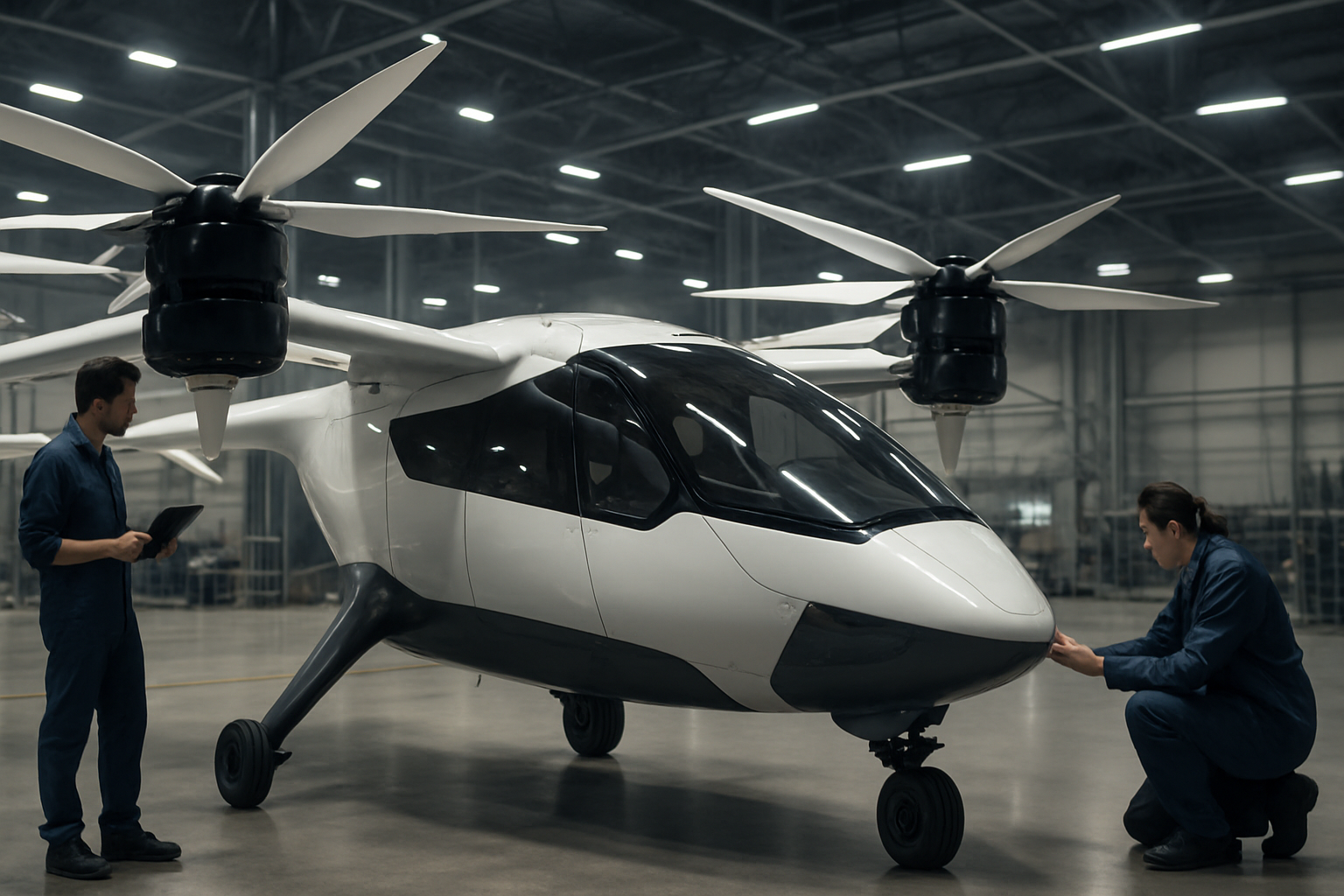
The prototype’s design incorporates distributed electric propulsion, a configuration that offers multiple advantages over traditional helicopter architectures. By spreading motors across the aircraft’s structure, Eve achieves enhanced redundancy, improved efficiency at hover, and better energy management during transition between vertical and horizontal flight modes. This design philosophy has proven effective in earlier development phases and continues to guide engineering decisions as the prototype moves into more demanding test regimes.
Battery technology has emerged as a critical enabler of Eve’s progress. The company’s engineering teams have developed solutions for rapid charging, thermal management, and state-of-charge monitoring that address some of the most pressing challenges in electric aviation. These advances in battery systems extend flight endurance while maintaining the weight margins necessary for a practical urban air vehicle, directly supporting the transition toward demonstration flights and eventual commercial operations.
Regulatory and Certification Pathways Emerging
As Eve advances toward the transition phase, the company is simultaneously engaging with aviation regulators to establish certification pathways tailored for eVTOL aircraft. Traditional certification frameworks were developed for conventional aircraft and do not fully account for the unique characteristics of electric vertical takeoff vehicles. This has prompted regulatory agencies to develop new standards and approval processes, creating both opportunities and challenges for companies like Eve.
The transition phase offers a practical proving ground for these emerging regulatory frameworks. By demonstrating how Eve’s aircraft performs under increasingly realistic operational scenarios, the company provides valuable data that helps regulators refine approval standards. This collaborative relationship between industry and regulators is essential for establishing certification norms that are both technically sound and commercially viable.
Eve’s Brazilian origin provides unique advantages in this regulatory landscape. ANAC has positioned itself as an innovation-friendly regulator, willing to work with manufacturers to develop certification approaches that enable rapid technological advancement while maintaining rigorous safety standards. This regulatory environment may give Eve a competitive advantage in achieving early certification compared to eVTOL developers operating in more traditionally conservative regulatory jurisdictions.
Commercial Implications and Market Impact
The prototype’s advancement toward the transition phase carries significant commercial implications for Eve, its partners, and the broader personal air mobility ecosystem. Airlines and transportation operators are increasingly interested in acquiring early-generation eVTOL aircraft for urban routes, provided they can demonstrate regulatory approval and operational maturity. Eve’s progress moves the company closer to being able to offer commercially viable aircraft to this emerging market.
The timing of Eve’s transition phase is particularly significant given the competitive landscape in eVTOL development. Numerous companies worldwide are pursuing similar technologies, but few have demonstrated the kind of sustained engineering progress that Eve has achieved. This milestone strengthens Eve’s market position and enhances its credibility with potential customers, investors, and strategic partners who are evaluating the viability of eVTOL technology for their operations.
Looking beyond immediate commercial considerations, Eve’s progress contributes to validating the broader concept of personal air mobility as a practical transportation solution. Each successful milestone in the development of certified eVTOL aircraft reduces perceived risk in the marketplace and encourages investment in complementary infrastructure, services, and technologies. This positive momentum benefits not only Eve but accelerates the entire industry’s transition from concept to commercial reality.
Key Takeaways from Eve’s Prototype Transition
- Eve’s prototype transition marks a decisive shift from laboratory validation to real-world demonstration, bringing commercial eVTOL operations measurably closer to reality.
- Brazilian regulatory support and Eve’s proprietary innovations in distributed propulsion and battery technology position the company as a leading contender in the global eVTOL market.
- This milestone reinforces investor and operator confidence in electric vertical takeoff technology, potentially unlocking capital and partnerships that accelerate industry-wide commercialization.
Eve Urban Air Mobility’s prototype approaching its critical transition phase represents a defining moment for the eVTOL industry and personal air mobility broadly. The company has successfully transformed conceptual designs and engineering principles into a functioning aircraft that is now ready for the rigorous validation required before commercial certification. As the prototype advances through this pivotal phase, the entire aviation and transportation sectors will be watching closely—not just to see if Eve succeeds, but because Eve’s success or failure will fundamentally shape how quickly electric vertical takeoff technology transforms global urban transportation. The new dawn for personal air mobility may be closer than many anticipated, with Eve’s methodical engineering progress lighting the path forward.