HIGHLIGHTS
- Dewu Additive secures tens of millions of yuan in pre-Series A funding, validating 3D printing as critical infrastructure for eVTOL manufacturing scalability
- Additive manufacturing dramatically reduces production costs and lead times while enabling optimized component geometry impossible with traditional manufacturing
- Chinese investment in eVTOL supply chain signals strong market momentum and positions China as a global manufacturing hub for personal air mobility
The personal air mobility industry is experiencing a manufacturing revolution, and Dewu Additive’s recent pre-Series A funding round demonstrates the critical role additive manufacturing will play in the future of electric vertical takeoff and landing (eVTOL) aircraft. This significant capital injection reflects investor confidence in 3D printing technologies as essential enablers for rapid prototyping, cost reduction, and scalability in the burgeoning eVTOL sector.
Additive Manufacturing as a Game-Changer for eVTOL Development
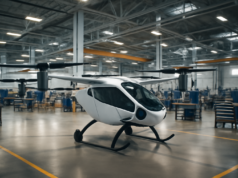
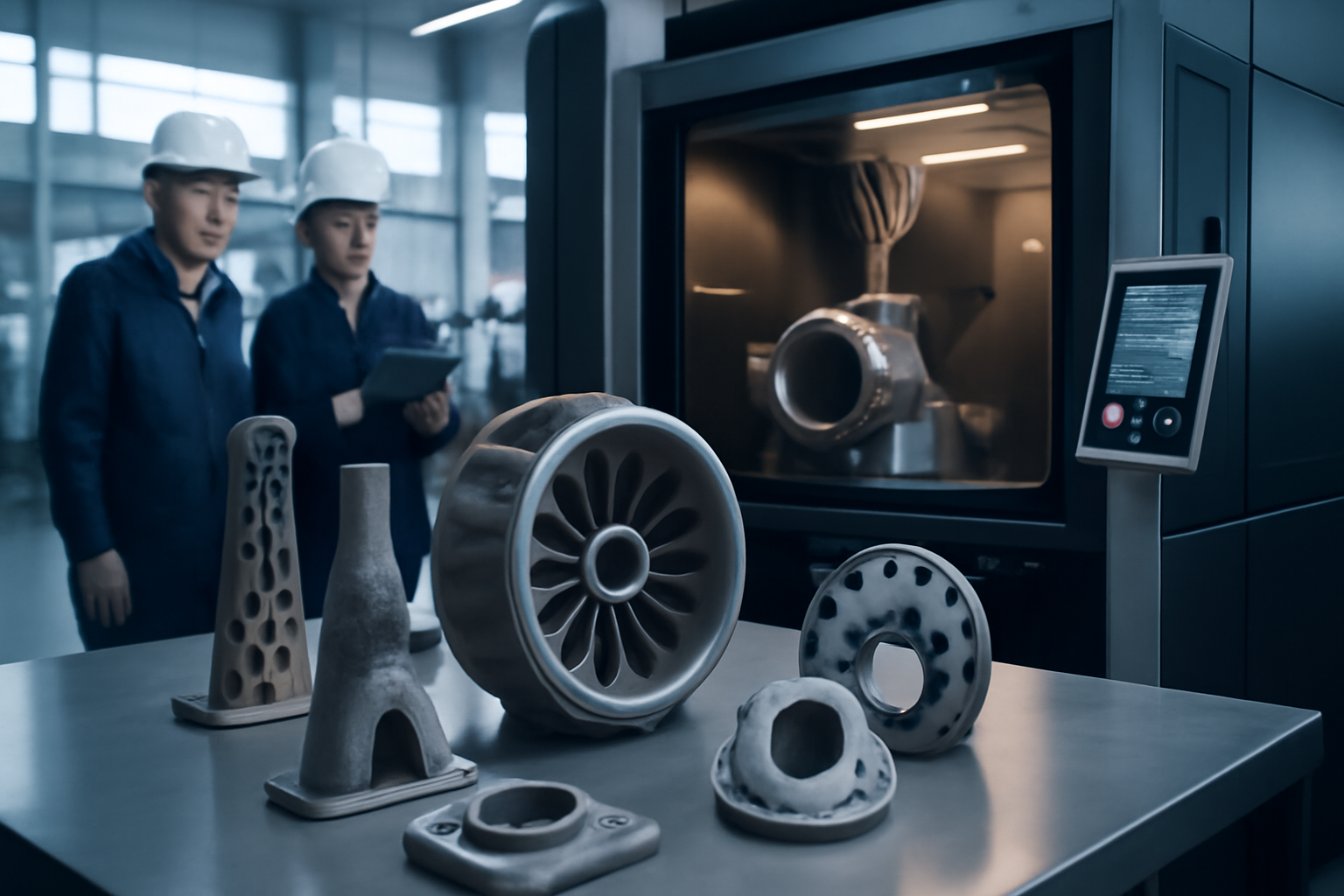
Traditional aircraft manufacturing relies on subtractive processes and assembly-heavy workflows that increase production timelines and costs. 3D printing technology offers a fundamentally different approach, enabling manufacturers to produce complex components—such as engine housings, structural brackets, and internal ducts—in a single operation. For eVTOL developers, this capability is transformative, as it allows for rapid iteration and testing of new designs without the overhead of conventional tooling and machining.
Dewu Additive’s funding success underscores the industry’s recognition that additive manufacturing is no longer a niche application but rather a central component of competitive aircraft production. The company’s expertise in 3D printing positions it as a supplier capable of supporting multiple eVTOL manufacturers who are racing to achieve certification and commercial deployment. By securing significant pre-Series A capital, Dewu has validated that investors see substantial market potential in this emerging supply chain.
The timing of this funding round is particularly strategic. As eVTOL programs advance from prototype phases toward production certification, the need for reliable, scalable manufacturing partners becomes urgent. Dewu Additive is positioning itself at the intersection of two rapidly growing markets: advanced manufacturing and personal air mobility, creating compelling investment thesis for venture capital and strategic investors.
Cost Reduction and Production Efficiency Benefits
One of the most compelling advantages of 3D printing for eVTOL manufacturers is the potential for dramatic cost reduction. Conventional manufacturing processes require expensive molds, dies, and fixtures, while additive manufacturing minimizes material waste and reduces labor-intensive assembly steps. For lightweight aircraft where every gram matters, 3D printing allows engineers to optimize component geometry for strength-to-weight ratios in ways that traditional manufacturing simply cannot achieve.
Dewu Additive’s pre-Series A funding enables the company to expand its production capacity and invest in next-generation printing technologies capable of handling larger components and higher-throughput operations. This scaling is essential as eVTOL manufacturers move beyond limited pilot production runs toward regional manufacturing networks. The ability to produce mission-critical components quickly and at reduced cost directly translates to more affordable air taxi and delivery drone services for end users.
The financial boost also allows Dewu to develop proprietary materials and processes optimized specifically for aviation applications. eVTOL components face unique demands—high strength-to-weight ratios, thermal stability, certification compliance, and reliability in demanding operational environments. A well-capitalized 3D printing firm can invest in R&D to tailor additive manufacturing solutions to these specialized requirements, creating competitive advantages for both the printing company and its aircraft manufacturer customers.
Investment Momentum in the eVTOL Supply Chain
Dewu Additive’s funding is part of a broader wave of investment flowing into the eVTOL ecosystem. While much attention focuses on aircraft manufacturers and air taxi operators, the supply chain—including propulsion systems, batteries, avionics, and now manufacturing infrastructure—is attracting substantial capital. This diversification of funding sources strengthens the entire industry, as success depends on multiple innovation fronts advancing simultaneously.
Chinese investors and firms are playing an increasingly prominent role in personal air mobility development. Dewu Additive’s pre-Series A success reflects confidence from Chinese venture capitalists and strategic investors in the long-term viability of this market. As China positions itself as a manufacturing hub for eVTOL and urban air mobility solutions, investments in advanced manufacturing capabilities become strategic competitive moves on the global stage.
This capital influx also signals that the eVTOL market is moving beyond speculative hype into legitimate industrial investment territory. When established venture capital firms commit “tens of millions of yuan” to a specialized manufacturing supplier, it suggests serious conviction that demand for eVTOL aircraft will materialize and scale within the next 5-10 years. Such investments provide validation for the entire ecosystem, encouraging further development and regulatory progress.
Regulatory and Scalability Implications
As eVTOL aircraft approach regulatory certification, manufacturing capability and quality assurance become paramount. Aviation authorities, including EASA and FAA, require demonstrated production consistency, traceability, and compliance with stringent safety standards. Dewu Additive’s expanded funding enables the company to invest in quality management systems, testing infrastructure, and certifications that will make it an approved supplier for regulated aircraft manufacturing.
The availability of certified, scalable 3D printing solutions reduces a major barrier to eVTOL commercialization. Without reliable manufacturing partners capable of producing thousands of components per year, eVTOL programs face severe constraints on production ramp-up. By securing capital to expand operations, Dewu Additive helps remove this bottleneck, enabling multiple aircraft programs to move toward commercial scale simultaneously.
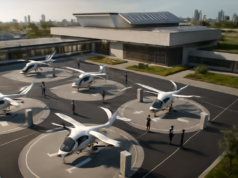
The company’s funding also facilitates the development of distributed manufacturing networks, where 3D printing facilities can be established in different regions to reduce logistics costs and lead times. This geographic flexibility is crucial for a globally dispersed eVTOL ecosystem, where regional air taxi networks may require locally manufactured components to minimize supply chain dependencies and support rapid market scaling.
Key Takeaways: Dewu Additive’s Impact on eVTOL Manufacturing
- Dewu Additive’s tens-of-millions yuan pre-Series A funding demonstrates investor confidence in 3D printing as essential to eVTOL scalability and cost reduction
- Additive manufacturing enables rapid prototyping, optimized component geometry, and dramatic waste reduction compared to traditional aircraft production methods
- Chinese investment in eVTOL supply chain infrastructure signals serious market momentum and positions China as a competitive manufacturing hub for personal air mobility
The convergence of advanced manufacturing and personal air mobility represents one of the most exciting industrial transitions of the next decade. Dewu Additive’s successful funding round is a crucial milestone in this journey, providing the capital and validation needed to transform 3D printing from a laboratory novelty into the backbone of commercial eVTOL production. As this manufacturing revolution unfolds, companies and investors who position themselves at the intersection of these two transformative technologies stand to capture enormous value while enabling the future of urban and regional air transportation.