HIGHLIGHTS
- Joby Aviation’s EV drones are becoming the fastest airport transport option for NYC travelers, cutting commute times dramatically.
- Air taxis promise to reduce ground traffic congestion and provide an emission-free alternative to traditional airport transfers.
- 2026 marks a pivotal year for urban air mobility commercialization, with New York City emerging as a global testbed for PAM infrastructure.
The future of airport transportation is taking flight. Joby Aviation’s revolutionary electric vertical takeoff and landing (eVTOL) aircraft—commonly referred to as air taxis—are poised to become the quickest way to reach New York City’s major airports. As urban congestion worsens and travelers demand faster commute solutions, Joby Aviation’s EV drones represent a paradigm shift in how millions of people move through metropolitan areas. With successful test flights over the NYC skyline and growing regulatory approval, the era of practical air taxi service is no longer theoretical; it’s becoming reality.
Joby Aviation’s Path to NYC Dominance
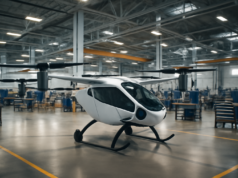
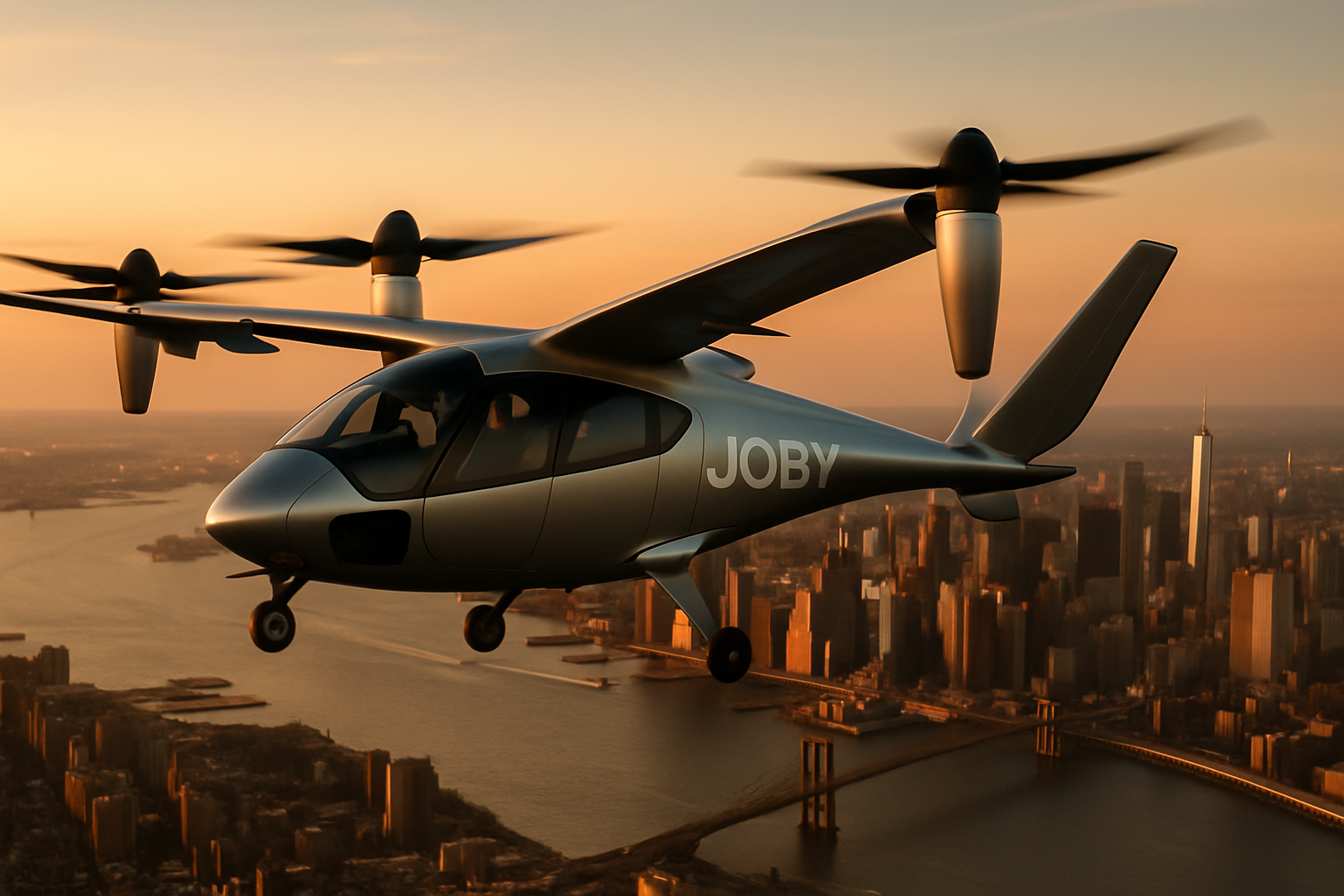
Joby Aviation has spent years developing the technology and securing the regulatory framework necessary to operate commercial air taxi services in America’s most demanding airspace. The company’s S4 aircraft, an advanced eVTOL platform, has undergone rigorous testing and certification processes to meet Federal Aviation Administration (FAA) standards. With sleek lines, electric propulsion systems, and vertical takeoff capabilities, the S4 represents the cutting edge of personal air mobility innovation. Flying over the NYC skyline demonstrates both technical capability and operational readiness in one of the world’s most complex airspaces.
The choice to launch operations in New York City is strategic and symbolic. NYC’s three major airports—JFK, LaGuardia, and Newark—collectively serve over 130 million passengers annually. Ground transportation to these facilities is notoriously congested, with travelers facing unpredictable delays, high taxi fares, and environmental emissions. Joby Aviation’s air taxi service offers a direct, emission-free alternative that can potentially reduce travel times from 45-90 minutes via ground transport to just 5-10 minutes by air.
Joby Aviation’s business model focuses on premium customer segments first—business travelers and time-sensitive passengers willing to pay a premium for speed and reliability. Initial operations will connect Manhattan and other city centers directly to airport terminals, creating an exclusive service that fundamentally changes how people perceive airport commutes. As the technology scales and demand increases, pricing is expected to become more competitive, eventually democratizing air taxi access across broader customer demographics.
The Technology Behind EV Drones
Modern EV drones differ fundamentally from traditional helicopters in design, operation, and environmental impact. Joby’s aircraft utilizes distributed electric propulsion—multiple electric motors driving independent propellers—which provides superior efficiency, redundancy, and noise reduction compared to conventional rotorcraft. The battery-electric architecture eliminates fossil fuel combustion entirely, producing zero direct emissions and dramatically reducing operating costs over the aircraft’s lifetime. Each S4 can carry one pilot and four passengers, with a cruising speed of 120 mph and a range sufficient for repeated airport shuttle flights without recharging.
The engineering required to achieve practical commercial air taxi performance is substantial. Battery technology has improved dramatically, enabling longer flight times and heavier payloads than previously possible. Joby’s aircraft incorporates advanced materials, electric motor designs, and power management systems developed specifically for eVTOL operations. The distributed architecture means that single-motor failure doesn’t compromise flight safety—remaining motors can safely land the aircraft. This redundancy, combined with autonomous backup systems, makes electric drones operationally safer than many assume.
Noise reduction is another critical advantage of EV drones over conventional helicopters. Traditional helicopter noise reaches 85-90 decibels and disrupts neighborhoods below flight paths. Joby’s electric systems produce approximately 70 decibels at cruise altitude—comparable to a busy street but significantly quieter than helicopter operations. This noise profile opens urban airspace for operations over residential and commercial areas that would reject helicopter services, fundamentally expanding the viability of air taxi networks in dense metropolitan environments.
Regulatory Framework and Operational Readiness
Flying commercial aircraft over Manhattan requires extraordinary regulatory clearance and safety certification. The FAA has implemented a rigorous approval process for eVTOL operators, requiring comprehensive testing, pilot training, maintenance protocols, and insurance coverage. Joby Aviation has systematically worked through this certification process, securing Special Federal Airworthiness Certification (SFAC) and operating under strict conditions that will be gradually expanded as operational data accumulates. Each test flight over the NYC skyline contributes to the safety case and demonstrates regulatory compliance to federal authorities.
The regulatory environment is evolving rapidly in response to commercial pressure from companies like Joby, Archer, Lilium, and others developing air taxi platforms. The FAA has established the Unmanned Aircraft System Traffic Management (UTM) framework to coordinate eVTOL operations in shared airspace, preventing conflicts with helicopters, fixed-wing aircraft, and other airborne assets. New York City, in particular, has been designated as a priority operational zone for air taxi commercialization, with dedicated airspace corridors and landing zones being designated for eVTOL operators. This governmental support accelerates the timeline from experimental flights to regular passenger operations.
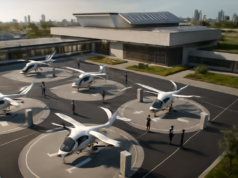
Ground infrastructure is being developed in parallel with regulatory approval. Vertiports—specialized landing facilities designed for eVTOLs—are being planned and constructed at strategic locations throughout NYC. These facilities will feature charging stations, passenger lounges, and integration with existing ground transportation networks. Unlike traditional airports requiring vast acreage, vertiports can be built on rooftops, parking structures, or dedicated urban sites, requiring minimal space while integrating seamlessly into city infrastructure. This efficiency makes vertiport deployment feasible in dense urban environments where land availability is constrained.
Market Impact and Urban Mobility Transformation
The emergence of commercial air taxi services will fundamentally reshape urban transportation networks. Airport access represents just one application—Joby Aviation and competitors are exploring intercity routes, corporate shuttle services, emergency medical transport, and leisure tourism applications. However, the airport connection market is the obvious entry point due to proven demand, regulatory urgency, and pricing tolerance from time-sensitive business travelers. A functioning air taxi network could reduce congestion on roads leading to airports by 10-15% as premium travelers shift to aerial transport.
Broader urban mobility benefits extend beyond airport applications. As air taxi networks mature, they could alleviate congestion on critical ground routes, reduce total transportation emissions, and improve last-mile connectivity for intercity rail and public transit systems. Ride-sharing companies and traditional taxi operators will face competitive pressure, requiring adaptation and integration with air-based transport options. Insurance and liability frameworks are evolving to accommodate air taxi operations within traditional urban transportation systems, creating new regulatory categories and risk assessment models.
Employment opportunities will emerge across manufacturing, maintenance, operations, and passenger services sectors. Joby Aviation and competitors will need pilots, mechanics, ground operations staff, and customer service personnel—potentially creating thousands of skilled jobs in NYC and other metropolitan areas. Existing aviation workforce expertise from commercial airline operations, helicopter services, and maintenance facilities can be retrained and deployed into eVTOL operations, creating natural pathways for workforce development and economic benefit distribution.
Challenges and Next Steps
Key Technical and Operational Considerations
- Battery Performance in Extreme Weather: Winter operations, thunderstorms, and temperature extremes require additional certification and operational constraints that may limit year-round availability.
- Vertiport Infrastructure Cost: Building sufficient vertiport capacity across NYC requires hundreds of millions in investment, with unclear funding sources and private sector willingness to finance.
- Public Acceptance and Noise Concerns: Despite lower noise profiles than helicopters, some neighborhoods may resist repeated eVTOL operations overhead, creating potential political opposition to air taxi expansion.
The path forward requires continued collaboration between Joby Aviation, regulators, city planners, and airport operators to ensure that air taxi commercialization happens safely, sustainably, and equitably. Environmental benefits are significant only if batteries are charged with renewable energy and operational efficiency is maintained over decades of service. Pricing must eventually become accessible to broader passenger populations, not remain an exclusive luxury service. These challenges are surmountable but require intentional policy and investment decisions by stakeholders across the aviation and transportation sectors.
Joby Aviation’s EV drones flying over the NYC skyline represent more than technological achievement—they symbolize a fundamental shift in how modern cities can approach transportation challenges. As 2026 progresses, successful passenger operations will inspire additional cities worldwide to develop air taxi infrastructure and services. The question is no longer whether air taxis will arrive, but how quickly cities can adapt to accommodate them. New York City is positioned at the forefront of this transformation, becoming a global model for personal air mobility integration and a catalyst for the future of urban transportation.