HIGHLIGHTS
- Boeing’s strategic backing positions Archer Aviation as a major player in the competitive eVTOL market with enhanced credibility and resources
- Archer’s NYSE listing (ACHR) provides transparency and growth capital to accelerate commercialization of electric urban air mobility solutions
- This partnership demonstrates how legacy aerospace giants are investing in next-generation air mobility to reshape urban transportation infrastructure
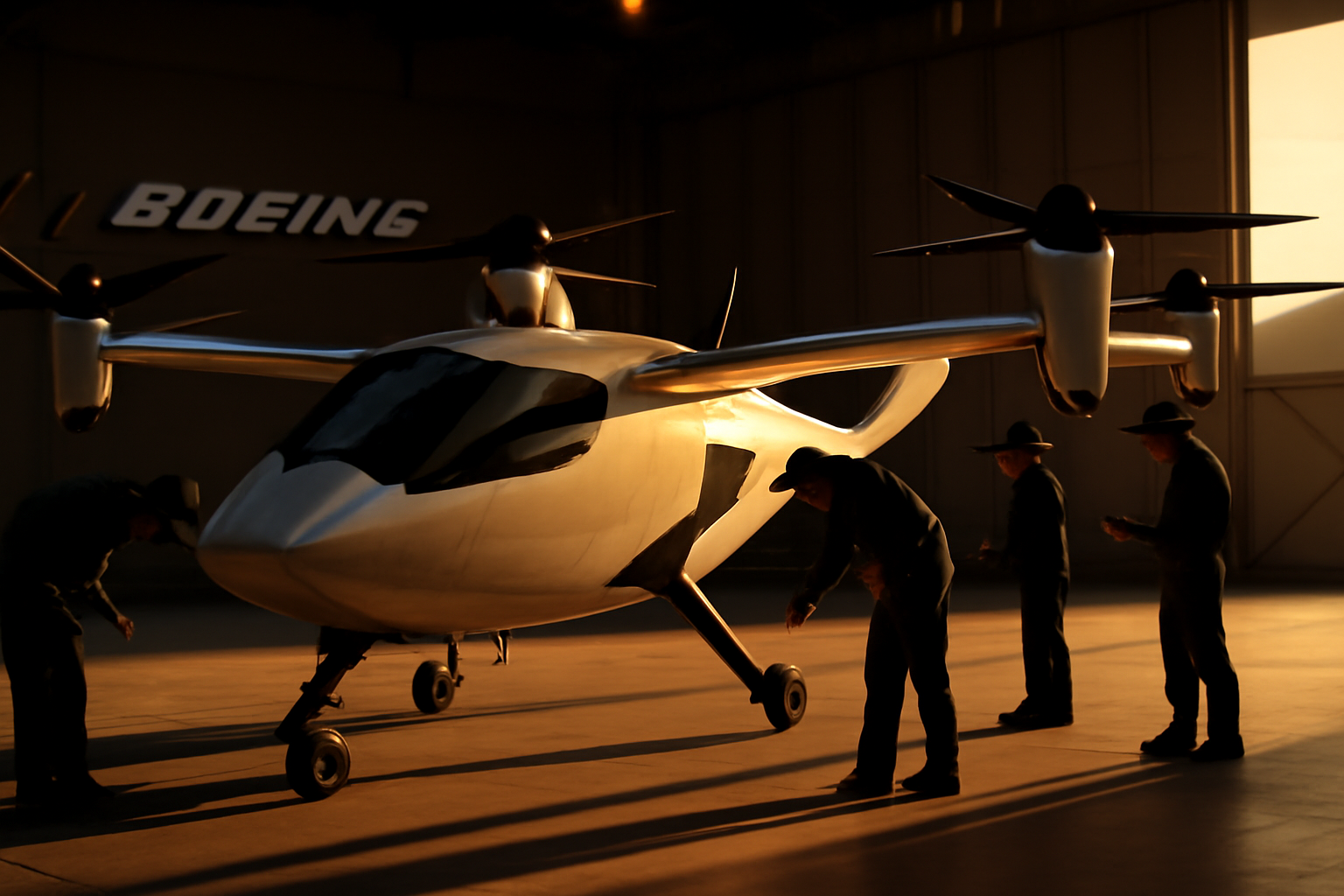
In a significant development for the electric vertical takeoff and landing (eVTOL) industry, Archer Aviation (NYSE:ACHR) has attracted substantial backing from Boeing, one of the world’s most influential aerospace manufacturers. This strategic partnership signals growing confidence in urban air mobility solutions and raises critical questions about how such collaborations could reshape transportation infrastructure in major cities worldwide. With Boeing’s engineering expertise and Archer’s innovative platform, this partnership represents a watershed moment for the commercialization of electric aircraft technology.
Boeing’s Strategic Investment in Urban Air Mobility
Boeing’s decision to back Archer Aviation underscores the aerospace industry’s conviction that urban air mobility is not a distant fantasy but an imminent commercial reality. As traditional aviation faces pressure to reduce carbon emissions and adapt to evolving urban transportation needs, legacy manufacturers are recognizing that early-stage investments in eVTOL companies can position them competitively in this emerging market. Boeing’s involvement brings manufacturing scale, regulatory expertise, and established relationships with government agencies—assets that are invaluable for moving from prototype to production aircraft.
The partnership also reflects Boeing’s broader strategy to diversify beyond commercial aircraft. By backing Archer, Boeing gains exposure to a high-growth segment while maintaining optionality in how it might ultimately participate in urban air mobility. Whether through direct collaboration, technology licensing, or acquisition, Boeing’s financial commitment demonstrates that the aerospace giant is hedging its bets on the future of urban transportation.
Furthermore, Boeing’s backing enhances Archer’s credibility with regulators, investors, and potential customers. When a company with Boeing’s reputation and legacy endorses a technology platform, it signals that the underlying concept has withstood rigorous scrutiny. This credibility advantage is particularly crucial in the aerospace sector, where safety certifications and regulatory approvals represent the primary obstacles to market entry.
Archer Aviation’s Trajectory and Market Position
Archer Aviation’s NYSE listing (ticker: ACHR) already represented a milestone for the eVTOL industry, providing public market transparency and establishing a clear valuation benchmark for competing companies. With Boeing’s backing now secured, Archer’s market position is further solidified. The company can leverage this partnership to accelerate aircraft development, expand its talent pool, and scale manufacturing capabilities—all of which are essential for meeting projected demand timelines.
The company’s eVTOL platform has been designed specifically for urban and regional air mobility applications, targeting routes that are too long for ground transportation but too short for conventional aircraft to operate economically. By focusing on this “sweet spot” in the market, Archer addresses a genuine transportation gap while positioning itself to capture a significant share of the emerging air mobility economy.
Archer’s operational model emphasizes sustainability, with fully electric propulsion systems that eliminate direct emissions and reduce noise pollution—key advantages in densely populated urban environments where noise and air quality are major public concerns. This environmental positioning also aligns with regulatory trends favoring zero-emission technologies, giving Archer a structural advantage as governments implement stricter environmental standards.
The Broader Implications for Urban Air Mobility
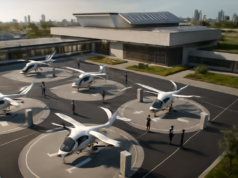
Boeing’s investment in Archer Aviation signals that major aerospace companies are now committed to supporting the infrastructure necessary for urban air mobility to become mainstream. This includes not just aircraft manufacturing, but also the development of vertiport networks, traffic management systems, and charging infrastructure. Boeing’s involvement suggests that comprehensive ecosystem development—not just individual aircraft production—is being taken seriously by industry leaders.
The partnership also highlights the consolidation trend expected in the eVTOL industry. As regulatory hurdles become clearer and commercialization timelines compress, weaker players may struggle to compete against well-backed companies like Archer. Boeing’s endorsement could tip the competitive balance, making Archer a default choice for airlines, ride-sharing platforms, and other operators seeking to enter the urban air mobility market.
Additionally, Boeing’s backing may catalyze faster regulatory approvals for Archer’s aircraft. The FAA and international aviation authorities are more likely to prioritize certification processes for manufacturers backed by established aerospace leaders, as this reduces perceived risk and signals that products have been subject to rigorous internal review standards. This certification acceleration could compress the timeline from prototype to commercial service by years.
Challenges and Critical Uncertainties
Despite the optimism surrounding this partnership, significant challenges remain. The eVTOL market still faces substantial regulatory uncertainty, particularly regarding airspace management, pilot training requirements, and safety certification standards. While Boeing’s backing accelerates certain processes, these regulatory questions ultimately lie with government agencies, not private companies.
Cost remains another critical variable. Current eVTOL aircraft prototypes are expensive to manufacture, and scaling production while maintaining cost-efficiency is a formidable engineering and supply chain challenge. Operating costs for electric aircraft also depend heavily on electricity pricing and battery technology improvements—factors outside Archer’s direct control. Consumer adoption will ultimately depend on whether urban air mobility services can achieve price competitiveness with ground-based alternatives.
Market demand is also not guaranteed. While urban congestion is a real problem, consumer willingness to pay premium prices for air transportation remains uncertain. Archer and Boeing will need to demonstrate that urban air mobility solves genuine transportation problems more effectively than incremental improvements to ground-based transit systems.
Key Uncertainties and Takeaways
- Regulatory approval timelines remain unpredictable despite Boeing’s industry influence and manufacturing expertise
- Economic viability depends on achieving manufacturing scale and cost reductions that have not yet been demonstrated at commercial production levels
- Competitive dynamics could shift rapidly as other eVTOL companies secure backing from major aerospace firms or automotive manufacturers
In conclusion, Boeing’s backing of Archer Aviation represents a pivotal moment for the urban air mobility industry. This partnership combines the innovative spirit of a lean eVTOL startup with the manufacturing capabilities and regulatory expertise of a global aerospace leader. While significant challenges remain—from regulatory approvals to cost optimization to consumer adoption—the involvement of a company as consequential as Boeing signals that urban air mobility has transitioned from speculative venture to mainstream aerospace priority. As this partnership unfolds, the eVTOL industry and the broader aviation community will be watching closely to see whether Archer and Boeing can transform the vision of electric urban air mobility into commercial reality. For industry observers, investors, and urban planners, this collaboration offers a compelling case study in how established and emerging companies can combine forces to reshape transportation infrastructure for the 21st century.