
HIGHLIGHTS
- Governor DeSantis projects operational eVTOL aircraft could be flying in Florida by 2027, establishing the state as a potential national leader in urban air mobility
- The ambitious timeline requires federal FAA certification, vertiport construction, airspace integration, and pilot training—all coordinated between state and federal regulators
- Florida’s early adoption of eVTOL infrastructure could generate billions in economic activity and position the state as the aerospace hub for next-generation transportation
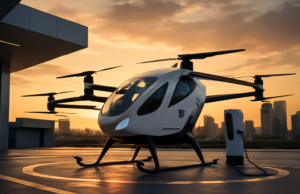
Governor Ron DeSantis has made a bold prediction about Florida’s future in personal air mobility, declaring that operational flying cars could take to the skies across the state by 2027. This announcement signals significant momentum in eVTOL adoption and regulatory framework development, positioning Florida as a potential leader in the emerging urban air mobility sector. The governor’s statement reflects growing confidence in the technological readiness and operational viability of vertical takeoff and landing aircraft, even as the industry navigates complex certification and infrastructure requirements nationwide.
Florida’s Regulatory Momentum in Urban Air Mobility
Florida has been actively positioning itself as a hub for aviation innovation and aerospace development for decades. With this new directive, the state is signaling its commitment to embracing next-generation transportation technologies. The regulatory environment in Florida, coupled with its diverse geography spanning urban centers like Miami and Orlando to sprawling metropolitan areas, makes it an ideal testing ground for eVTOL operations at scale.
DeSantis’s 2027 timeline suggests that state-level coordination with federal aviation authorities like the FAA is already well underway. Florida likely recognizes the economic opportunity that comes with being an early adopter—establishing infrastructure, manufacturing capabilities, and operational protocols ahead of other states could position the region as a national leader in the eVTOL ecosystem.
The announcement also indicates that Florida may be developing streamlined approval pathways for eVTOL operators, potentially working with manufacturers to establish vertiports and air corridors in major metropolitan areas. Early adoption of such infrastructure could create competitive advantages for companies choosing to base operations in Florida, from logistics and medical transport to luxury urban mobility services.
Technical Readiness and eVTOL Development Timeline
For flying cars to be operational by 2027—just over a year away from this August 2026 announcement—multiple companies must be in advanced stages of certification and real-world testing. Several established manufacturers including Joby Aviation, Lilium, Archer Aviation, and Vertical Aerospace have been conducting flight trials and working toward Part 135 certification from the FAA, which would allow commercial passenger operations.
The compressed timeline suggests that DeSantis’s government is confident in the maturity level of current eVTOL platforms. These aircraft have demonstrated vertical takeoff and landing capabilities, electric propulsion systems with sufficient battery technology, autonomous or piloted flight operation, and safety protocols comparable to traditional helicopters. Battery improvements and motor efficiency gains over the past several years have made the 2027 target increasingly feasible from an engineering standpoint.
However, operational readiness extends beyond just having certified aircraft. Vertiport infrastructure, ground support systems, air traffic management integration, pilot training programs, and maintenance facilities must all be established. Florida’s announcement likely encompasses coordination across these multiple domains to ensure comprehensive readiness rather than simply aircraft availability.
Infrastructure and Economic Implications
Implementing operational eVTOL services by 2027 requires significant infrastructure development across Florida. Major urban centers like Miami, Tampa, and Orlando would need vertiports—dedicated takeoff and landing facilities that integrate with existing transportation networks. These facilities represent substantial capital investment but also generate economic activity through construction, operations, and service jobs.
The economic impact extends to aircraft manufacturing, maintenance facilities, battery production and recycling, and technology integration. Companies establishing supply chains and operational bases in Florida ahead of the 2027 launch would create high-skilled employment opportunities. Additionally, tourism and medical transport services—natural early use cases for eVTOL aircraft—could generate significant revenue and efficiency improvements for the state’s economy.
Miami’s position as a global business hub and tourism destination makes it particularly suited for premium eVTOL services. A working demonstration of commercial flying car operations in Florida could accelerate adoption nationwide, establishing the state as the center of American urban air mobility innovation and attracting additional investment from aerospace and technology companies.
Regulatory Challenges and Federal Coordination
While DeSantis’s timeline demonstrates state-level ambition, actual eVTOL operations remain under FAA jurisdiction. The federal agency must complete certification of specific aircraft models, establish operating rules for urban airspace, and coordinate with air traffic control systems. States cannot unilaterally authorize commercial aviation operations, but can facilitate infrastructure development and policy coordination that removes barriers to deployment.
Florida’s announcement suggests active coordination with federal regulators who may also recognize the political and economic benefits of enabling eVTOL operations in a major state. The FAA has been moving toward Part 135 certification for eVTOL operators and is developing standards for urban air mobility operations. A successful Florida launch in 2027 would validate these federal frameworks and potentially accelerate approval timelines for other states and regions.
Potential regulatory hurdles include noise restrictions, airspace management conflicts with traditional aircraft, emergency procedures, cybersecurity standards for autonomous systems, and environmental impact assessments. However, the 2027 target implies that collaborative efforts between state and federal authorities have already identified pathways to resolve these challenges within the compressed timeline.
Key Considerations for 2027 eVTOL Operations
- Aircraft certification must be completed by FAA for commercial passenger operations under Part 135 rules
- Vertiport infrastructure across major Florida cities requires planning, permits, and construction completion
- Air traffic integration systems must be operational to safely manage eVTOL flights alongside traditional aviation
- Pilot training programs and maintenance certification must be established before revenue operations begin
- Insurance, liability frameworks, and passenger safety protocols must align with federal standards
- Battery supply chains and charging infrastructure must support daily operational demands
Governor DeSantis’s projection that operational flying cars could launch in Florida by 2027 represents an ambitious but increasingly plausible milestone for the personal air mobility industry. With multiple eVTOL manufacturers approaching certification, battery technology advancing rapidly, and regulatory frameworks taking shape at both state and federal levels, the 2027 timeline is no longer science fiction—it’s an emerging reality. Florida’s commitment to infrastructure development and regulatory coordination positions the Sunshine State as a potential epicenter for the eVTOL revolution, demonstrating that America’s urban air mobility future may be closer than many anticipated.