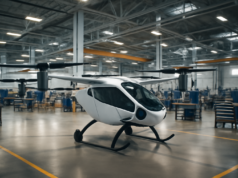

Honeywell has taken a leadership role in a groundbreaking European initiative aimed at accelerating the development and deployment of electric vertical takeoff and landing (eVTOL) aircraft and autonomous cargo drones. This strategic project represents a significant milestone in the advancement of personal air mobility and commercial drone operations across Europe, positioning the region as a global hub for innovative aerospace technology.
Honeywell’s Strategic Leadership in European Air Mobility
Honeywell’s appointment as the lead organization in this European air mobility initiative underscores the company’s commitment to advancing next-generation aviation technologies. With decades of experience in aerospace and defense systems, Honeywell brings critical expertise in aircraft systems integration, safety protocols, and certification procedures that are essential for bringing eVTOL vehicles to market.
The company’s role involves coordinating multiple stakeholders across the European Union, including aircraft manufacturers, regulatory bodies, technology providers, and research institutions. This collaborative approach ensures that the project benefits from diverse perspectives and builds consensus around technical standards and operational procedures that will govern eVTOL operations across European airspace.
Honeywell’s involvement signals strong industry confidence in the commercial viability of eVTOL technology and indicates that major aerospace companies are moving beyond research and development phases into practical deployment planning. The company’s track record in delivering complex aviation systems positions it well to navigate the technical and regulatory challenges inherent in this emerging sector.
eVTOL Technology Development and Innovation
The European air mobility project places significant emphasis on advancing the underlying technologies that make eVTOL aircraft practical and commercially viable. This includes developing more efficient electric propulsion systems, advanced battery technologies, and integrated flight management software that can safely operate autonomous or piloted eVTOL vehicles in European airspace.
Battery technology represents one of the most critical components of eVTOL development, as energy density directly impacts range, payload capacity, and operational economics. The project undoubtedly includes initiatives focused on rapid charging systems, thermal management solutions, and battery safety protocols that exceed existing aviation standards. These advancements will be crucial for enabling eVTOLs to serve practical urban air mobility routes with reasonable flight times and payload capabilities.
Beyond propulsion and energy systems, the project encompasses flight control systems, collision avoidance technology, and autonomous navigation capabilities. These technologies must operate reliably in complex urban environments with multiple aircraft operating simultaneously, requiring sophisticated air traffic management integration and real-time communication networks that don’t yet exist at the necessary scale.
Cargo Drones and Autonomous Delivery Operations
The inclusion of cargo drones in this European initiative reflects growing market demand for autonomous aerial delivery services. Cargo drones offer significant advantages for last-mile delivery, particularly in urban environments where ground-based logistics face congestion and time constraints. The project aims to establish operational frameworks and technical standards that enable safe, efficient cargo drone operations across European cities and regions.
Autonomous cargo drones require different design and operational considerations compared to eVTOL aircraft designed for passenger transport. They must balance payload capacity with flight endurance, incorporate sophisticated autonomous systems for navigation and obstacle avoidance, and operate reliably in variable weather conditions. The European project likely includes development of standardized cargo interfaces, battery management systems optimized for frequent cycling, and maintenance protocols designed for high-utilization operations.
The commercial potential for cargo drones is substantial, with applications ranging from emergency medical supply delivery to e-commerce fulfillment and industrial logistics. By establishing regulatory frameworks and technical standards early in the development process, Europe can position itself as a leader in autonomous cargo drone operations and attract investment from logistics companies seeking to modernize their delivery networks.
Regulatory Framework and Airspace Integration
Perhaps the most critical aspect of Honeywell’s European air mobility project involves developing the regulatory framework and airspace integration systems necessary to safely operate large numbers of eVTOL aircraft and cargo drones. European air traffic management infrastructure was designed for traditional fixed-wing aircraft operating at higher altitudes, and significant modernization is required to accommodate the lower-altitude, higher-density operations characteristic of urban air mobility.
The project must work closely with EASA (European Union Aviation Safety Agency) and national aviation authorities to develop certification standards for eVTOL aircraft, establish airworthiness criteria, and create operating procedures that protect both vehicle occupants and people on the ground. These regulatory requirements will influence vehicle design, operational procedures, and the infrastructure investments necessary to deploy commercial air mobility services.
Airspace integration represents another significant challenge addressed by this initiative. Managing eVTOL and cargo drone operations in the same airspace occupied by manned helicopters, general aviation aircraft, and commercial flights requires advanced air traffic management systems capable of processing real-time data from numerous autonomous vehicles. The project likely includes development of U-space systems specifically designed for low-altitude urban airspace management.
Key Takeaways and Industry Impact
Essential Developments from the European Initiative
- Honeywell’s leadership brings aerospace expertise essential for transitioning eVTOL technology from research to commercial deployment across Europe
- The project addresses critical technology gaps in battery systems, autonomous flight control, and collision avoidance required for safe urban air mobility operations
- Regulatory framework development through this initiative will establish European standards that influence global eVTOL certification and operational procedures
- Cargo drone integration focuses on practical commercial applications including medical deliveries, e-commerce fulfillment, and industrial logistics services
- Coordinated airspace management planning ensures eVTOLs can operate safely alongside existing aviation traffic in European cities and regions
Honeywell’s leadership of this ambitious European air mobility project marks a pivotal moment in the transition from eVTOL concept to commercial reality. By combining technological innovation with regulatory framework development and infrastructure integration, this initiative creates the necessary conditions for widespread adoption of electric aircraft and autonomous cargo drones across Europe. As the project advances, it will generate valuable insights and establish standards that influence global air mobility development, positioning European companies and regulators at the forefront of this transformative transportation revolution. The next several years will be critical in demonstrating the technical and operational viability of eVTOL services and establishing the regulatory foundation for sustainable, scalable urban air mobility in European cities.