HIGHLIGHTS
- EH216-S completed Central Asia’s first autonomous human-carrying eVTOL flight, setting a historic precedent for pilotless air mobility in the region.
- The successful mission demonstrates the technical maturity and safety validation of autonomous electric aircraft for passenger transport.
- This milestone signals growing regulatory confidence in pilotless eVTOL operations across emerging markets beyond traditional aviation hubs.
The electric vertical takeoff and landing (eVTOL) industry has just witnessed a transformative milestone. The EH216-S aircraft successfully completed Central Asia’s first pilotless human-carrying eVTOL flight, marking a significant leap forward in autonomous aviation technology and regional air mobility adoption. This achievement not only demonstrates the technical readiness of next-generation electric aircraft but also signals a critical turning point in how emerging markets are embracing autonomous urban air transportation.
The EH216-S: Engineering Excellence in Motion
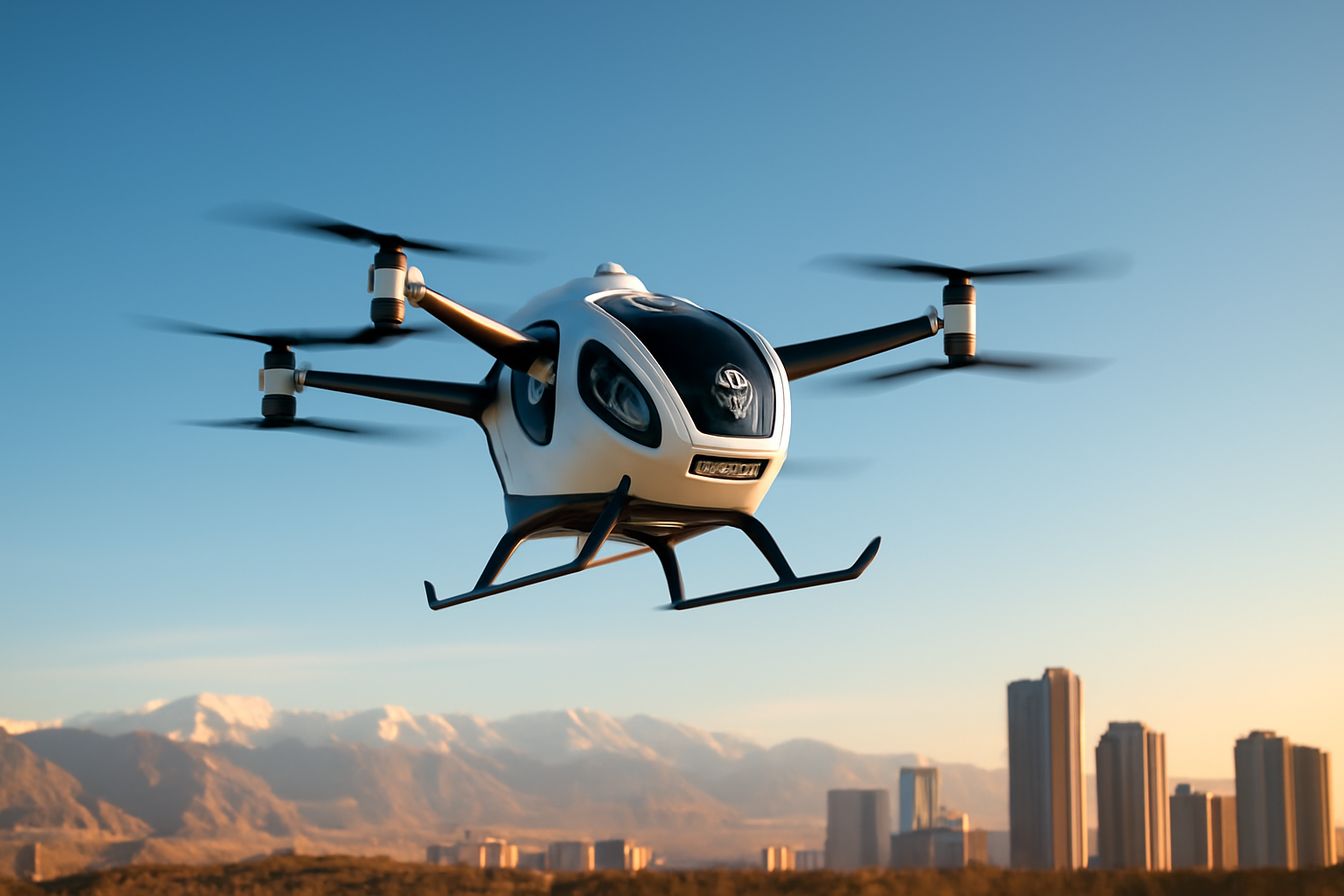
The EH216-S is a cutting-edge electric vertical takeoff and landing aircraft developed by EHang Holdings, a leading innovator in the autonomous aerial vehicle industry. Built on years of research, development, and real-world testing, the EH216-S represents the pinnacle of current eVTOL design—combining efficient dual-rotor architecture with advanced battery management systems and sophisticated autonomous flight control software. The aircraft is specifically engineered to carry passengers safely across urban and regional airspace without requiring a pilot onboard.
The platform features intelligent autonomous navigation, real-time weather adaptation, and redundant safety systems that allow it to operate independently while maintaining constant communication with ground-based traffic management systems. Each component—from the electric propulsion units to the passenger cabin—has been rigorously tested and validated to meet international safety standards. The EH216-S represents not just an aircraft, but a complete ecosystem approach to autonomous air mobility that integrates hardware, software, and operational infrastructure.
What makes the EH216-S particularly noteworthy is its proven track record across multiple geographies and operational conditions. Prior successful demonstrations in Asia-Pacific regions provided the foundation for this Central Asian milestone, validating that autonomous eVTOL technology can operate reliably in diverse climates and regulatory environments. The aircraft’s performance metrics—including flight duration, payload capacity, and energy efficiency—have consistently exceeded initial projections, building confidence among regional operators and regulators alike.
Central Asia’s Path to Autonomous Air Mobility
Central Asia has emerged as an unexpected but strategic hub for advanced aerospace innovation. The region’s rapidly growing urban centers face mounting transportation challenges that traditional infrastructure cannot adequately address. Cities across Kazakhstan, Uzbekistan, and neighboring countries are experiencing population growth that strains existing road networks and public transit systems. eVTOL technology offers a compelling solution—enabling point-to-point aerial transportation that bypasses congested ground infrastructure while generating zero direct emissions.
The successful EH216-S flight represents more than a technical demonstration; it reflects genuine regional commitment to adopting next-generation mobility solutions. Local aviation authorities, technology partners, and urban planners collaborated to establish the regulatory framework, airspace coordination protocols, and operational procedures necessary for pilotless eVTOL flights. This cooperative approach demonstrates that emerging markets are not simply adopting imported technology—they are actively shaping the regulatory and operational standards that will define global air mobility for decades to come.
Central Asia’s geographic positioning also makes it strategically important for eVTOL development and deployment. The region serves as a geographic bridge connecting multiple continents, with favorable conditions for testing autonomous aircraft operations across varied terrain—from flat urban centers to mountainous regions. As international routes for autonomous air cargo and passenger transport develop, Central Asia’s role as both an innovator and operational hub becomes increasingly valuable to the broader global eVTOL ecosystem.
Pilotless Operations: The Autonomous Revolution
The term “pilotless” in aviation carries profound implications. Traditional aircraft require human pilots—professionals trained over thousands of hours to handle emergencies, navigate complex airspace, and make judgment calls in unpredictable situations. Autonomous eVTOL aircraft replace human decision-making with sophisticated artificial intelligence systems, sensor fusion technology, and redundant safety architectures. This shift fundamentally changes operational economics, safety profiles, and scalability potential for commercial air mobility.
The EH216-S pilotless flight validates that autonomous systems can manage the complexities of real-world flight operations. The aircraft successfully navigated takeoff, cruise, descent, and landing sequences while continuously processing sensor data, monitoring weather conditions, and maintaining coordination with air traffic management systems. The achievement required not just advanced autonomous technology but also regulatory frameworks that allowed such flights to occur—a considerable accomplishment in regions where aviation regulations traditionally prioritize human oversight.
Removing the pilot from the cockpit produces immediate operational benefits. It eliminates pilot fatigue as a safety factor, allows for longer operational windows, reduces labor costs dramatically, and enables standardized procedures across diverse operating environments. Over the long term, autonomous operations enable higher fleet utilization, faster response times for emergency services, and the possibility of scaled deployment across entire regions. The EH216-S flight demonstrates that these theoretical advantages can translate into reliable real-world performance.
Regulatory Leadership and Safety Validation
Regulatory approval for pilotless eVTOL flights remains exceptionally rare globally. Most established aviation jurisdictions maintain conservative approaches, requiring extensive validation before permitting autonomous operations. Central Asian authorities’ willingness to certify and oversee the EH216-S pilotless flight reflects confidence in the aircraft’s safety systems and marks a significant divergence from the cautious regulatory posture typical of more established aviation markets. This openness to innovation creates competitive advantages for the region while establishing precedents that other emerging markets may follow.
Safety validation for the EH216-S involved comprehensive testing protocols covering normal operations, emergency procedures, sensor redundancy verification, and cybersecurity assessment. The aircraft operates within defined flight corridors and altitudes, under continuous monitoring by ground-based traffic management systems. Multiple safety layers—including real-time vehicle health monitoring, automated emergency descent capabilities, and geofencing protocols—ensure that autonomous operations maintain or exceed safety standards established for traditional piloted aviation.
The regulatory approval process serves as a template for other regions considering autonomous eVTOL deployment. By establishing clear certification requirements, operational boundaries, and safety metrics, Central Asian authorities have created a replicable framework. This precedent-setting approach may accelerate adoption across neighboring regions while ensuring that safety remains paramount as the technology expands globally. The flight demonstrates that autonomous air mobility can be integrated into existing airspace management systems with appropriate safeguards and oversight mechanisms.
Market Implications and Future Trajectory
The EH216-S Central Asia achievement carries substantial implications for the global eVTOL market. It provides compelling proof-of-concept for emerging market operators who have questioned whether autonomous technology could reliably function outside established aerospace clusters. The successful flight reduces perceived risk for potential operators, investors, and regulators evaluating autonomous eVTOL adoption. Capital markets, which have remained skeptical of speculative eVTOL claims, may respond positively to validated autonomous operations in real-world conditions.
For EHang Holdings specifically, the flight reinforces the EH216-S’s position as the most operationally proven autonomous eVTOL platform globally. The company benefits from genuine deployment experience across multiple continents and climatic conditions—a competitive advantage that transcends the theoretical advantages promised by numerous pre-commercial eVTOL developers. This operational validation trajectory supports EHang’s path toward commercialization and scaled deployment across Asia-Pacific, with Central Asia now positioned as a key operational hub.
The achievement also influences urban air mobility timelines across the region. Cities can now plan for eVTOL integration with greater confidence that the technology will mature and become operationally available within planning horizons. Transportation planners, infrastructure investors, and city governments can begin designing supporting systems—including vertiports, air traffic management integration, and last-mile connectivity solutions—with higher certainty that autonomous eVTOL services will become available to integrate into broader mobility ecosystems.
Key Takeaways: What This Milestone Means for Air Mobility
- Autonomous operations are no longer theoretical—the EH216-S has proven that pilotless eVTOL flights can safely operate in real-world conditions with appropriate regulatory oversight and safety systems in place.
- Emerging markets are not simply adopting imported technology but actively leading the regulatory innovation and operational deployment of autonomous air mobility systems.
- The success creates momentum for wider eVTOL adoption across Central Asia and adjacent regions, with validated operational frameworks and demonstrated technical performance supporting future commercial deployment.
The EH216-S’s historic pilotless flight in Central Asia marks a pivotal moment in the evolution of personal air mobility. It demonstrates that autonomous eVTOL technology has matured beyond prototype stages into systems capable of reliable, safe operation under real-world conditions. As additional regions recognize the benefits of this technology and establish supportive regulatory frameworks, autonomous air mobility transitions from speculative future vision to immediate operational reality. The EH216-S flight over Central Asia represents not just a technical achievement but a transformative milestone that will shape urban transportation for generations to come.