HIGHLIGHTS
- U.S. Navy commits major investment to Shield’s vertical-takeoff drone while Air Force takes a wait-and-see approach, revealing different military priorities for VTOL adoption.
- Naval operations benefit immediately from VTOL’s ability to launch and recover from confined spaces, while Air Force’s established runway infrastructure reduces near-term procurement urgency.
- Military VTOL contracts validate the technology’s operational viability and accelerate innovation cycles, creating competitive advantages and spillover benefits for commercial air mobility markets.
The U.S. military landscape for vertical takeoff and landing (VTOL) technology is shifting in unexpected directions. While the Navy has made a significant strategic investment in Shield’s vertical-takeoff drone platform, the Air Force has notably held back from committing resources to similar programs. This divergence reveals competing priorities, budget constraints, and differing assessments of how drone technology should evolve within the armed forces.
Navy’s Strategic Commitment to Shield’s VTOL Platform
The U.S. Navy has demonstrated confidence in Shield’s vertical-takeoff drone technology through a meaningful financial investment announced in August 2026. This move signals the Navy’s belief that VTOL drones offer critical capabilities for naval operations, particularly in maritime reconnaissance, cargo transport, and tactical support missions where traditional runway-dependent aircraft face limitations.
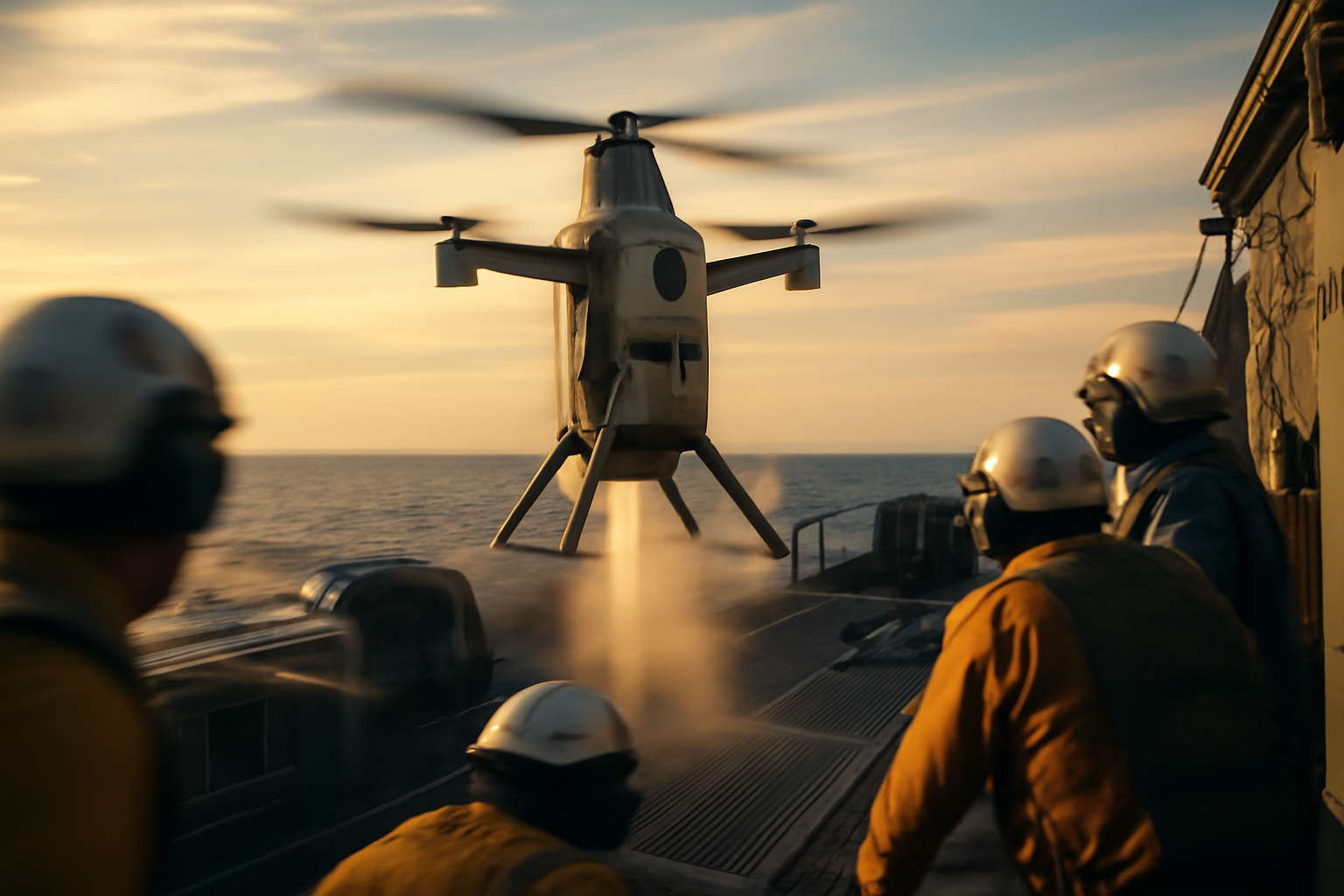
Shield’s VTOL drone platform represents a new generation of military unmanned systems designed to operate from confined spaces, including naval vessels, amphibious platforms, and forward-deployed locations. The ability to launch and recover without requiring prepared runways provides the Navy with unprecedented operational flexibility in contested environments where conventional airfields may be unavailable or vulnerable.
This investment reflects broader Navy priorities toward modernizing its unmanned systems fleet and reducing dependency on larger, more vulnerable fixed-wing aircraft. By backing Shield’s technology, the Navy is positioning itself to maintain technological superiority in maritime domain awareness and rapid-response capabilities across global operating areas.
Air Force’s Cautious Approach to VTOL Investments
In contrast to the Navy’s commitment, the Air Force has chosen to hold off on significant investments in vertical-takeoff drone programs as of August 2026. This measured approach doesn’t necessarily reflect skepticism toward VTOL technology itself, but rather suggests the service branch is evaluating multiple technological pathways before making major procurement decisions.
The Air Force’s hesitation may stem from several practical considerations. Traditional fixed-wing aircraft and rotorcraft already provide well-established capabilities for airborne operations, and the service maintains extensive infrastructure supporting these platforms. Integrating new VTOL systems would require investment in logistics, training, maintenance facilities, and pilot programs before fielding at scale.
Additionally, the Air Force may be waiting for demonstration of real-world performance data and reliability metrics from Navy operations. A “show me” approach allows the Air Force to assess the technology’s maturity and cost-effectiveness before committing to programs that could span decades and billions in development costs.
Military Divergence Reflects Distinct Operational Needs
The Navy and Air Force’s different investment strategies highlight how distinct operational environments drive technology adoption patterns. Naval operations frequently occur in remote locations with limited infrastructure, making VTOL capabilities particularly valuable for distributed fleet operations and coastal security missions.
The Air Force, conversely, maintains a global network of established bases and operates across continental and theater-wide distances where runway-dependent aircraft remain highly efficient. While future concepts may incorporate VTOL for specific tactical scenarios, the Air Force’s current operational doctrine doesn’t create immediate urgency for wholesale adoption.
This divergence also reflects institutional factors. The Navy, as a service traditionally dependent on seaborne platforms, views VTOL technology as a natural extension of naval aviation principles. The Air Force, rooted in a century of runway-based operations, may require longer to integrate radical new concepts into force structure and doctrine.
Implications for Private Sector Air Mobility Innovation
Military investments in VTOL technology create powerful demonstration effects for commercial markets. The Navy’s backing of Shield’s platform validates VTOL systems as technically feasible and operationally valuable, building industry confidence and attracting investment capital to the sector.
Government procurement patterns also establish standards and specifications that influence private sector development priorities. Military-grade VTOL drones, designed to rigorous performance and reliability standards, generate technological spillovers that eventually benefit commercial applications in urban air mobility, emergency response, and cargo delivery.
The continued competition for military VTOL contracts will likely accelerate innovation cycles and drive multiple companies to advance their platforms. Even without Air Force funding, the Navy’s investment ensures Shield and competitors will continue refining VTOL technology with access to real-world operational feedback and resources for capability development.
Key Takeaways from Military VTOL Investments
- The U.S. Navy has invested in Shield’s vertical-takeoff drone platform while the Air Force holds off, reflecting different operational priorities and procurement philosophies between the two services.
- Naval operations in remote, infrastructure-limited environments create immediate value for VTOL capabilities, whereas the Air Force’s established base network and doctrine support continued reliance on runway-dependent aircraft.
- Military VTOL investments validate the technology’s feasibility and create spillover benefits for commercial air mobility markets, attracting private capital and accelerating innovation across the industry.
The diverging paths between Navy and Air Force investments in VTOL technology will shape military modernization strategies for decades to come. Shield’s Navy backing represents a critical validation point for the vertical-takeoff drone sector, signaling that mature VTOL platforms are ready for operational integration in demanding military environments. As the Navy gains operational experience with advanced VTOL systems, the Air Force will likely develop its own VTOL strategies based on lessons learned and evolving doctrine. This measured, parallel evolution of military air mobility represents prudent risk management while maintaining momentum in one of aerospace’s most promising technological frontiers. For the commercial air mobility industry, military VTOL development serves as both proof of concept and testbed for technologies destined for civilian applications in the coming years.