HIGHLIGHTS
- The US Army is systematically integrating EV drones and uncrewed ground vehicles into operational forces as part of a comprehensive modernization strategy aligned with Department of Defense emission-reduction mandates.
- Advanced military-grade battery technology and ruggedized power management systems enable electric autonomous platforms to operate reliably in extreme environments, high-altitude operations, and remote deployment scenarios without conventional infrastructure.
- Distributed charging infrastructure and international partnerships with NATO allies create cost-sharing opportunities while reducing US military dependence on global fuel supplies and enhancing long-term strategic resilience.
The United States military has long recognized the strategic and operational advantages of transitioning to electric vehicle technologies across its fleet. In recent developments, the US Army has taken another significant step forward in its comprehensive shift toward EV drones and uncrewed ground vehicles, a transformation that reflects both environmental commitments and tactical modernization. This evolution represents one of the most ambitious undertakings in military vehicle electrification, with implications that extend far beyond traditional defense applications.
The Army’s EV Drone Integration Strategy
The US Army’s adoption of EV drones represents a fundamental shift in how military operations will be conducted in the coming decades. Unlike their fuel-dependent predecessors, electric drones offer reduced operational costs, extended mission flexibility, and significantly lower maintenance requirements. The Army has been systematically evaluating various EV drone platforms to determine which systems best align with tactical requirements while meeting sustainability benchmarks established by the Department of Defense.
Integration of EV drones into Army operations requires comprehensive ecosystem development, including charging infrastructure, pilot training protocols, and interoperability standards across multiple platforms. The military has begun establishing testing grounds and training facilities dedicated to electric drone operations, allowing personnel to gain practical experience before widespread deployment. This measured approach ensures that transition phases are manageable and that operational readiness is never compromised during the modernization process.
Beyond the immediate tactical benefits, EV drones enable the Army to extend mission durations while reducing the environmental footprint of operations. Electric powertrains produce zero direct emissions, a critical advantage for stealth operations and for maintaining good relationships with allied nations increasingly focused on environmental stewardship. The quiet operation of EV drones also provides tactical advantages in certain mission profiles where noise discipline is paramount.
Uncrewed Ground Vehicles: A Parallel Transformation
While aerial platforms receive considerable attention, the Army’s commitment to electrifying uncrewed ground vehicles (UGVs) is equally significant. These autonomous systems handle supply chain logistics, reconnaissance missions, and explosive ordnance disposal—roles where electric powertrains offer distinct operational advantages. The shift from diesel to electric ground platforms is creating a more cohesive, interconnected military vehicle ecosystem that operates with greater efficiency and reduced logistical burden.
The development of EV uncrewed ground vehicles addresses several critical military challenges simultaneously. First, electric powertrains require substantially less maintenance than conventional internal combustion engines, freeing up valuable personnel resources. Second, the distributed nature of electric charging infrastructure can be scaled to support forward operating bases and remote deployment scenarios. Third, the noise reduction inherent to electric systems provides tactical advantages in detection-avoidance and camouflage operations.
Military planners recognize that the electrification of uncrewed ground vehicles creates opportunities for integrated autonomous swarm operations. Multiple EV-powered UGVs can coordinate missions with minimal acoustic signature, communicate via secure networks, and operate for extended periods with centralized battery management systems. This interconnectedness transforms how the military approaches complex operational scenarios requiring coordination across multiple platforms.
Regulatory Frameworks and Military Sustainability Goals
The Department of Defense has established ambitious sustainability targets that mandate significant reductions in vehicle emissions across all military branches. These regulatory pressures, combined with congressional mandates and international defense partnerships, have accelerated the Army’s EV transition timeline considerably. The military now operates under strict emission-reduction requirements that mirror civilian federal fleet standards, creating accountability mechanisms that drive adoption across all vehicle categories.
Regulatory frameworks governing military EV adoption extend beyond simple emission targets. The Army must navigate complex procurement regulations, budget allocation procedures, and interagency coordination requirements that add layers of complexity to the transition process. However, these regulatory structures also create stability and predictability for manufacturers and suppliers developing military-grade EV and autonomous systems. Clear regulatory direction enables private sector partners to invest confidently in developing next-generation military electric platforms.
International agreements and allied military partnerships further influence the Army’s EV transition strategy. NATO allies have similarly committed to electrifying military fleets, creating opportunities for standardized platforms and shared development costs. These partnerships ensure that the US Army remains technologically compatible with allied forces while reducing individual development burdens through collaborative engineering efforts and shared testing infrastructure.
Technological Challenges and Current Solutions
The transition to EV drones and uncrewed ground vehicles presents significant technological challenges that the Army is actively addressing through research and development initiatives. Battery technology for military applications must meet demanding performance requirements, including rapid charging capabilities, extreme weather resilience, and compatibility with high-power actuators used in tactical systems. Current generation military-grade batteries represent substantial improvements over civilian counterparts, though continued advancement remains essential.
Power management systems for military EV platforms must operate reliably in challenging environments where conventional commercial infrastructure is unavailable. The Army has invested heavily in ruggedized battery management systems capable of functioning in extreme temperatures, high-altitude operations, and electromagnetic interference environments. These specialized systems ensure that EV drones and ground vehicles maintain full operational capability regardless of deployment location or environmental conditions.
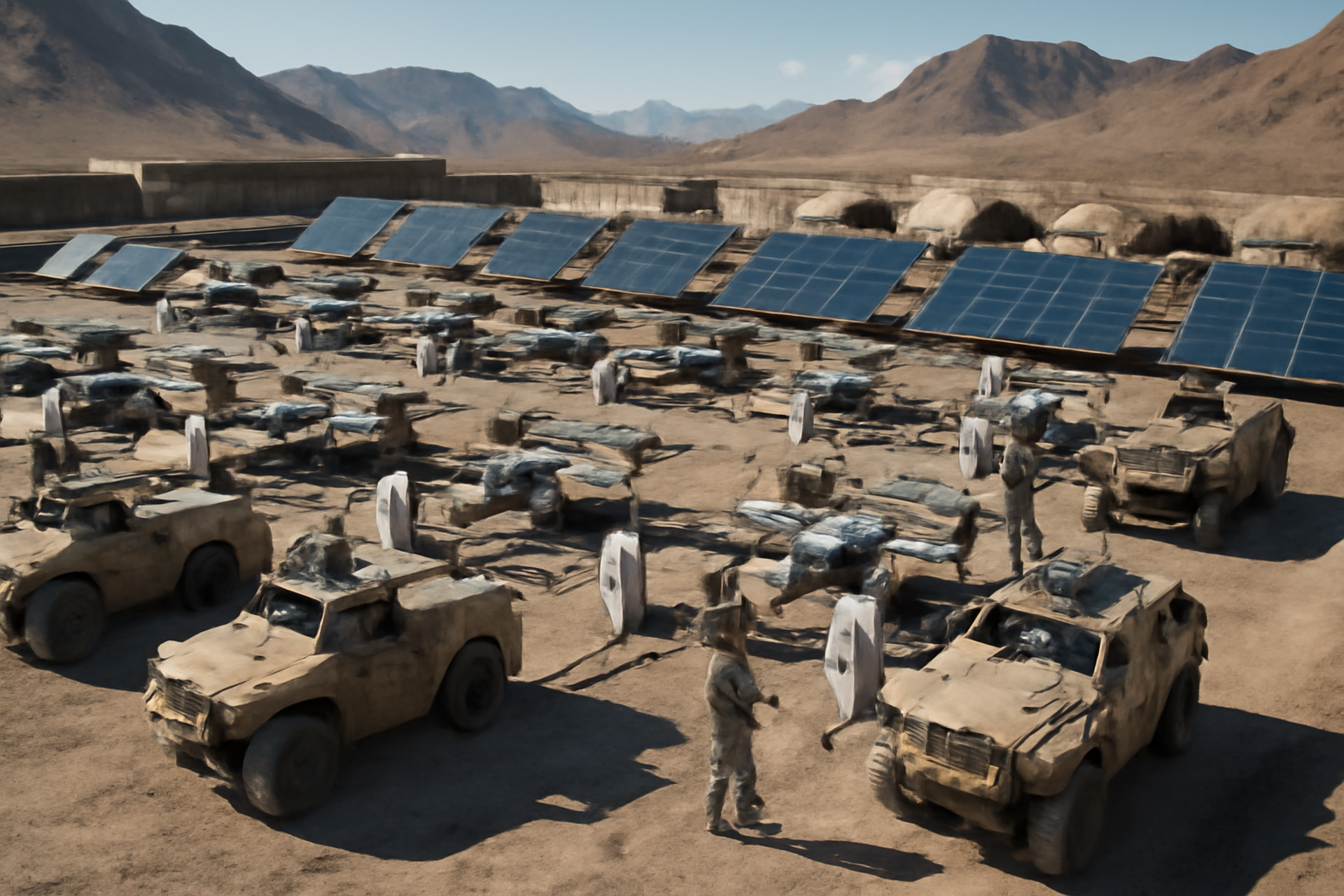
Charging infrastructure development remains a critical bottleneck in the EV transition timeline. The Army is implementing distributed charging networks at bases worldwide, incorporating solar and renewable energy sources wherever practical. Mobile charging units designed for forward deployment enable sustained operations in remote areas, while strategic positioning of permanent charging stations ensures that EV vehicles can recharge efficiently between missions. This infrastructure buildout represents a substantial ongoing investment in military modernization.
Future Implications for Military Operations
The widespread adoption of EV drones and uncrewed ground vehicles will fundamentally transform how the US Army approaches modern warfare and logistics. All-electric autonomous systems operating in coordinated swarms represent a qualitative shift in military capability, enabling mission profiles that would be impossible with conventional platforms. Future military operations will likely feature networked EV systems working in concert, with human commanders exercising oversight while machines execute tactical objectives with precision and efficiency.
Cost reduction represents another significant long-term implication of the EV transition. Although initial procurement costs for electric military vehicles may exceed conventional alternatives, lifecycle costs—factoring in fuel, maintenance, and operational efficiency—strongly favor electric systems. Over multi-year budget cycles, the Army’s shift to EVs will free substantial resources for investment in other capability areas, potentially accelerating modernization across multiple military domains.
Strategic autonomy through domestic EV manufacturing and battery production is an often-overlooked benefit of military electrification. As the Army transitions away from petroleum-dependent platforms, US military operations become less vulnerable to global fuel supply disruptions or energy market volatility. This shift toward domestic renewable energy and locally manufactured EV components enhances long-term strategic resilience while supporting the broader national transition toward sustainable energy systems.
Key Takeaways from the Army’s EV Transition
- The US Army is systematically integrating electric drones and uncrewed ground vehicles into operational forces, representing a fundamental modernization of military autonomous systems with long-term tactical and sustainability benefits.
- Regulatory mandates from Congress and the Department of Defense establish clear emission-reduction targets that drive adoption timelines, while international partnerships with NATO allies create opportunities for standardized platform development and cost sharing.
- Advanced battery management systems, distributed charging infrastructure, and power management innovations address technical challenges specific to military operations, enabling EV platforms to function reliably in extreme environments and remote deployment scenarios.
The US Army’s methodical progress toward electrifying its drone and autonomous vehicle fleet demonstrates a long-term commitment to both operational modernization and environmental sustainability. While the transition presents significant technological and logistical challenges, ongoing investments in battery technology, charging infrastructure, and military-specific power systems are steadily removing barriers to full-scale adoption. As EV drones and uncrewed ground vehicles become increasingly prevalent in military operations worldwide, the Army’s early commitment to this transition positions the service favorably for future conflicts where electric autonomous systems will define operational capabilities and strategic advantage.