
HIGHLIGHTS
- Florida launches comprehensive eVTOL flight testing, signaling regulatory readiness and positioning the state as a critical hub for personal air mobility development
- Vertiport infrastructure and ground transportation integration are essential for commercial success, with Miami and Orlando emerging as key deployment centers
- Demonstrated safety performance and transparent regulatory oversight establish Florida as a model for responsible eVTOL deployment, building public trust ahead of commercial service expansion
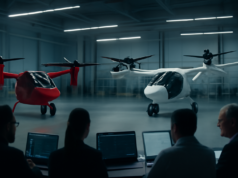
Florida is standing at the crossroads of aviation history. As the eVTOL revolution accelerates globally, the Sunshine State has emerged as a critical testing ground for flying cars and electric vertical takeoff and landing aircraft. The recent announcement of comprehensive flight tests marks a pivotal moment for personal air mobility in the United States, signaling regulatory readiness and commercial interest converging at a crucial juncture.
Florida’s Strategic Role in eVTOL Development
Florida’s geographic position and existing aviation infrastructure make it an ideal location for eVTOL testing and deployment. The state has positioned itself as a leader in embracing new transportation technologies, with Miami and Orlando emerging as potential hubs for air taxi services. State regulators have demonstrated a proactive approach to facilitating innovation while maintaining safety standards, creating an attractive environment for manufacturers and operators.
The decision to launch comprehensive eVTOL tests reflects Florida’s recognition of the transformative potential of electric vertical aviation. With growing urban congestion and traditional transportation bottlenecks, flying cars represent a revolutionary solution to metropolitan mobility challenges. Florida’s diverse landscape—from dense urban centers to suburban sprawl to waterfront communities—provides an ideal laboratory for testing various operational scenarios.
Beyond infrastructure advantages, Florida brings significant economic incentives to the eVTOL sector. The state’s thriving aerospace ecosystem, established workforce, and competitive business environment make it an attractive destination for aircraft manufacturers and air mobility service operators. This convergence of regulatory support, infrastructure readiness, and economic opportunity positions Florida as a leading contender in the global race toward commercialized air mobility.
The eVTOL Revolution and Market Trajectory
The transition from concept to operational reality accelerates across the air mobility sector. Electric vertical takeoff and landing aircraft represent one of the most significant transportation revolutions in decades, with the potential to reshape urban commuting patterns fundamentally. Multiple manufacturers worldwide are advancing toward certification milestones, with several platforms anticipated to enter commercial service within the next 2-3 years.
Market analysts project explosive growth in the eVTOL sector, with valuations reaching hundreds of billions of dollars by 2035. Early adopters will likely focus on high-value routes—such as airport-to-city center connections, executive transport, and emergency medical services—before expanding to broader consumer markets. Florida’s position as a hub for both tourism and business travel makes it particularly valuable for demonstrating commercial viability and consumer adoption patterns.
The regulatory pathway for eVTOL aircraft has matured significantly. Aviation authorities including the FAA have established clear certification frameworks, technical standards, and operational requirements. Florida’s testing initiatives align with these federal standards while allowing state-level refinement of local airspace management, ground infrastructure requirements, and emergency response protocols. This collaborative approach between state and federal regulators accelerates technology maturation while maintaining rigorous safety oversight.
Technical and Operational Considerations
eVTOL aircraft represent a sophisticated convergence of drone technology, aviation engineering, and electric propulsion systems. Modern designs feature redundant battery systems, distributed electric motors, advanced flight control computers, and real-time communication capabilities. These aircraft typically carry 2-6 passengers and operate with zero direct emissions, aligning with environmental sustainability goals and urban air quality improvement objectives.
Operational challenges extend beyond aircraft design to encompass airspace management, vertiport infrastructure, ground transportation integration, and passenger safety protocols. Florida’s testing environment will evaluate critical aspects including noise performance in residential areas, emergency response procedures, weather operation limitations, and integration with existing air traffic control systems. These real-world operational insights prove invaluable for refining regulatory frameworks and commercial business models.
Battery technology and charging infrastructure represent critical enabling factors for eVTOL commercialization. Current generation lithium-ion battery systems provide sufficient energy density for regional routes (typically 15-30 miles), with turnaround times measured in minutes to hours. Florida’s testing will evaluate charging network requirements, grid integration impacts, and operational economics across various deployment scenarios. Advanced battery chemistries and charging technologies under development promise extended range and faster turnaround capabilities within the next 2-3 years.
Regulatory Framework and Safety Standards
The Federal Aviation Administration has established comprehensive certification requirements for eVTOL aircraft, drawing from traditional aircraft certification standards while accommodating novel design features and operational characteristics. Special Conditions and Special Certificates of Airworthiness enable early-stage operations under controlled conditions, allowing manufacturers to demonstrate safety and operational suitability before full type certification. Florida’s testing initiatives leverage these regulatory pathways to advance toward commercial service authorization.
Safety represents the paramount concern throughout eVTOL development and deployment. Redundant systems, fail-safe design principles, and autonomous flight capabilities address the inherent challenges of urban low-altitude operations. Emergency procedures, pilot training requirements, and maintenance protocols receive rigorous evaluation through both simulation and flight testing. Florida’s regulatory approach balances innovation acceleration with uncompromising safety standards, establishing a model for responsible technology deployment.
Public acceptance and trust depend fundamentally on demonstrated safety performance and transparent regulatory oversight. Florida’s commitment to comprehensive testing and public communication regarding eVTOL operations builds societal confidence in this emerging transportation mode. As early operational experience accumulates, safety data informs continuous regulatory refinement and operational best practices. This evidence-based approach transforms eVTOL from speculative technology to proven, trusted transportation solution.
Infrastructure and Urban Integration
Vertiports—specialized facilities designed for eVTOL aircraft operations—represent essential infrastructure for air mobility services. These facilities require landing pads, passenger terminals, battery charging stations, maintenance hangars, and ground transportation connections. Florida’s planning initiatives address vertiport siting strategies, considering factors including noise impacts, emergency services proximity, ground traffic patterns, and integration with public transportation networks.
Urban air mobility services will function most effectively when seamlessly integrated with existing ground transportation systems. Successful models envision eVTOL flights connecting major transportation hubs—airports, train stations, bus terminals—with downtown business districts and suburban employment centers. Ground transportation planning, parking facilities, passenger processing, and security screening all require thoughtful coordination to optimize end-to-end journey efficiency and user experience.
Environmental considerations extend beyond zero operational emissions to encompass noise performance, airspace pollution, and resource consumption. Modern eVTOL designs demonstrate significantly reduced noise signatures compared to traditional aircraft and rotorcraft, typically operating at 70-80 decibels. Florida’s testing will establish baseline environmental impact data, informing policies regarding operational hours, flight corridors, and vertiport locations. Sustainable operations aligned with environmental and quality-of-life goals strengthen long-term community acceptance and regulatory support.
Key Takeaways for Florida’s eVTOL Initiative
- Florida’s comprehensive testing framework accelerates eVTOL commercialization while maintaining rigorous safety and regulatory standards
- Infrastructure integration, including vertiport development and ground transportation connectivity, proves critical for operational success and passenger adoption
- Demonstrated safety performance and transparent regulatory oversight build public confidence, establishing Florida as a model for responsible air mobility deployment
Florida’s decision to embrace eVTOL testing positions the state at the forefront of the personal air mobility revolution. As flying cars transition from concept to operational reality, the lessons learned from Florida’s initiatives will inform deployment strategies globally. By combining regulatory rigor with innovation acceleration, infrastructure planning with environmental stewardship, and technical advancement with public engagement, Florida demonstrates the path toward transforming urban mobility. The coming months will prove critical as testing progresses, proving safety, establishing operational norms, and building the foundation for commercial services that will reshape how millions of people move through cities. The eVTOL revolution is no longer a distant possibility—it is arriving in Florida today.