
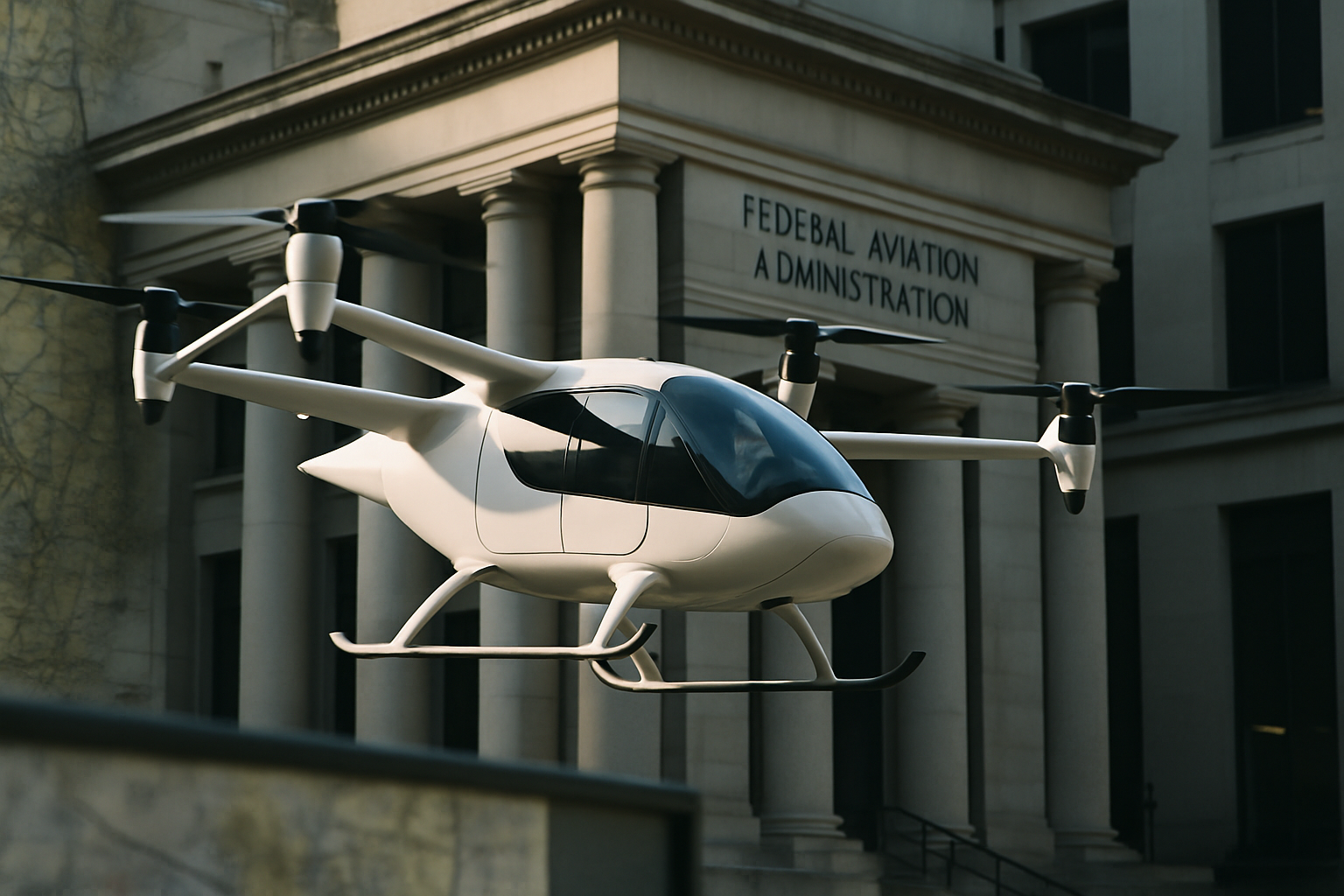
The Federal Aviation Administration (FAA) has announced a major milestone in its electric vertical takeoff and landing (eVTOL) program, signaling significant progress toward establishing comprehensive regulatory frameworks for personal air mobility. This achievement represents a crucial turning point for the aviation industry, as manufacturers and stakeholders have been awaiting clear certification pathways for electric aircraft. The milestone demonstrates the FAA’s commitment to balancing innovation with safety while accommodating the rapidly evolving eVTOL sector.
Understanding the FAA’s eVTOL Certification Framework
The FAA has been working diligently to develop robust certification standards specifically designed for electric vertical takeoff and landing aircraft. Unlike traditional fixed-wing aircraft, eVTOLs present unique engineering challenges that require tailored regulatory approaches. The recent milestone indicates that the agency has successfully completed critical phases of developing these specialized certification criteria, which will serve as the foundation for manufacturers seeking approval to operate commercially.
The certification framework addresses multiple aspects of eVTOL operations, including aircraft design, propulsion systems, battery safety, and pilot training requirements. By establishing clear guidelines, the FAA enables manufacturers to understand exactly what they need to accomplish to bring their aircraft to market. This transparency reduces uncertainty in the development process and encourages continued investment in eVTOL technology across the industry.
The framework’s completion marks a transition from exploratory regulatory discussions to actionable certification pathways. Companies can now reference specific technical standards when designing their aircraft and planning their certification strategies. This shift from theory to practical application represents a watershed moment for the entire personal air mobility ecosystem.
Impact on Personal Air Mobility Development
The FAA’s progress on eVTOL certification has immediate implications for personal air mobility companies currently in development stages. Startups and established aerospace manufacturers alike have been waiting for regulatory clarity before committing full resources to commercial production. This milestone provides the confidence needed to accelerate development timelines and increase investment in manufacturing facilities.
Urban air mobility operators and air taxi service providers are particularly excited about the regulatory progress. These companies envision eVTOLs operating in busy metropolitan areas, shuttling passengers between downtown districts and airports or other key destinations. Clear certification standards mean that these innovative transportation solutions can move closer to real-world implementation, potentially transforming how people move through cities within the next few years.
Battery manufacturers, avionics suppliers, and other component providers are also benefiting from the regulatory clarity. As they understand the certification requirements, they can design and test products specifically to meet those standards, creating a virtuous cycle of innovation and regulatory compliance. The milestone essentially gives the entire supply chain a roadmap for development.
Safety and Technical Considerations
The FAA’s eVTOL certification milestone places strong emphasis on safety protocols that protect both passengers and people on the ground. Electric propulsion systems, autonomous flight capabilities, and novel airspace management requirements demanded innovative safety approaches. The agency has worked with industry experts to establish benchmarks that match or exceed safety standards for traditional aircraft operations.
One critical aspect of the certification framework involves battery safety and energy management. eVTOL aircraft depend entirely on electric batteries for propulsion, making battery reliability and thermal management essential safety considerations. The FAA’s standards include rigorous testing protocols for battery systems, ensuring they can maintain sufficient charge for safe flights while preventing failure modes that could compromise aircraft control.
Additionally, the certification framework addresses redundancy requirements for critical flight systems. Many eVTOL designs incorporate distributed electric propulsion with multiple motors, providing inherent redundancy if one motor fails. The FAA has established standards for how this redundancy must function and what performance margins manufacturers must demonstrate during testing and certification.
Path Forward for Commercial Operations
With the major regulatory milestone achieved, the next phase involves individual manufacturers submitting their specific aircraft designs for certification review. The FAA will evaluate each proposal against the newly established standards, a process that typically requires extensive flight testing and documentation. Companies have realistic timelines for certification decisions, with some projecting commercial operations could begin in the coming years.
The certification milestone also enables the FAA to work with the European Union Aviation Safety Agency (EASA) and other international aviation authorities to harmonize eVTOL standards globally. International harmonization reduces the burden on manufacturers who plan to operate aircraft in multiple countries and creates a more seamless global market for eVTOL technology. Coordination between aviation authorities strengthens the overall regulatory environment.
Infrastructure planning is another area that will accelerate following this milestone. Cities and municipalities interested in hosting air taxi services or personal air mobility operations can now work with the FAA to develop vertiport standards and airspace management procedures. The regulatory clarity enables urban planners to incorporate eVTOL operations into their transportation strategies with confidence in the FAA’s oversight.
Industry Response and Market Implications
Leading eVTOL manufacturers have responded positively to the FAA’s milestone announcement, viewing it as validation of their development efforts and a clear signal that the commercial market is approaching reality. Companies like Joby, Lilium, Archer Aviation, and others are accelerating their timelines based on the regulatory progress. Investor confidence in the personal air mobility sector continues to strengthen as regulatory risk decreases.
Stock markets have taken notice of the regulatory progress, with eVTOL manufacturers seeing increased investor interest following the FAA milestone announcement. Venture capital funding continues to flow into the sector, recognizing that regulatory approval is now a predictable outcome rather than an uncertain variable. This financial support enables companies to scale manufacturing and prepare for commercial operations.
Insurance companies are also preparing for eVTOL operations, developing coverage products for aircraft manufacturers, operators, and third-party liability. As the regulatory framework solidifies, insurance markets can price risk more accurately and create products suitable for commercial operations. This maturation of the insurance market removes another barrier to launching eVTOL services.
Key Takeaways from the FAA Milestone
- The FAA has established comprehensive certification standards specifically designed for electric vertical takeoff and landing aircraft, eliminating regulatory uncertainty for manufacturers.
- Clear certification pathways accelerate development timelines for personal air mobility companies and increase investor confidence in the emerging industry.
- Battery safety, redundancy systems, and novel flight operations are addressed in the new regulatory framework with rigorous testing and performance standards.
- International coordination with other aviation authorities will harmonize global eVTOL standards, creating consistent requirements across markets.
- Commercial eVTOL operations could begin within the next few years as manufacturers proceed through the newly clarified certification process.
The FAA’s major milestone in the eVTOL program represents a transformative moment for personal air mobility and electric aviation technology. By establishing clear, comprehensive certification standards, the agency has converted speculation about future aircraft operations into a concrete regulatory pathway. Manufacturers can now move forward with confidence, knowing exactly what they must accomplish to bring their innovations to market. Cities and operators can begin serious planning for air taxi services and other innovative mobility solutions. Investors can commit capital with reduced regulatory risk. As the industry moves from development to certification to commercial operations, this FAA milestone will be remembered as the pivotal moment when personal air mobility transitioned from an ambitious concept to regulated reality. The next chapter of aviation history is being written, and the FAA’s eVTOL certification framework is the key to unlocking this exciting future.