HIGHLIGHTS
- China claims “world’s first” pilotable flying platform, but US companies like Joby and Archer flew piloted eVTOL aircraft in 2021-2022
- Multiple nations across North America, Europe, and Asia are advancing eVTOL development with different technological approaches and timelines
- True industry leadership will be determined by FAA certification, operational safety, and commercial viability—not by press release announcements
China has made headlines by unveiling what it claims is the world’s first pilotable flying platform, generating significant media attention across Asia and international tech outlets. However, this announcement requires important context: the United States had already developed and flown operational pilotable eVTOL aircraft years before this Chinese unveiling. Understanding the real technological timeline reveals a more nuanced picture of the global race in personal air mobility and vertical takeoff landing technology.
China’s Flying Platform Announcement
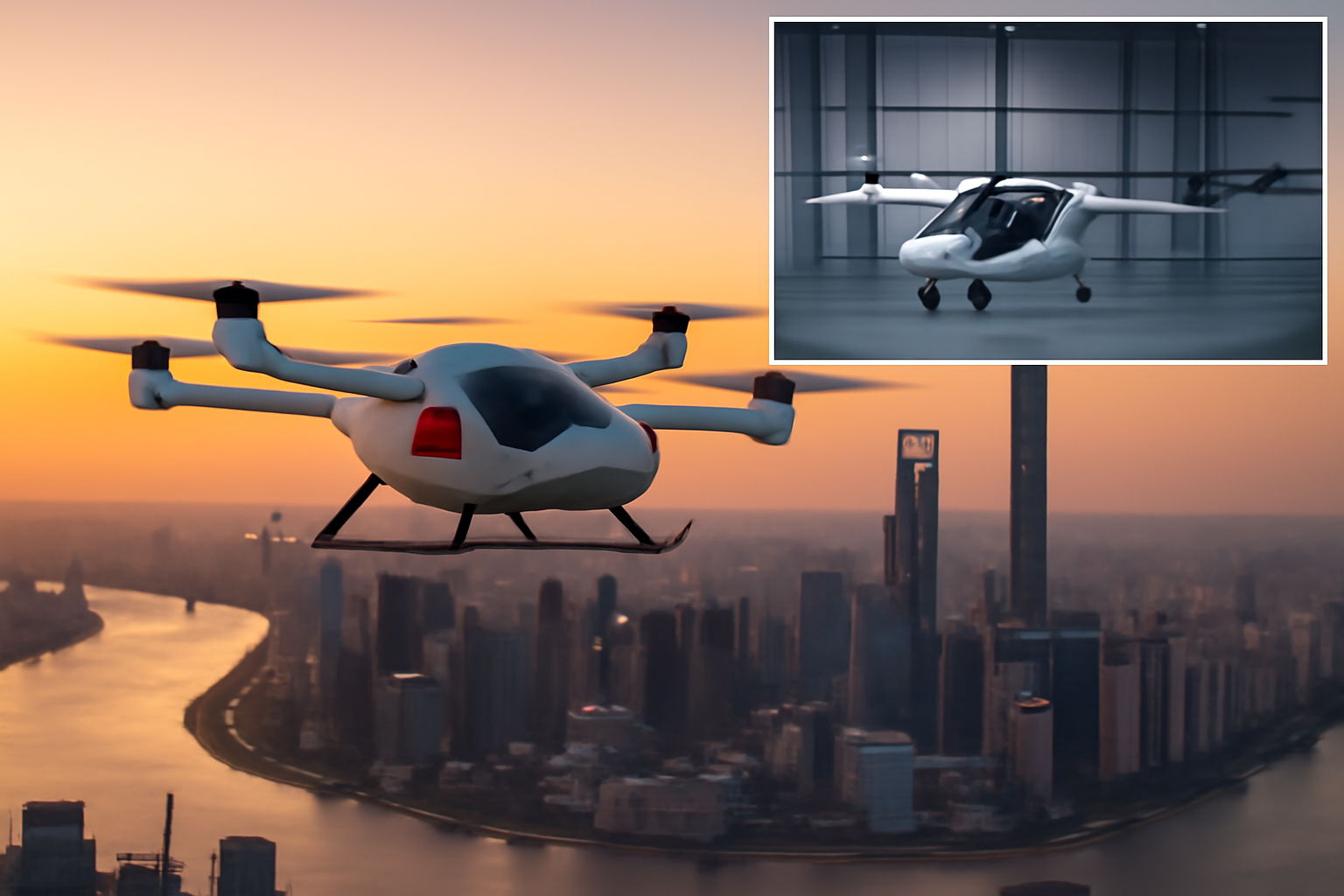
Chinese developers recently showcased their latest pilotable flying platform at industry events and through media demonstrations. The platform reportedly features electric vertical takeoff and landing capabilities, along with autonomous flight modes and advanced stability systems designed for pilot operation. The announcement generated considerable buzz in Chinese tech media and international aviation circles eager to track progress in the eVTOL space.
The platform’s design emphasizes ease of operation and safety redundancy, targeting eventual commercial applications in urban air mobility and point-to-point transportation. Chinese developers have positioned this as a breakthrough moment in the country’s aerospace and electric vehicle sectors, representing the convergence of drone technology and manned aviation.
However, the “world’s first” claim deserves scrutiny when placed against the documented history of eVTOL development globally. The announcement demonstrates China’s commitment to the personal air mobility market but also highlights how marketing narratives sometimes outpace technical reality.
The US Head Start in Pilotable eVTOL Aircraft
The United States achieved significant milestones in pilotable eVTOL technology well before China’s recent announcement. Companies like Joby Aviation, Archer Aviation, and Lilium have conducted extensive test flights of piloted electric vertical takeoff aircraft since the early 2020s. These platforms have achieved sustained flight, demonstrated advanced autopilot systems, and undergone FAA certification pathways.
Joby Aviation, for instance, has been conducting piloted test flights since 2021 and conducted demonstration flights at the Paris Air Show in 2023. Archer Aviation similarly achieved its first piloted eVTOL flight in 2022. These vehicles represent years of development, significant capital investment, and extensive regulatory engagement with the FAA.
The technological sophistication of US eVTOL platforms also extends to battery technology, motor efficiency, and autonomous flight capabilities—areas where American developers have invested heavily. The regulatory framework in the United States, while rigorous, has enabled companies to move forward with practical flight testing and real-world demonstrations.
Global eVTOL Development Timeline
Understanding the true timeline of eVTOL development requires looking beyond individual company announcements to the broader industry progression. European companies like Lilium have also conducted piloted test flights and demonstrated advanced electric propulsion systems. South Korea, Japan, and other nations have pursued parallel development efforts.
The race to commercialize eVTOL technology is genuinely global, with multiple nations and dozens of companies pursuing different technological approaches. Some focus on vertical takeoff and landing capabilities, others on distributed electric propulsion, and still others on hybrid-electric systems. This diversity of approaches suggests the market hasn’t yet settled on a single winning design.
China’s announcement should be understood as one important step in this broader competition rather than a definitive breakthrough. The country’s entry into piloted eVTOL development reflects serious investment and engineering capability, but it builds on technological foundations already established by pioneers in North America and Europe.
Marketing, Messaging, and Industry Reality
The “world’s first” framing around China’s announcement illustrates a common challenge in the eVTOL industry: distinguishing between genuine technological innovation and strategic marketing claims. Many companies across multiple nations have made “first” claims based on different criteria—first electric vertical takeoff in a region, first autonomous flight, first with a particular propulsion configuration.
These claims often reflect real technical achievements but can be misleading when taken at face value. A platform that is the first in one country or for one specific feature may not be the first globally. Media coverage sometimes amplifies these claims without sufficient context, creating confusion about the actual competitive landscape.
For investors, regulators, and consumers, the critical question isn’t who achieved a particular milestone first but rather which eVTOL platforms will ultimately achieve certification, commercialization, and safe, reliable operations at scale. This requires sustained engineering excellence, regulatory compliance, safety validation, and real-world performance data—not just successful test flights or announcements.
Key Takeaways: What Matters Most
- China’s flying platform is a legitimate engineering achievement but not the world’s first pilotable eVTOL—US companies flew piloted aircraft years earlier
- Multiple nations including the US, Europe, and Asia are pursuing competitive eVTOL development with different technological approaches and timelines
- Industry leadership will be determined by achieving certification, operational safety, and commercial viability—not by who announces first
The global eVTOL industry continues to advance rapidly, with meaningful progress occurring across North America, Europe, and Asia. China’s flying platform represents a welcome addition to this competitive landscape and demonstrates the technology’s growing feasibility. However, placing this announcement in proper historical context—acknowledging US and European development that preceded it—provides a clearer picture of where personal air mobility technology stands today. The real race isn’t about who announces first, but who achieves safe, certified, and commercially successful operations first. This competition remains genuinely open, with multiple nations and companies making legitimate contributions to an emerging industry that will reshape urban transportation in the coming decade.