HIGHLIGHTS
- eVTOL aircraft certification is imminent (12-18 months), but vertiport infrastructure development is the real bottleneck limiting near-term commercial operations and market expansion.
- Vertiport development requires capital investment, regulatory approval, specialized design, and air traffic management systems that remain unstandardized across jurisdictions, creating a critical chicken-and-egg operational dilemma.
- Leading manufacturers, airport operators, and real estate developers are forming strategic partnerships to accelerate vertiport deployment, with meaningful urban air mobility market growth expected in the late 2020s.
The aviation industry stands on the cusp of a revolutionary transformation. Electric vertical takeoff and landing (eVTOL) aircraft are no longer a distant dream—they’re nearly ready to take to the skies. However, as manufacturers refine their designs and prepare for certification, a critical realization is dawning: the technical achievement of building aircraft that can fly is only half the battle. The real race is now underway to establish the infrastructure needed to land them safely and efficiently. Vertiports, urban air mobility hubs, and regulatory frameworks must all fall into place before eVTOL operations can truly launch.
The eVTOL Revolution Is Nearly Upon Us
Over the past five years, eVTOL development has accelerated dramatically. Companies like Joby Aviation, Lilium, Archer Aviation, and Vertical Aerospace have progressed from concept sketches to flying prototypes to near-certification readiness. Their aircraft represent genuine engineering breakthroughs—quieter, cleaner, and more efficient than traditional helicopters. The technology itself has largely been validated. Battery systems, electric propulsion, autonomous flight controls, and safety redundancies have all matured substantially.
The U.S. Federal Aviation Administration (FAA) is actively reviewing several type certification applications, signaling that regulatory approval could arrive within the next 12 to 18 months. In other regions, including Europe and Asia-Pacific markets, parallel certification pathways are advancing. This convergence of technical readiness and regulatory progress represents a historic inflection point. For the first time, commercial eVTOL operations appear genuinely feasible in the near term rather than perpetually five years away.
Yet this milestone brings an uncomfortable truth to light: aircraft that can fly need places to land, recharge, and serve passengers. The aviation industry has spent over a century developing airport infrastructure, air traffic control systems, and ground support networks. eVTOL operators cannot simply rely on those existing systems. Vertiports—specialized facilities designed for vertical aircraft operations—represent an entirely new category of infrastructure that barely existed a decade ago.
Vertiports: The Missing Piece of Urban Air Mobility
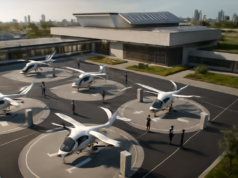
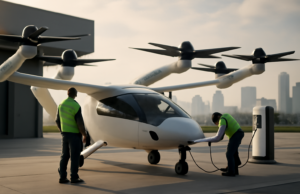
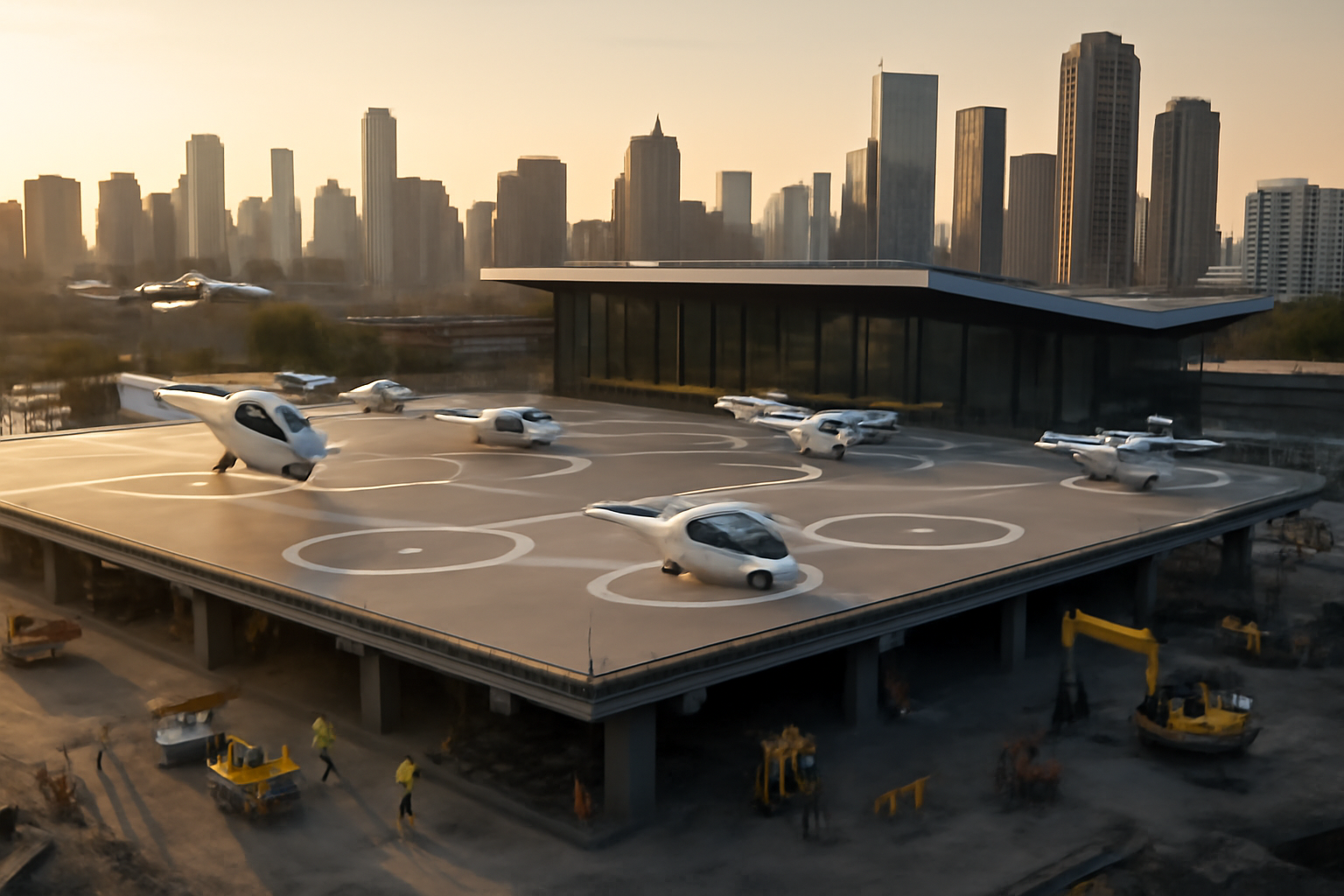
A vertiport is far more than a concrete pad. It must integrate passenger terminals, battery charging systems, aircraft maintenance bays, air traffic management technology, and coordination with urban environments. Unlike traditional airports located far from city centers, vertiports are envisioned to operate within or adjacent to urban areas, directly serving metropolitan populations. This proximity to dense urban environments creates unique operational and regulatory challenges that have no historical precedent.
Early vertiport projects are now under development in major cities worldwide. Several U.S. cities are exploring vertiport concepts for future urban air mobility networks. Miami, Los Angeles, New York, and Dallas have all announced plans or feasibility studies. International cities including Singapore, São Paulo, and London are similarly preparing for eVTOL operations. However, converting these plans into functioning facilities remains complex. Land acquisition in urban centers is expensive and politically contentious. Environmental reviews, community concerns, and zoning regulations must be navigated carefully.
The physical design of vertiports is itself still evolving. Questions remain about optimal aircraft parking configurations, passenger capacity, noise mitigation measures, and integration with public transportation networks. Some designs emphasize multi-story vertical structures in the heart of cities; others propose distributed smaller pads on building rooftops or in peripheral locations. Each approach carries distinct trade-offs in accessibility, cost, environmental impact, and operational efficiency. The absence of established best practices means each new vertiport project must essentially pioneer its own solutions.
Regulatory and Operational Hurdles
Beyond physical infrastructure, a comprehensive regulatory framework for vertiport operations must be established. The FAA is developing guidance for vertiport certification, safety standards, and operational procedures. These regulations must address passenger safety, aircraft handling, emergency protocols, noise limits, and coordination with existing air traffic control systems. The regulatory path is not yet fully defined, and different jurisdictions may adopt different standards, complicating international operations.
Air traffic management represents another critical challenge. Current airspace over cities is largely restricted or reserved for emergency helicopters and law enforcement. Integrating dozens or hundreds of eVTOL aircraft operating on regular commercial schedules requires new airspace management concepts, communication protocols, and collision avoidance technologies. Advanced air mobility (AAM) traffic management systems are under development by NASA, the FAA, and private companies, but widespread deployment remains years away.
Operational costs also merit serious attention. Building vertiports requires capital investment that vertiport operators must recoup through landing fees, charging services, and terminal revenues. eVTOL operators must be confident that vertiport networks will be available and economically viable before committing resources to route development. This creates a chicken-and-egg problem: vertiports won’t be built until operators commit to flying routes, yet operators hesitate to commit until vertiports exist. Public-private partnerships and government incentives may be necessary to break this impasse.
Strategic Positioning and Market Dynamics
Leading eVTOL manufacturers are actively addressing the vertiport challenge. Some companies are forming partnerships with airport operators, real estate developers, and energy companies to establish landing infrastructure. Others are proposing to operate their own vertiports or invest in vertiport development. These strategic moves reflect the realization that aircraft manufacturers alone cannot succeed without corresponding infrastructure investment and development.
Traditional aviation stakeholders, including airport operators and airlines, are also entering the eVTOL space. Airport operators see vertiports as a new revenue stream and an extension of their existing services. Airlines recognize that eVTOL aircraft could serve short regional routes or provide last-mile connectivity to major airports, expanding their addressable markets. These established industry players bring capital, regulatory expertise, and operational experience that could accelerate vertiport development and integration with broader transportation networks.
The timeline for significant eVTOL operations likely depends more on vertiport readiness than aircraft certification. While the first commercial eVTOL flights might commence within two to three years in select locations, establishing a network of vertiports sufficient to support widespread urban air mobility services could take considerably longer. Industry experts generally anticipate meaningful market growth beginning in the late 2020s, as vertiport networks expand and operational patterns mature.
Future Outlook and Industry Transformation
The race for vertiport infrastructure represents far more than a logistical challenge—it signals the beginning of a fundamental restructuring of urban transportation systems. Cities that successfully establish robust vertiport networks early may gain significant competitive advantages in attracting eVTOL operators and capturing the economic benefits of this emerging sector. Conversely, cities that move slowly or face regulatory obstacles risk lagging in the urban air mobility economy.
Environmental and sustainability considerations will likely shape vertiport development priorities. eVTOL aircraft promise substantial reductions in carbon emissions compared to traditional helicopters and gasoline-powered aircraft. However, maximizing these environmental benefits requires vertiport networks powered by renewable energy, efficient aircraft utilization, and integration with sustainable ground transportation. Vertiports designed with these principles in mind could become models for sustainable urban infrastructure.
The involvement of diverse stakeholders—manufacturers, real estate developers, urban planners, government agencies, and environmental advocates—underscores the scale of transformation ahead. Unlike previous aviation revolutions, which occurred largely within the aviation industry itself, eVTOL integration fundamentally reshapes urban landscapes and transportation patterns. Successfully navigating this transformation requires unprecedented collaboration, clear regulatory frameworks, and sustained investment.
Key Takeaways: eVTOL Infrastructure Race
- eVTOL aircraft are nearing certification, but vertiport infrastructure development is emerging as the critical bottleneck for commercial operations and urban air mobility deployment.
- Vertiports require substantial capital investment, specialized design, regulatory approval, and air traffic management systems that are still being developed and standardized across jurisdictions.
- Strategic partnerships between aircraft manufacturers, airport operators, real estate developers, and government agencies are essential to accelerate vertiport deployment and establish viable routes by the late 2020s.
The eVTOL aircraft revolution is happening—but the story’s most critical chapter is just beginning. As aircraft soar closer to certification, the aviation industry and urban planners must work in concert to build the vertiport networks that will transform theoretical air mobility into daily urban reality. The race for landing infrastructure has started, and the cities and operators that win it will define the future of transportation in the 21st century.