HIGHLIGHTS
- Archer Aviation is diversifying beyond its Midnight eVTOL aircraft into cargo, defense, and specialized aviation to build a multi-product aerospace portfolio.
- Competitors like Wisk demonstrate the value of iterative platform development across multiple generations, informing Archer’s approach to product innovation and refinement.
- Diversification reduces market risk, improves manufacturing efficiency, enables government contracts, and strengthens supply chain resilience in a competitive UAM sector.
Archer Aviation is making a strategic pivot to position itself as a diversified aerospace company rather than a single-product eVTOL manufacturer. This shift reflects the maturing urban air mobility (UAM) market and the company’s ambition to capture multiple revenue streams as the industry accelerates toward commercialization. By expanding beyond its flagship Midnight aircraft, Archer is laying the groundwork for sustained growth and long-term viability in the competitive personal air mobility space.
Expanding the Archer Aerospace Vision
The aerospace industry has historically rewarded diversified players who can serve multiple customer segments and market verticals. Archer’s decision to broaden its portfolio signals confidence in the company’s ability to execute beyond its core eVTOL platform. Rather than remaining a niche player focused solely on passenger transport, the company is exploring adjacent opportunities in cargo, defense, and specialized aviation applications.
This strategic diversification mirrors the playbook of legacy aerospace giants, which have built resilience through multiple product lines and revenue sources. For a relatively young company like Archer, establishing this portfolio diversity early can significantly improve investor confidence and reduce the risk profile associated with single-product dependence.
The timing of this acceleration is deliberate. As regulatory frameworks for eVTOL operations solidify globally, and as the first commercial routes begin operations, established manufacturers must think beyond initial market entry. Archer’s proactive approach positions it to capitalize on emerging opportunities across the broader aerospace sector.
Lessons from Wisk’s Multi-Generation Development Strategy
Recent industry developments highlight the importance of iterative platform development. Wisk, a competitor in the autonomous eVTOL space, has invested significantly in developing multiple generations of aircraft, demonstrating that success in this field requires continuous refinement and technological advancement. With six generations of aircraft development under its belt, Wisk’s approach underscores the need for sustained R&D investment and willingness to evolve designs based on real-world testing and regulatory feedback.
Archer can apply similar lessons to its own diversification strategy. Rather than launching entirely new product lines from scratch, the company can leverage its existing engineering expertise, manufacturing infrastructure, and regulatory knowledge to develop complementary aircraft and systems. This modular approach to diversification reduces risk and accelerates time-to-market for new offerings.
The multi-generational development model also highlights the importance of customer feedback loops and field testing. Each iteration of aircraft design brings valuable insights that inform subsequent generations. As Archer expands its portfolio, maintaining this feedback-driven development culture will be essential to ensuring new products meet real-world market demands.
Competitive Positioning in a Crowded Market
The urban air mobility sector has attracted numerous entrants, from traditional aerospace companies to venture-backed startups. This crowding creates both opportunity and pressure. Companies that remain focused on a single aircraft type risk being outmaneuvered by larger competitors with deeper resources and more diversified portfolios. Archer’s diversification strategy is a pragmatic response to this competitive landscape.
By expanding into adjacent markets—such as cargo delivery, emergency response, or military applications—Archer can establish multiple beachheads in the emerging aerospace ecosystem. This approach reduces dependence on any single market segment and provides operational flexibility if consumer eVTOL demand develops differently than projected.
Furthermore, diversification allows Archer to participate in government contracts and defense initiatives, which often provide more stable and predictable revenue than nascent consumer markets. These relationships can also accelerate technology development and regulatory approvals, as government agencies work closely with manufacturers to validate and operationalize new systems.
Manufacturing Scalability and Supply Chain Resilience
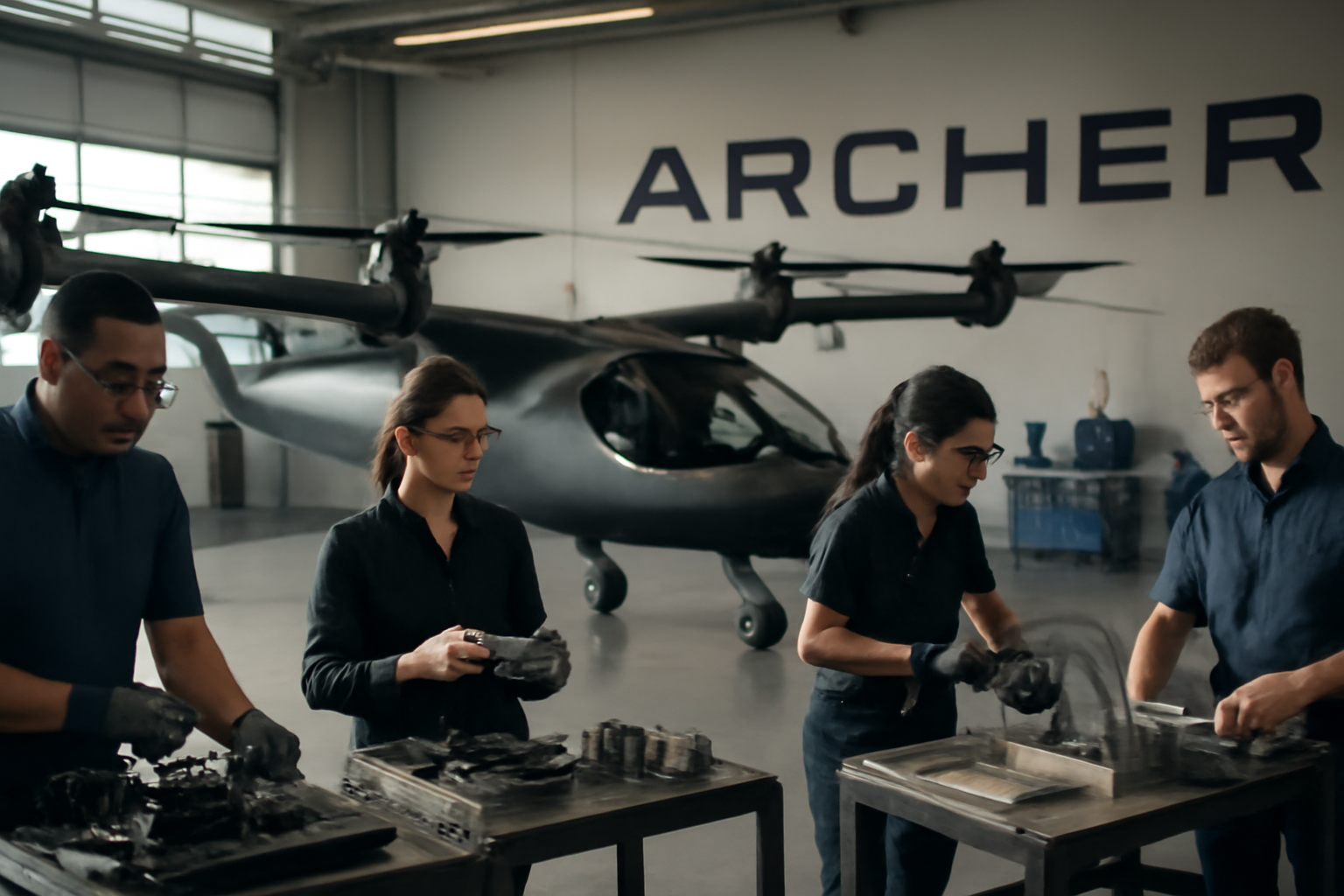
As Archer scales operations, manufacturing efficiency and supply chain robustness become critical success factors. A diversified portfolio can actually improve factory utilization rates and supply chain efficiency by spreading fixed costs across multiple product lines. This economies-of-scale effect can make the company more competitive on pricing while maintaining healthy margins.
Diversification also provides hedging against supply chain disruptions affecting specific components or materials. If a particular supplier becomes constrained, a company with multiple product lines can prioritize critical items and shift production accordingly. This operational flexibility is a competitive advantage in volatile global markets.
Additionally, developing multiple aircraft types allows Archer to optimize each platform for specific use cases and regulatory regimes. A cargo-focused eVTOL may have different requirements than a passenger aircraft, enabling more efficient engineering and certification processes tailored to each market segment’s unique demands.
Key Takeaways from Archer’s Strategic Pivot
- Archer is transitioning from a single-product eVTOL manufacturer to a diversified aerospace company, expanding into cargo, defense, and specialized aviation applications to capture multiple revenue streams.
- The company’s strategy mirrors the development approach of competitors like Wisk, which has refined aircraft designs through multiple generations, demonstrating the value of sustained R&D and iterative platform evolution.
- Diversification improves competitive positioning in a crowded market, enables participation in government contracts, enhances manufacturing efficiency, and provides resilience against supply chain disruptions and market volatility.
Archer Aviation’s acceleration toward becoming a diversified aerospace company reflects the industry’s maturation and the competitive pressures shaping the urban air mobility landscape. By expanding beyond eVTOL passenger transport and learning from peers like Wisk, Archer is positioning itself for sustained growth through multiple product lines and market segments. This strategic evolution, combined with disciplined R&D and supply chain management, could prove essential to Archer’s long-term success as personal air mobility transitions from concept to commercial reality. Investors, regulators, and industry observers will be watching closely as Archer executes on this expanded vision.