HIGHLIGHTS
- Trump Transportation Secretary Sean P. Duffy publicly marks Joby Aviation’s major eVTOL certification milestone, signaling federal commitment to accelerating air taxi deployment.
- Clear FAA regulatory pathways and executive backing reduce uncertainty for manufacturers, with commercial operations now projected for 2027-2028 in major U.S. cities.
- Joby’s certification success sets industry precedent and accelerates competitive timelines across the eVTOL sector, enabling rapid supply chain and infrastructure development.
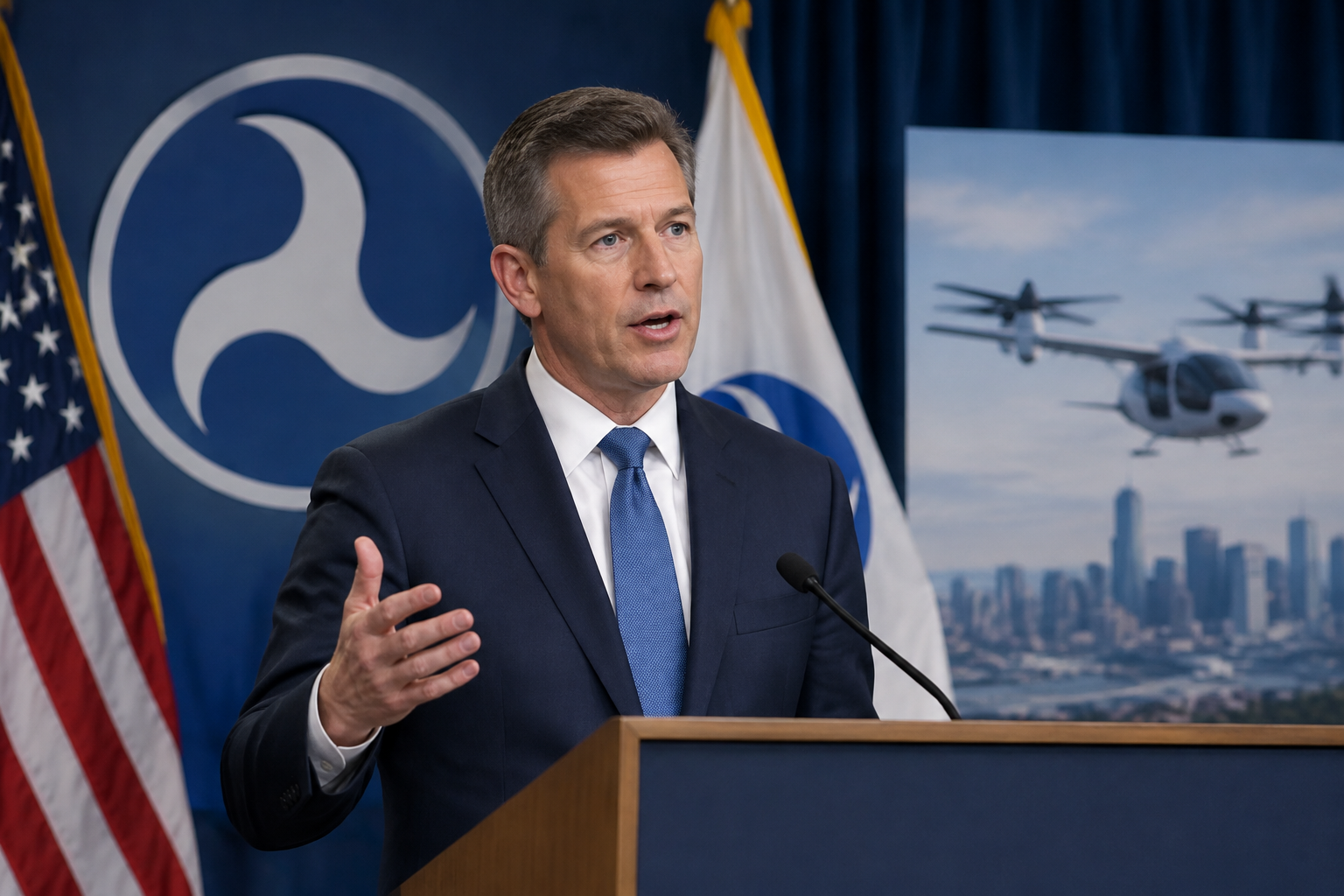
The Trump administration took a significant step forward in supporting urban air mobility on October 31, 2026, when Transportation Secretary Sean P. Duffy marked a major milestone in the regulatory pathway for electric vertical takeoff and landing (eVTOL) aircraft. The announcement, involving Joby Aviation’s ongoing certification efforts, signals renewed federal commitment to accelerating the deployment of next-generation air transportation systems across the United States.
Federal Support for Urban Air Mobility Accelerates
The Trump administration has made personal air mobility a priority within its broader transportation modernization agenda. Transportation Secretary Sean P. Duffy’s involvement in highlighting Joby Aviation’s progress demonstrates the federal government’s commitment to streamlining the regulatory approval process for commercial eVTOL operations. This level of executive attention underscores the administration’s belief that air taxis could reshape how Americans commute and travel in metropolitan areas.
By publicly endorsing industry milestones, the Department of Transportation signals to investors and manufacturers that the federal government is actively supporting the eVTOL sector. This regulatory clarity and political backing reduce uncertainty for companies investing billions in aircraft development and certification. Duffy’s announcement reflects a shift toward proactive federal engagement rather than passive oversight of the emerging industry.
The milestone marks a turning point in how Washington views electric aviation. Rather than treating eVTOL certification as a bureaucratic box-checking exercise, the administration is positioning it as a national infrastructure priority aligned with innovation and economic growth objectives.
Joby Aviation’s Certification Progress
Joby Aviation has been at the forefront of eVTOL development, with significant investments from Toyota and other major backers. The company’s pursuit of Part 135 certification from the Federal Aviation Administration (FAA) represents a critical step toward commercial operations. This certification category covers small aircraft used for air taxi and charter services, making it essential for Joby’s business model.
The milestone announced by Secretary Duffy likely reflects progress on key certification benchmarks, such as completing flight testing requirements, demonstrating safety protocols, or finalizing design specifications. These technical achievements are prerequisites for the FAA to issue an airworthiness certificate and operating authorization. Joby’s ability to reach these milestones on an accelerated timeline demonstrates the maturity of their aircraft platform and operational planning.
Beyond Joby, this certification progress has ripple effects across the industry. Other developers like Archer Aviation, Lilium, and Joby competitors will reference Joby’s pathway as they navigate their own federal approval processes. A successful certification sets precedent for what the FAA expects from eVTOL manufacturers and can inform regulatory guidance for future applicants.
Regulatory Pathway Becomes Clearer
One of the greatest challenges facing the eVTOL industry has been regulatory uncertainty. The FAA initially lacked clear procedures for certifying aircraft that didn’t fit traditional categories—they weren’t quite helicopters, airplanes, or drones. Over the past several years, the FAA has developed more specific guidance through special conditions and certification specifications tailored to electric vertical takeoff vehicles.
Secretary Duffy’s public support for Joby’s progress signals that the FAA and the Trump administration are aligned in establishing a fast-track pathway for qualified manufacturers. This regulatory clarity benefits not only Joby but the entire eVTOL ecosystem by reducing approval timelines and providing manufacturers with concrete benchmarks for compliance. Companies can now plan investments and commercialization timelines with greater confidence.
The clarification of regulatory requirements also opens the door to supply chain development, pilot training programs, and infrastructure planning. Cities and regions interested in air taxi services can now move forward with operational planning, knowing that certification is achievable within a defined timeline rather than an indefinite process.
Impact on Market Timeline for Commercial Operations
With Transportation Secretary Duffy marking this milestone in late 2026, the timeline for Joby’s commercial air taxi service has become tangible. Industry analysts have long projected that initial eVTOL air taxi operations could begin in 2027-2028, pending final FAA approval. Duffy’s announcement suggests that timeline is realistic and achievable if certification processes remain on track.
The first commercial eVTOL operations will likely launch in major metropolitan areas with high air congestion, such as New York, Los Angeles, and San Francisco. These initial routes will serve as proof of concept for the broader industry, demonstrating safety, efficiency, and passenger demand. Success in these initial markets could accelerate adoption in secondary cities.
Beyond Joby, this milestone encourages other eVTOL companies to accelerate their own certification timelines. Competitive pressure to be first to market will drive innovation and regulatory progress across the sector. The Federal government’s supportive stance means that qualified manufacturers should expect streamlined rather than adversarial certification processes.
Key Takeaways
- Transportation Secretary Sean P. Duffy publicly endorsed Joby Aviation’s eVTOL certification progress, signaling strong Trump administration support for urban air mobility deployment.
- Joby’s regulatory milestones demonstrate that FAA certification for commercial air taxi operations is achievable within defined timelines, likely enabling 2027-2028 service launches.
- Federal regulatory clarity and political backing are reducing investment uncertainty for the eVTOL industry, encouraging rapid commercial deployment and supply chain development.
The milestone marked by Transportation Secretary Sean P. Duffy represents a watershed moment for the eVTOL industry in the United States. By publicly recognizing Joby Aviation’s certification progress, the Trump administration has positioned electric vertical takeoff aircraft as a national priority rather than a speculative technology. This federal endorsement, combined with clarifying regulatory pathways, sets the stage for commercial air taxi operations to begin in major U.S. cities within the next 12-18 months. For investors, manufacturers, and cities planning urban air mobility infrastructure, Duffy’s announcement provides the regulatory confidence needed to move from planning to deployment.