HIGHLIGHTS
- Joby Aviation achieves $100 eVTOL flights in Tampa Bay, a historic milestone that brings personal air mobility pricing into parity with premium ground transportation services.
- This breakthrough pricing model pressures competitors and validates commercial viability, accelerating industry-wide adoption and regulatory approval timelines across multiple U.S. markets.
- Consumer accessibility to eVTOL services expands as prices decline, transitioning air mobility from experimental technology to practical, recurring transportation infrastructure in urban environments.
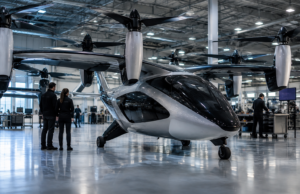
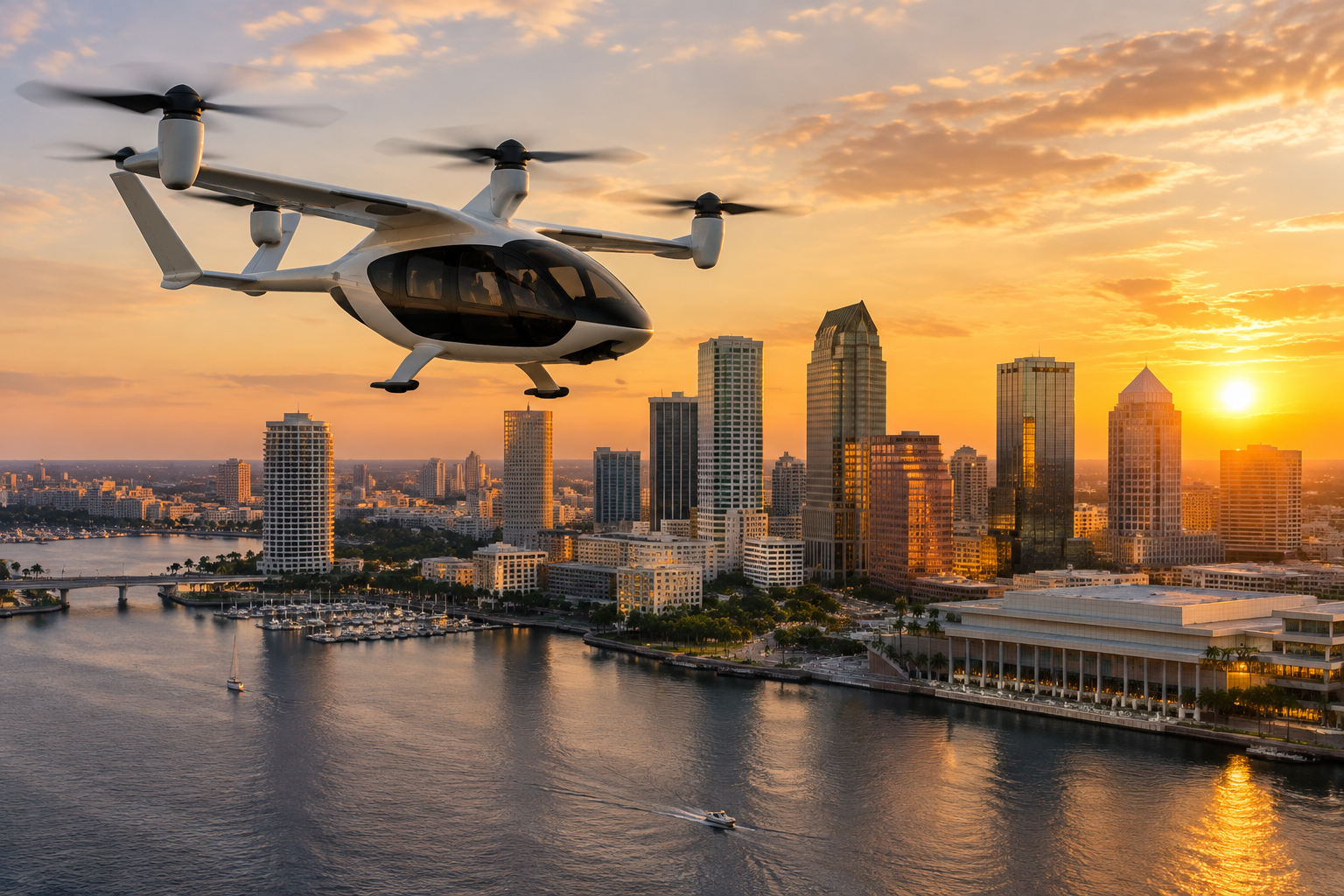
Joby Aviation has reached a pivotal moment in the evolution of personal air mobility. The company’s announcement of $100 eVTOL flights represents a significant step toward making urban air transportation accessible to mainstream consumers. This breakthrough pricing milestone comes as the air mobility industry races to commercialize electric vertical takeoff and landing vehicles, with Tampa Bay serving as a key testing ground for Joby’s operational capabilities and market readiness.
Joby’s Path to Affordable eVTOL Operations
For years, the eVTOL industry has been criticized for its astronomical price tags, with early commercial services pricing flights at $500 or more per ride. Joby Aviation has aggressively pursued cost optimization strategies to bring that barrier down to earth—literally. The company’s engineering and operational teams have focused on maximizing aircraft utilization, streamlining ground operations, and scaling production efficiencies to achieve unprecedented pricing in the commercial eVTOL market.
The $100 price point is particularly significant because it approaches parity with luxury ground transportation alternatives like premium ride-sharing services. This pricing strategy positions eVTOL flights as a practical option for business travelers, time-sensitive commuters, and tourists willing to pay a modest premium for speed and convenience. By demonstrating operational sustainability at this price level, Joby is proving that profitable, commercially viable eVTOL services can exist without exorbitant consumer costs.
Tampa Bay’s selection as a proving ground for these flights underscores the region’s importance in Joby’s commercialization timeline. The metropolitan area provides ideal conditions for testing operations: manageable airspace, sufficient customer demand from business and tourism sectors, and supportive regulatory relationships with local authorities. Success in Tampa could accelerate Joby’s expansion to other major U.S. markets competing for early-mover advantages in urban air mobility.
Market Implications and Competitive Landscape
Joby’s $100 flight announcement sends shockwaves through the personal air mobility sector, raising the bar for competitors and validating investor confidence in the industry’s eventual profitability. Other eVTOL developers—including Archer Aviation, Lilium, and Volocopter—are watching closely to understand how Joby achieved this cost structure and what it means for their own commercialization timelines. The pressure on competitors to match or beat this pricing will accelerate innovation across battery technology, manufacturing processes, and operational efficiency.
This development also signals to regulatory bodies and city planners that eVTOL services are transitioning from experimental technology to viable transportation infrastructure. When fares become affordable relative to existing premium transportation options, the regulatory pathway becomes clearer, and urban air mobility integration moves from theoretical possibility to practical planning requirement. Cities currently evaluating whether to support eVTOL operations now have concrete pricing data to inform infrastructure investments and airspace management strategies.
The competitive landscape is intensifying as the $100 barrier falls. Joby’s achievement demonstrates that scale, efficiency, and operational optimization can overcome the historical cost disadvantages that have plagued eVTOL services. Venture capital and corporate investors will use this milestone as a reference point when evaluating funding for other air mobility companies. The question shifts from “Is this commercially viable?” to “Can you achieve Joby’s cost structure or better?”
Technology and Operational Excellence Behind the Pricing
Achieving $100 flights requires excellence across multiple technical and operational dimensions. Joby’s aircraft design emphasizes energy efficiency through advanced aerodynamics, lightweight composite materials, and optimized electric propulsion systems. Every kilowatt-hour saved in battery consumption directly impacts the cost per flight, making battery efficiency one of the primary engineering focus areas. The company’s proprietary aircraft design, developed over years of iteration, represents the cumulative advantage of early investment in research and development.
Beyond the aircraft itself, ground operations have been revolutionized to maximize aircraft utilization. Fast charging infrastructure, minimal turnaround times between flights, and streamlined passenger processing all contribute to reducing the cost per revenue flight. Joby has invested heavily in automating and optimizing these operational procedures, understanding that capital-intensive aircraft sitting idle between flights destroys unit economics. Tampa Bay flights likely showcase operational procedures honed through years of testing and refinement.
Pilot training and operational safety standards represent another dimension where Joby’s maturity as a company becomes evident. The path to regulatory certification has forced the company to develop comprehensive safety protocols, pilot training programs, and maintenance procedures that, while adding cost, also instill confidence in passengers and regulators. These investments position Joby for long-term success by building a reputation for safe, reliable operations that can command premium pricing when necessary and sustainable pricing at scale.
Regulatory Approval and Future Expansion
The Tampa Bay flights operate within a framework of Federal Aviation Administration approvals and local regulatory coordination. Joby’s ability to execute $100 flights commercially demonstrates that the regulatory pathway is becoming clearer and that certification processes are maturing. The FAA’s gradual approval of eVTOL operations, combined with industry standards development and safety validation, has created an environment where commercial operations can proceed with defined rules and oversight mechanisms.
This regulatory progress is essential for scaling beyond single-market operations. As Joby expands from Tampa Bay to other metropolitan areas—such as Los Angeles, where the company has previously announced plans—regulatory familiarity and streamlined approval processes will accelerate deployment timelines. Cities and regions that have already engaged with eVTOL operators or expressed interest in urban air mobility services will likely be prioritized for early expansion, creating a competitive advantage for early-adopter communities.
The $100 flight announcement is likely to accelerate regulatory discussions at multiple levels of government. State and local officials will begin evaluating infrastructure investments necessary to support scaled eVTOL operations. Federal agencies may reassess certification timelines based on demonstrated operational success and consumer interest. International regulators will monitor the U.S. market closely, with implications for eVTOL adoption across Europe, Asia-Pacific, and other regions pursuing urban air mobility solutions.
Consumer Adoption and Long-Term Vision
At $100 per flight, eVTOL services enter the category of discretionary but economically rational transportation choices for affluent consumers and time-constrained business travelers. This pricing level opens possibilities for recurring use cases: airport shuttle services, business district point-to-point transport, and tourist experiences. As battery technology improves and manufacturing scales, prices could decline further, progressively opening the service to broader consumer segments. Joby’s vision of democratized air mobility becomes increasingly tangible as price barriers diminish.
Consumer adoption will likely follow predictable patterns observed in other transportation innovations. Early adopters—tech enthusiasts, business professionals, and affluent travelers—will drive initial demand and generate positive word-of-mouth. As service reliability improves and pricing becomes more competitive relative to ground alternatives, adoption broadens. Safety records and passenger experiences shared on social media will significantly influence perceptions and create network effects that accelerate market penetration. Tampa Bay flights serve as real-world validation that will fuel this adoption curve.
The long-term vision extends beyond single-passenger recreational flights to integrated urban transportation networks. Joby and competitors envision ecosystems where eVTOL services connect to existing transit infrastructure, seamlessly linking passengers from residential areas to airports, business districts, and major transportation hubs. The $100 pricing milestone suggests that this vision, once considered impossibly expensive, is transitioning toward economic feasibility. Over the next 5-10 years, successful operators at this price point will establish eVTOL services as a permanent fixture in urban transportation.
Key Takeaways
- Joby Aviation’s $100 eVTOL flights in Tampa Bay represent a watershed moment for affordability and commercial viability in personal air mobility, proving sustainable business models are achievable.
- The pricing breakthrough raises competitive pressure across the industry while validating investor confidence and accelerating regulatory adoption timelines for urban air mobility integration.
- As unit costs decline and operational procedures mature, eVTOL services are transitioning from experimental technology to viable transportation infrastructure with expanding consumer accessibility.
Joby Aviation’s achievement of $100 eVTOL flights marks a turning point for personal air mobility. The company has demonstrated that through engineering excellence, operational optimization, and strategic scaling, commercial electric vertical takeoff and landing services can achieve pricing levels that make them economically comparable to premium ground transportation. As Tampa Bay flights validate this business model and create positive consumer experiences, the entire industry benefits from proof that the path to profitable, accessible air mobility is real and achievable. The next frontier will be rapid geographic expansion and price reduction that brings eVTOL services within reach of increasingly broad consumer segments, ultimately fulfilling the long-held vision of democratized urban air transportation.