HIGHLIGHTS
- P550 all-electric powertrain eliminates noise signatures and thermal detection risks, transforming tactical stealth capabilities for forward-deployed military operations.
- eVTOL design removes runway dependencies, enabling rapid deployment from austere locations and improving commander responsiveness to real-time intelligence requirements.
- U.S. Army’s P550 adoption positions American forces as technology leaders while generating operational data that will shape international military aviation modernization and defense partnerships.
The U.S. Army has set its sights on modernizing its unmanned aviation fleet with the P550 eVTOL UAS, a groundbreaking all-electric vertical takeoff and landing system. This cutting-edge platform signals a pivotal shift toward sustainable military operations while maintaining the tactical advantages that modern armed forces demand. As governments worldwide accelerate their commitment to decarbonization, the P550 represents a tangible step forward in bringing clean energy technology to one of the most demanding operational environments.
Revolutionary All-Electric Propulsion for Military Operations
The P550 eVTOL UAS stands apart from traditional military drones by leveraging an all-electric powertrain, eliminating the need for fossil fuel combustion. This fundamental redesign not only reduces the platform’s carbon footprint but also dramatically lowers operational noise signatures—a critical advantage in tactical scenarios where stealth and discretion matter. Electric motors deliver consistent, predictable performance in diverse environmental conditions, from high-altitude mountain operations to low-level urban reconnaissance.
Battery technology advancement has been the primary enabler of this transition. Modern lithium-based energy systems provide sufficient power density to sustain extended flight operations while maintaining the payload capacity military operations require. The P550 engineers have optimized energy management systems to ensure reliability under the stringent performance standards the U.S. Army enforces across its fleet. This represents years of research and development focusing on thermal management, charge cycling, and redundancy protocols.
The shift to electric propulsion also dramatically reduces maintenance burdens compared to traditional internal combustion engines. Without spark plugs, fuel injectors, or complex ignition systems, the P550 requires fewer scheduled maintenance intervals and replacement components. This translates directly to lower lifecycle costs and improved availability rates—metrics that directly impact operational readiness and defense budgets.
Vertical Takeoff Capabilities Transform Deployment Flexibility
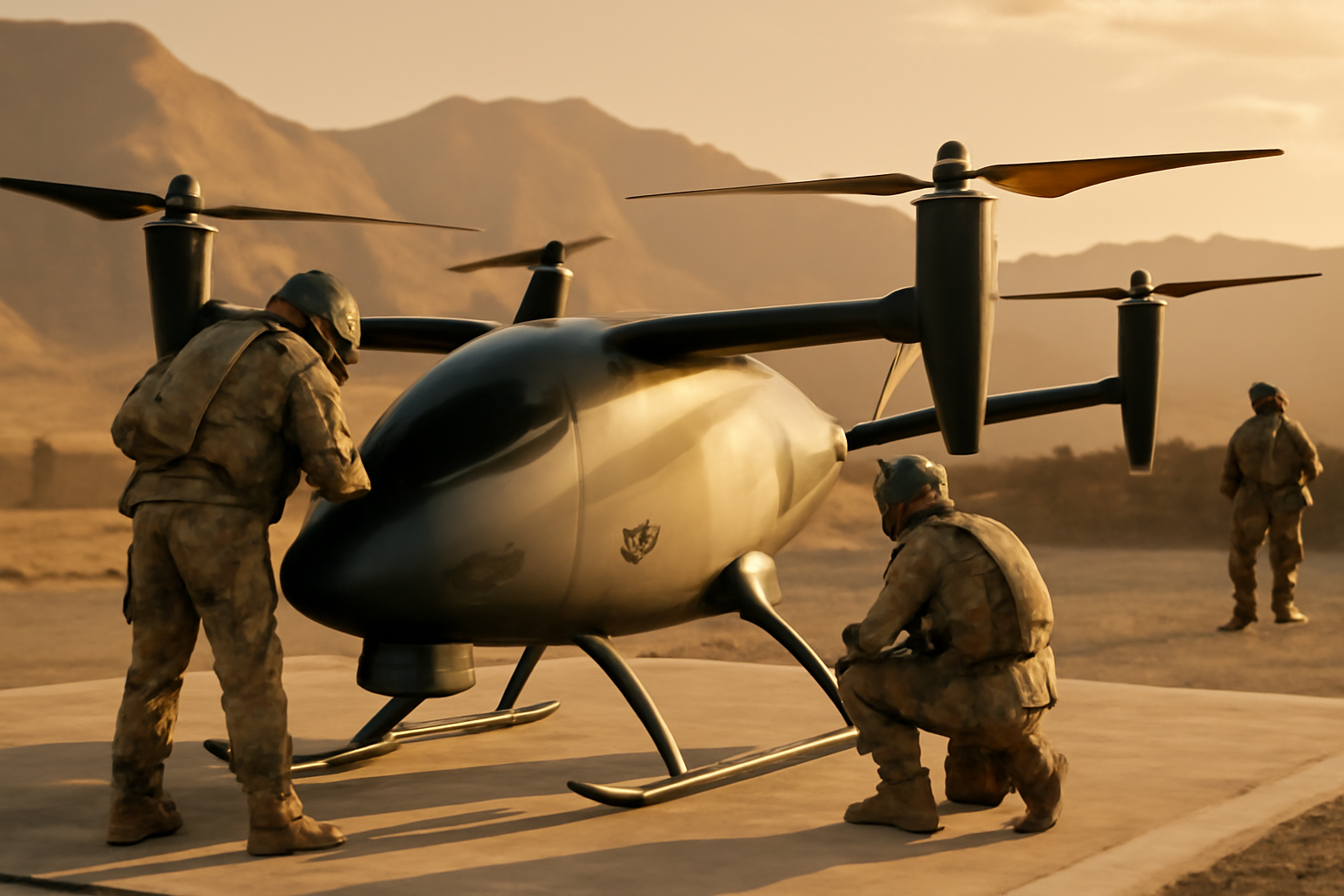
The eVTOL configuration of the P550 eliminates the need for conventional runways or launching mechanisms, fundamentally expanding where the Army can deploy unmanned systems. Soldiers can operate the P550 from forward operating bases, rooftops, moving platforms, or austere field locations without requiring specialized infrastructure. This flexibility proves invaluable in rapid-response scenarios, disaster relief operations, and situations where traditional airfields are unavailable or compromised.
The vertical takeoff and landing capability reduces platform complexity compared to fixed-wing designs that require extended launch sequences. Operators can launch the P550 quickly in response to emerging tactical situations, respond to changing intelligence requirements, or reposition assets with minimal preparation time. This responsiveness enhancement provides commanders with more adaptive, real-time decision-making capabilities across varied operational theaters.
Range, altitude, and loiter time represent critical performance parameters for unmanned systems, and the P550 architecture optimizes these characteristics for military missions. The vertical takeoff capability allows the platform to climb to operational altitude efficiently, minimizing energy expenditure during the climb phase. Once on station, the P550 can maintain extended surveillance or reconnaissance missions, providing persistent overhead coverage that enhances situational awareness for ground forces.
Strategic Implications for Military Aviation Modernization
The U.S. Army’s investment in the P550 eVTOL UAS signals a broader commitment to incorporating advanced air mobility platforms into future warfare doctrine. As peer competitors develop their own eVTOL capabilities, early adoption positions American forces at the technological frontier. The P550 serves as a testbed for integrating electric aviation into standard military operations, generating operational data that informs future platform development and procurement decisions.
Regulatory and procurement pathways for military eVTOLs differ substantially from civilian commercial aviation, allowing the Army to accelerate development timelines and field-test advanced concepts faster than commercial operators. This advantage enables the military to validate new technologies, identify integration challenges, and refine operational procedures before broader fleet adoption. The lessons learned from P550 operations will shape second and third-generation military electric aircraft for decades.
International allies and defense partners are closely monitoring American progress in military eVTOL development. Successful P550 deployment could catalyze international acquisition efforts, joint development programs, and standardized tactical doctrines around electric vertical takeoff systems. NATO countries, in particular, face pressure to modernize air assets while meeting climate commitments, making electrified unmanned aviation an attractive solution to both operational and environmental mandates.
Operational and Logistical Advantages of Electric UAS
Electric propulsion systems offer distinctive operational advantages that extend far beyond environmental benefits. The absence of fuel burning eliminates thermal signatures that infrared detection systems exploit, enhancing survivability in contested environments. Lower operational noise profiles enable covert reconnaissance operations in sensitive areas where acoustic detection risks compromise mission effectiveness. These characteristics prove particularly valuable in operations where adversaries possess advanced surveillance and air defense capabilities.
Logistics chains simplify considerably with all-electric platforms. Rather than managing complex fuel supply chains, ammunition storage facilities, and hazardous material handling procedures, Army personnel simply need battery charging infrastructure and spare power packs. This simplified logistics picture reduces supply chain vulnerability, decreases transport requirements, and mitigates environmental contamination risks associated with fuel handling. Forward-deployed units can operate more independently with smaller logistical footprints.
Predictable operating costs represent another significant advantage. Fuel price volatility has historically impacted military aviation budgets unpredictably, making long-term planning difficult. With electric systems, energy costs become more stable and manageable. Electricity pricing demonstrates far less volatility than petroleum markets, enabling more accurate budget forecasting and resource allocation planning. This financial predictability improves departmental planning cycles and enhances strategic budgeting accuracy.
Key Strategic and Operational Takeaways
- The P550 eVTOL UAS features all-electric propulsion that reduces noise signatures, eliminates thermal detection risks, and dramatically lowers maintenance requirements compared to traditional military drones.
- Vertical takeoff capability eliminates runway dependencies, enabling rapid deployment from forward operating bases and austere locations while accelerating tactical responsiveness to emerging intelligence requirements.
- Early Army adoption of electric aviation technology positions U.S. forces at the technological frontier while generating operational data to inform next-generation platform development and potential international defense partnerships.
The P550 eVTOL UAS represents more than an incremental upgrade to Army unmanned aviation capabilities—it embodies a fundamental transformation in how military forces will operate air assets in the coming decades. By embracing all-electric propulsion and vertical takeoff technologies, the U.S. Army demonstrates commitment to both operational excellence and environmental stewardship. As development progresses and operational experience accumulates, the P550 will undoubtedly influence defense procurement priorities globally, establishing electric-powered unmanned systems as essential components of modern military aviation doctrine.