
HIGHLIGHTS
- Joby’s stock rise is driven by solid operational results, but FAA regulatory certification and path to profitability remain the company’s most critical unresolved challenges
- Competitive pressure from traditional aerospace leaders (Boeing, Airbus, Bell) and well-funded rivals (Archer, Lilium) threatens Joby’s market position in an increasingly crowded eVTOL sector
- Strategic partnerships with JetBlue and Toyota provide manufacturing expertise and capital, but success depends on achieving commercial operations and profitability before capital reserves are exhausted
Joby Aviation, one of the leading developers of electric vertical takeoff and landing aircraft, has seen its stock price rise on the back of solid operational results, yet investors and industry analysts remain keenly focused on the company’s most significant hurdle: achieving regulatory certification and demonstrating a clear path to profitability in an increasingly competitive air mobility market.
Strong Financial Performance Drives Market Confidence
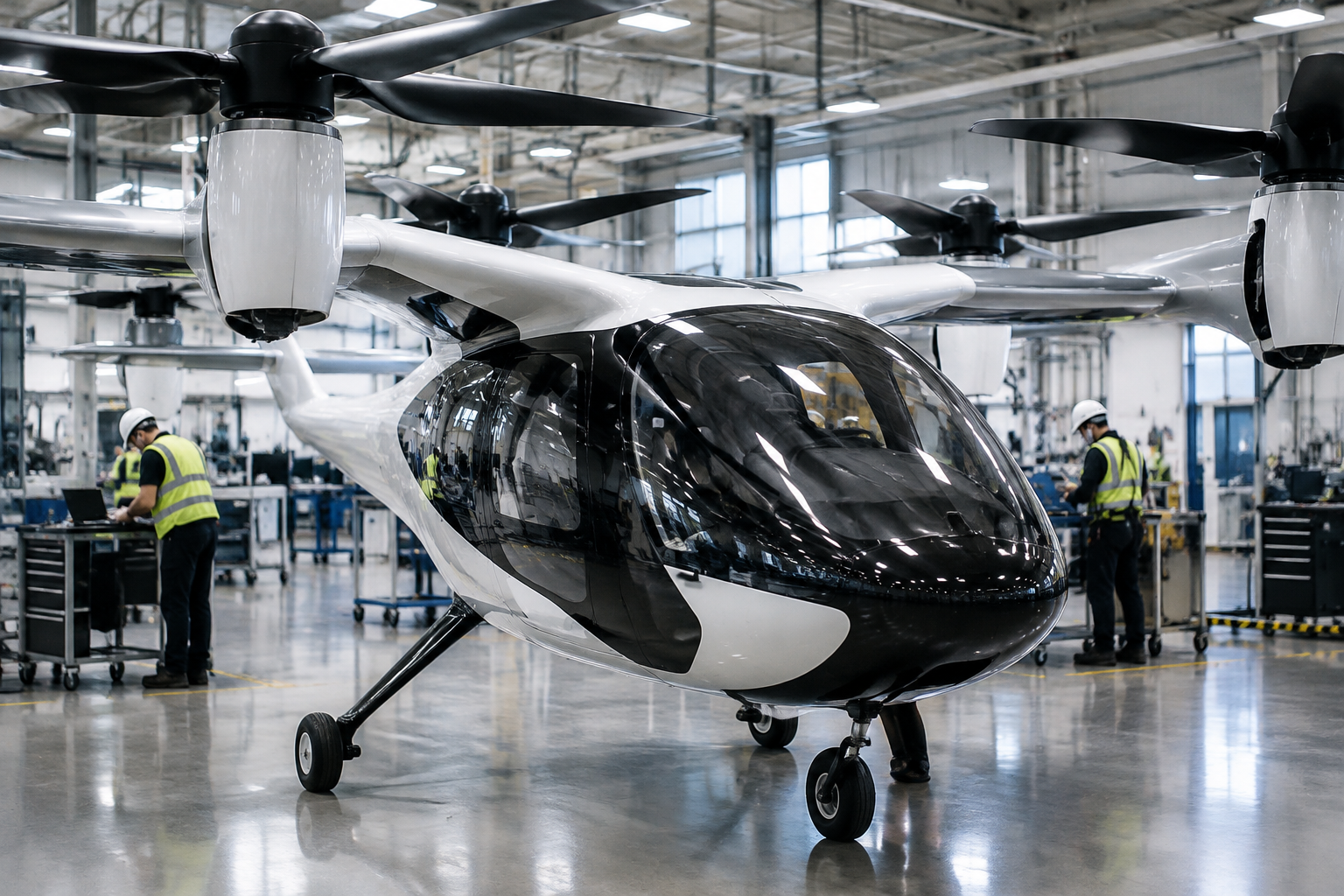
Joby Aviation’s latest financial results have provided a modest boost to investor confidence, with the company’s stock reflecting positive market sentiment in response to operational achievements and progress updates. The eVTOL manufacturer has demonstrated continued momentum in its development programs, particularly in the refinement of its S4 aircraft design and manufacturing processes. This positive reaction underscores the market’s recognition that Joby remains a serious contender in the emerging personal air mobility sector.
The company’s performance metrics, while still operating in the pre-revenue stage, have shown measurable progress in areas critical to eventual commercialization. These advancements include manufacturing efficiency improvements and successful test flight campaigns that validate the company’s engineering and design decisions. For a pre-commercial aerospace developer, such demonstrations are essential for maintaining stakeholder confidence and securing continued investment capital.
However, the stock price improvement should be viewed within the broader context of Joby’s development stage. While quarterly results may show positive trends, the company’s path to generating commercial revenue remains years away, and Wall Street’s enthusiasm is tempered by the substantial regulatory and operational challenges that still lie ahead.
Regulatory Certification Remains the Critical Barrier
Despite the recent stock appreciation, the most significant challenge facing Joby Aviation is obtaining full regulatory certification from the U.S. Federal Aviation Administration (FAA). This approval represents the essential gatekeeper for any eVTOL operator seeking to conduct commercial passenger flights in U.S. airspace. The FAA’s Special Conditions process for novel aircraft types has proven more complex and time-consuming than many industry observers initially anticipated, with multiple rounds of data submission and analysis extending development timelines.
The certification pathway requires Joby to demonstrate comprehensive safety standards across numerous technical domains, from aircraft structure and systems redundancy to pilot training protocols and maintenance procedures. Each category demands rigorous testing, documentation, and independent validation. The company has been working collaboratively with FAA officials through the certification process, but regulatory agencies must balance industry momentum with public safety imperatives, a tension that inevitably extends approval timelines.
Beyond FAA certification, Joby must also navigate approval processes in international markets where the company intends to operate. Japan, where Joby has established significant partnerships and development relationships, represents a crucial market, but the Civil Aviation Bureau of Japan (JCAB) maintains its own rigorous certification standards. This multi-jurisdictional regulatory challenge means that even successful U.S. approval would not immediately translate to global commercial operations.
Path to Profitability Demands Significant Scale
While Joby’s recent results have demonstrated operational progress, the company’s pathway to profitability remains unclear and will require achievement of substantial passenger flight volumes. Early financial models suggest that eVTOL services will demand premium pricing—initially ranging from $150 to $250+ per passenger seat—to justify the aircraft’s acquisition costs, pilot training requirements, and infrastructure development. This pricing structure limits the addressable market to affluent customers and specific high-value use cases, such as airport transfers in major metropolitan areas.
The company’s business model depends on achieving manufacturing scale and operational efficiency that would dramatically reduce unit costs. This requires moving from limited prototype production to actual commercial manufacturing at volumes that Joby’s current facilities are not designed to support. The company has announced plans for expanded production capacity, but translating these announcements into operational manufacturing at meaningful scale represents a multi-year and multi-hundred-million-dollar undertaking.
Cash burn remains a critical metric for pre-revenue aerospace companies like Joby. Even with recent funding rounds and strategic investments from sponsors like Toyota and Uber, the company’s runway for funding remains finite. Reaching cash flow positivity before capital reserves are exhausted represents a fundamental survival challenge for the organization, regardless of technical achievements or regulatory progress.
Competitive Landscape Intensifies Market Pressures
Joby’s competitive position, while strong, faces increasing pressure from other well-capitalized eVTOL developers. Companies such as Archer Aviation, Lilium, and Archer’s rival Blade Urban Air Mobility operators are pursuing parallel development and certification pathways. Additionally, traditional aerospace giants including Boeing, Airbus, and Bell Helicopter have announced eVTOL programs, leveraging their existing manufacturing expertise, supply chain relationships, and regulatory experience.
This competitive intensity raises critical questions about market consolidation and winner-take-most dynamics in the personal air mobility sector. Investors must evaluate whether the market can support multiple profitable eVTOL operators, or whether consolidation and attrition will reduce the field to a smaller number of established players. Joby’s current valuation assumes a significant market share of a large global eVTOL market, but this outcome remains speculative and dependent on multiple external factors including regulatory approval, economic conditions, and urban infrastructure development.
The competitive environment also creates pressure on supply chains and component sourcing. Early-mover advantages in securing battery technology suppliers, motor manufacturers, and avionics system partners could prove decisive. Joby’s established relationships with technology partners like JetBlue and helicopter operators position the company favorably, but these partnerships alone do not guarantee commercial success in an increasingly crowded market.
Strategic Partnerships and Market Development
Joby’s strategic partnerships represent a significant strategic asset in navigating toward commercialization. The company’s relationships with JetBlue Airways, which has committed to purchasing aircraft and infrastructure development, and its partnership with Toyota for manufacturing and component development, provide both capital and operational expertise. These partnerships signal confidence from established transportation companies in Joby’s technology and business model.
Additionally, Joby’s focus on specific high-value markets—particularly airport ground transportation in major metropolitan areas—demonstrates realistic market assessment. Rather than pursuing mass-market mobility services, the company has prioritized use cases where premium pricing and operational predictability align. This focused approach improves near-term feasibility, though it also caps addressable market size in the critical early commercial phase.
The company’s international expansion strategy, particularly its emphasis on the Japanese market where regulatory processes may move more efficiently, provides potential for achieving commercial operations sooner than pure U.S. regulatory timelines might suggest. Success in Japan could provide valuable operational data, manufacturing experience, and revenue streams that strengthen Joby’s financial position before full U.S. market entry.
Key Takeaways for Investors and Industry Observers
- Joby’s stock appreciation reflects genuine operational progress, but should not obscure the reality that FAA certification and path to profitability remain substantially incomplete
- The eVTOL market competitive landscape is intensifying as traditional aerospace companies enter the sector, raising questions about Joby’s long-term market position and profitability prospects
- Strategic partnerships with JetBlue and Toyota provide capital and expertise advantages, but success ultimately depends on Joby achieving commercial operations, manufacturing scale, and positive unit economics within its existing capital runway
Joby Aviation’s recent stock performance reflects justified recognition of the company’s technical achievements and development progress. However, the substantial hurdles ahead—regulatory certification, achieving manufacturing scale, and demonstrating path to profitability—represent challenges that no amount of current market enthusiasm can overcome. The company’s success story remains incomplete, and investors should approach Joby’s valuation with careful consideration of execution risks and competitive pressures that will shape the company’s ultimate trajectory in the emerging personal air mobility market.