HIGHLIGHTS
- Toyota leverages automotive-grade manufacturing, solid-state battery tech, and regulatory expertise to accelerate eVTOL commercialization ahead of startup competitors
- The company’s electrification experience and global supply chain enable faster scaling and cost-reduction strategies that smaller eVTOL developers cannot match
- Toyota’s entry into urban air mobility reinforces industry credibility, attracts infrastructure investment, and influences regulatory standards development worldwide
Toyota, one of the world’s largest automotive manufacturers, has announced a significant commitment to electric vertical takeoff and landing (eVTOL) technology. This groundbreaking initiative marks Toyota’s entry into the burgeoning personal air mobility sector, demonstrating the company’s strategic vision for transforming transportation beyond traditional ground-based vehicles. As urban congestion intensifies and environmental concerns drive innovation, Toyota’s investment in eVTOL represents a pivotal moment for the entire industry.
Toyota’s Strategic Entry into Electric Aviation
Toyota’s announcement underscores the automotive giant’s recognition that the future of mobility extends beyond cars and trucks. The company has leveraged its extensive experience in electrification, battery technology, and manufacturing excellence to develop competitive solutions in the eVTOL space. This strategic diversification positions Toyota alongside other industry leaders exploring urban air mobility, while bringing decades of automotive engineering rigor to aircraft development.
The company’s commitment to eVTOL technology reflects broader industry trends where traditional automotive manufacturers are investing heavily in aerial transportation. Toyota’s resources, supply chain expertise, and commitment to quality control provide significant competitive advantages. By entering this market, Toyota aims to capture a portion of the projected multi-billion-dollar urban air mobility sector expected to emerge over the next decade.
Toyota’s involvement also signals confidence in regulatory progress and market readiness for commercial eVTOL operations. As the company develops its aerial vehicle platform, it simultaneously contributes to industry standardization efforts and infrastructure development necessary for widespread adoption. This holistic approach demonstrates how established automotive leaders can accelerate eVTOL commercialization.
Manufacturing Innovation and Battery Technology
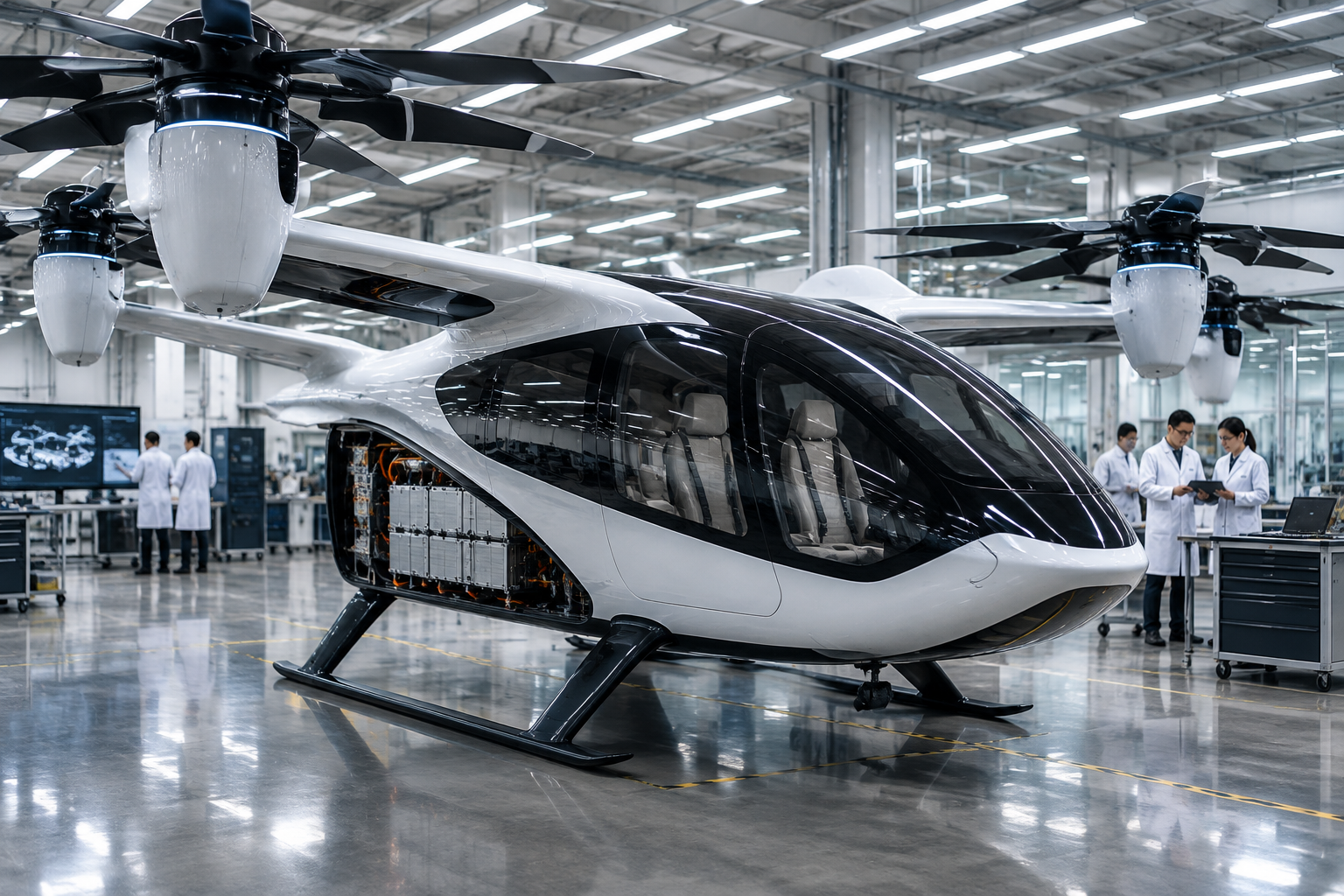
At the heart of Toyota’s eVTOL initiative lies its world-class battery technology and manufacturing capabilities. Toyota has spent years perfecting electric powertrains through hybrid and battery electric vehicle production, knowledge now being applied to aircraft propulsion systems. The company’s battery innovations, including solid-state battery research and advanced lithium-ion chemistries, provide critical advantages for eVTOL applications where energy density, reliability, and safety are paramount.
Toyota’s manufacturing philosophy emphasizes precision, quality, and continuous improvement—principles essential for aircraft production. The company’s expertise in lean manufacturing, automated assembly, and supply chain management can dramatically reduce production costs and time-to-market for eVTOL vehicles. This operational excellence differentiates Toyota from startups and smaller players in the eVTOL space, enabling faster scaling and more sustainable business models.
The integration of battery technology with aircraft design represents a complex engineering challenge that Toyota is uniquely positioned to address. The company’s deep understanding of battery thermal management, weight optimization, and system integration gained through decades of automotive electrification provides transferable expertise. Toyota’s approach emphasizes reliability and durability, ensuring eVTOL aircraft can operate safely and efficiently across diverse operational scenarios.
Market Positioning and Competitive Advantages
Toyota’s entry into eVTOL technology positions the company as a significant competitor to emerging players like Joby Aviation, Lilium, and Archer. However, Toyota brings distinct advantages: established relationships with regulators, proven manufacturing infrastructure, financial stability, and brand recognition. These factors could accelerate Toyota’s path to certification and commercial operations compared to venture-backed startups with limited operational history.
The company’s brand reputation for reliability and safety is invaluable in aviation, an industry where consumer confidence depends on demonstrated competence and quality. Toyota’s commitment to eVTOL reinforces its image as an innovative mobility solutions provider, not merely a traditional carmaker. This positioning appeals to urban communities and forward-thinking city planners seeking trusted partners for next-generation transportation systems.
Toyota’s involvement also strengthens the entire eVTOL ecosystem by lending credibility to the technology. As a global automotive leader, Toyota’s participation attracts investment, regulatory attention, and public interest to urban air mobility. The company’s scale enables it to influence industry standards, battery supply chains, and manufacturing best practices—amplifying its impact beyond its own vehicle development efforts.
Regulatory Pathway and Commercialization Timeline
Toyota’s eVTOL initiative must navigate complex regulatory environments across multiple jurisdictions. The Federal Aviation Administration (FAA), European Union Aviation Safety Agency (EASA), and other regulatory bodies are developing certification frameworks for electric aircraft. Toyota’s engagement with these agencies, combined with its automotive regulatory expertise, positions the company to efficiently meet certification requirements and influence favorable policy development.
The company’s announcement suggests a realistic timeline for eVTOL commercialization, likely spanning several years. Initial operations may focus on cargo transport or air taxi services in controlled environments—scenarios offering lower regulatory barriers and clearer business cases. Toyota’s phased approach, demonstrated through pilot programs and demonstrator flights, reflects industry best practices and reduces development risk.
Infrastructure development represents another critical pathway to commercialization. Urban air mobility requires landing pads, charging facilities, air traffic management systems, and maintenance infrastructure. Toyota’s involvement incentivizes city planners and infrastructure developers to invest in these systems, accelerating ecosystem maturation. The company’s global presence enables simultaneous development in multiple markets, compressing overall time-to-commercialization.
Environmental and Societal Impact
Electric vertical takeoff and landing technology promises significant environmental benefits compared to conventional helicopters and ground-based transportation. eVTOL aircraft produce zero direct emissions, reduce noise pollution substantially, and can operate efficiently using renewable energy sources. Toyota’s commitment to eVTOL aligns with its broader sustainability agenda and carbon neutrality objectives, positioning the company as a leader in environmental responsibility.
Urban air mobility could fundamentally transform metropolitan transportation by reducing ground-level congestion, lowering travel times, and improving air quality. By democratizing aerial transportation through efficient, electric aircraft, Toyota’s eVTOL efforts contribute to creating more livable, sustainable cities. The technology particularly benefits underserved communities with limited ground-based transportation infrastructure, expanding mobility access across economic strata.
Toyota’s eVTOL initiative also creates economic opportunities through job creation in aircraft manufacturing, maintenance, operations, and infrastructure development. The company’s investment in research facilities, manufacturing plants, and training programs generates employment while building long-term competitive advantage. This economic dimension underscores how eVTOL development benefits communities beyond the urban centers where aircraft operate.
Key Takeaways: Toyota’s eVTOL Strategy
- Toyota brings automotive-grade manufacturing, battery expertise, and regulatory credibility to the eVTOL sector, accelerating commercialization timelines
- The company’s solid-state battery research and electrification experience provide critical technical advantages for aircraft propulsion and efficiency
- Toyota’s global scale and supply chain infrastructure position it to influence industry standards and scale production faster than venture-backed competitors
Toyota’s announcement of its eVTOL initiative represents a watershed moment for personal air mobility. The automotive giant’s entry signals industry maturation and investor confidence in urban air mobility’s commercial viability. As Toyota develops its aerial platforms alongside regulatory progress and infrastructure development, the company is helping shape the future of mobility—one that extends into the skies above our cities. The next several years will reveal whether Toyota’s manufacturing excellence translates into leadership in the emerging eVTOL market, potentially redefining what mobility means for generations to come.