HIGHLIGHTS
- Archer Aviation could reach FAA certification by 2027–2028, a key inflection point that validates the commercial eVTOL business model and could trigger significant investor appreciation.
- Early revenue generation from urban air mobility services in major U.S. cities (LA, NYC, Miami) would prove market demand and potentially justify multiples of today’s valuation for patient early investors.
- Substantial execution and competitive risks exist—successful eVTOL operations remain unproven at commercial scale, and numerous well-funded competitors are pursuing similar timelines, requiring realistic risk assessment.
Archer Aviation, one of the most promising players in the electric vertical takeoff and landing (eVTOL) sector, has captured investor attention as the personal air mobility industry races toward commercial reality. With significant funding, FAA certification milestones on the horizon, and a clear pathway to revenue, some financial analysts are exploring whether a modest $5,000 investment in Archer today could potentially multiply into substantial wealth over the coming years. This emerging opportunity reflects the transformative potential of urban air mobility and the race to dominate a nascent trillion-dollar market.
The Archer Aviation Story and Market Position
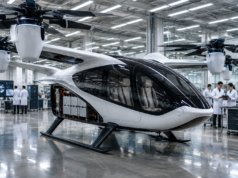
Archer Aviation has established itself as a leading contender in the eVTOL race through a combination of innovative engineering, strategic partnerships, and aggressive commercialization timelines. The company’s flagship aircraft, designed for urban air mobility applications, promises to revolutionize short-distance travel by reducing commute times and alleviating ground-level congestion in major metropolitan areas. With backing from prominent investors and a clear regulatory roadmap, Archer is positioned to be among the first operators bringing electric aircraft to paying customers.
The company’s business model focuses on operating as an air mobility service provider rather than simply manufacturing aircraft. This integrated approach—controlling both the vehicle platform and the customer experience—provides multiple revenue streams and greater margin potential than traditional aerospace suppliers. By combining hardware expertise with service operations, Archer creates a defensible competitive moat in an increasingly crowded market.
Archer’s market position is further strengthened by partnerships with established aerospace and automotive companies, strategic locations for vertiport development, and an experienced leadership team drawn from aviation and technology sectors. These competitive advantages, combined with early-mover benefits, suggest the company could capture meaningful market share as eVTOL services launch in cities worldwide.
Why Early Investment in eVTOL Leaders Could Offer Outsized Returns
The personal air mobility sector stands at an inflection point comparable to early-stage electric vehicle adoption. Regulatory frameworks are solidifying, technology maturation is accelerating, and consumer demand for time-saving transportation solutions remains strong. Early investors in dominant eVTOL operators could see exponential returns if the industry achieves even a fraction of its projected growth trajectory—some analysts predict the global eVTOL market could exceed $1 trillion by the 2040s.
History demonstrates that fortunes accumulate when investors identify transformative technologies before mainstream adoption. Those who invested in Tesla during its early public years, for instance, saw returns many multiples higher than their initial capital. While no investment is guaranteed, the parallel dynamics in eVTOL—regulatory tailwinds, infrastructure investment, corporate partnerships, and consumer enthusiasm—suggest similar outsized return potential for early investors in well-positioned companies like Archer.
The $5,000 threshold is psychologically significant because it represents an amount many retail investors can allocate to higher-risk, higher-reward opportunities without catastrophic personal financial consequences. For those with risk tolerance and a long-term investment horizon, this entry point into a revolutionary transportation sector may offer compelling asymmetric risk-reward positioning heading into the critical 2027–2030 commercialization window.
FAA Certification and the Path to Revenue Generation
Archer’s timeline toward generating real revenue hinges on securing Special Airworthiness Certification from the FAA—a regulatory milestone that validates the aircraft’s safety and design. The company has been working methodically through the certification process, conducting extensive testing and demonstrating compliance with stringent aviation safety standards. Achieving certification represents a major de-risking event that could trigger significant investor enthusiasm and potentially accelerate stock appreciation.
Once certified, Archer plans to launch commercial air mobility services initially in select U.S. cities, beginning with routes in California and potentially expanding to major metropolitan areas including New York, Miami, and Los Angeles. Early operational revenue, even from limited service areas, would prove the business model’s viability and likely justify higher valuation multiples. The transition from pre-revenue to revenue-generating company is historically one of the most significant inflection points for emerging aerospace and mobility companies.
Beyond certification, Archer’s success depends on operational execution—managing vertiport infrastructure, pilot recruitment and training, regulatory compliance, and customer acquisition. Companies that execute flawlessly through this phase typically see dramatically expanded valuation multiples and access to capital for scaling. Early investors who maintain positions through successful certification and initial revenue milestones could capture substantial appreciation.
Risks and Realistic Considerations for Investors
While the Archer Aviation opportunity presents compelling upside potential, investors must honestly assess meaningful risks before committing capital. The eVTOL sector remains unproven at commercial scale—no operator has yet successfully launched sustained, profitable urban air mobility services. Regulatory timelines could extend beyond current expectations, vertiport development could face local opposition, or consumer demand might materialize slower than projections suggest. These execution risks are real and could significantly impact Archer’s success.
Additionally, the competitive landscape is intensifying with numerous well-funded eVTOL startups competing for regulatory approval and market share. Joby Aviation, Lilium, and international players are pursuing similar timelines and strategies, meaning market share concentration is uncertain. Archer’s success is not assured—the company could face technological setbacks, funding challenges, regulatory delays, or competitive pressures that undermine its current market position.
Investors should view a $5,000 position in Archer Aviation as a speculative, high-risk allocation suitable only for those with diversified portfolios and long investment horizons. The potential for exceptional returns exists, but the risk of significant capital loss is equally real. Due diligence, realistic expectations, and appropriate position sizing are essential for any investor considering exposure to emerging aerospace companies.
The Broader eVTOL Market Opportunity
Regardless of whether Archer Aviation specifically becomes a multibagger for investors, the underlying eVTOL market opportunity is genuinely massive. Urban congestion, environmental imperatives, and technological advancement are converging to create sustained demand for alternative short-distance transportation. Governments worldwide are investing in airspace infrastructure, regulatory frameworks, and vertiport development—macro tailwinds that benefit all leading competitors including Archer.
The companies that successfully execute through the next three to five years—demonstrating safe operations, achieving regulatory milestones, building customer loyalty, and scaling efficiently—will likely command enormous valuations as the sector matures. Archer’s current market position, technical capabilities, and commercial strategy position it among the most likely beneficiaries of this industry maturation.
Looking forward, successful eVTOL operators could eventually be acquired by or consolidated with larger aerospace, automotive, or mobility companies, creating liquidity events that reward early equity investors. Alternatively, market leaders could sustain independent operations and generate returns through operational profitability and sustained revenue growth. Either path could provide exceptional returns for patient investors who allocate capital today.
Key Considerations for Archer Aviation Investors
- FAA certification represents the critical de-risking milestone that could unlock significant stock appreciation and validate the business model’s viability.
- Early revenue generation through commercial service launches in 2027–2028 would prove market demand and justify higher valuation multiples for early investors.
- Success is not assured—meaningful risks including competitive intensity, regulatory delays, operational execution challenges, and market adoption uncertainty require realistic assessment and appropriate position sizing.
Archer Aviation embodies the transformative potential of personal air mobility technology, representing an opportunity for investors to participate in a revolutionary transportation sector at an early stage. While a $5,000 investment today could potentially generate substantial wealth if the company executes successfully and the eVTOL market scales as expected, investors must approach this opportunity with clear-eyed realism about risks and volatility. For those with risk tolerance and a long-term perspective, Archer Aviation warrants serious consideration as part of a diversified emerging technology investment strategy.