HIGHLIGHTS
- FAA approves Skyways to test offshore drone deliveries for Shell, validating autonomous operations in challenging marine environments and setting regulatory precedent for industrial eVTOL applications.
- Skyways V2 platform engineered for extended range, robust weather resistance, and advanced payload capacity—designed specifically to replace costly helicopter and vessel-based supply runs to offshore platforms.
- Successful offshore approval opens market opportunities for specialized eVTOL manufacturers in energy, maritime infrastructure, and industrial logistics, with potential to accelerate regulatory frameworks globally.
In a significant regulatory breakthrough, the Federal Aviation Administration (FAA) has approved Skyways to conduct offshore drone delivery testing operations for Shell, opening new possibilities for autonomous logistics in remote and challenging environments. This clearance represents a major step forward in the commercialization of electric vertical takeoff and landing (eVTOL) technology and demonstrates growing confidence in unmanned aerial systems for industrial applications beyond traditional urban delivery routes.
FAA Approval Signals Regulatory Progress
The FAA’s decision to grant Skyways approval for offshore drone operations with Shell marks a pivotal moment in the regulatory landscape for autonomous aviation. This clearance indicates that federal regulators have assessed and validated Skyways’ safety protocols, operational procedures, and aircraft design for operations over water—an environment with unique challenges including limited emergency landing options and complex weather patterns. The approval process likely involved extensive technical reviews, risk assessments, and demonstration of redundancy systems to ensure mission safety.
This regulatory milestone reflects the FAA’s commitment to enabling innovation while maintaining rigorous safety standards. By approving offshore operations, the agency is acknowledging that unmanned systems can operate reliably in demanding conditions when proper safeguards and monitoring protocols are in place. The approval sets a precedent for other operators seeking to expand beyond conventional flight corridors and into industrial zones previously considered too complex or remote for autonomous systems.
The clearance also suggests that Skyways has met comprehensive FAA requirements including pilot certification, communication systems redundancy, airspace coordination, and emergency response procedures. These stringent standards ensure that offshore operations will not compromise safety or interfere with other air traffic in contested airspace, while also protecting marine operations and personnel below.
Offshore Delivery for Shell: Industrial Applications
Shell’s partnership with Skyways represents a pragmatic application of drone delivery technology in the oil and gas industry, where offshore platforms face unique logistical challenges. Traditional supply delivery to offshore installations relies on helicopter transport or vessel services, both of which are expensive, weather-dependent, and resource-intensive. Autonomous drones offer the potential to significantly reduce delivery times, lower operational costs, and improve safety by reducing the need for manned aircraft flights to remote platforms.
The test operations will likely focus on delivering critical supplies, spare parts, and equipment to Shell’s offshore facilities—items that are currently too small or too urgent for vessel transport but economical enough to justify regular helicopter runs. Drones can operate in weather conditions that might ground helicopters, and they require no pilot, reducing personnel exposure to hazardous environments. The data collected during these test flights will be invaluable for understanding how autonomous systems perform in the marine environment, including salt spray exposure, wind patterns, and electromagnetic interference.
Shell’s participation in this initiative underscores the energy sector’s growing recognition of autonomous logistics as a strategic advantage. As offshore drilling becomes more competitive and cost-sensitive, companies are actively seeking technological solutions that improve efficiency and reduce operational overhead. Success with Skyways could accelerate adoption across the entire oil and gas industry and establish a template for drone operations in other offshore sectors including renewable energy, maritime infrastructure, and telecommunications.
Technical Capabilities of Skyways’ Aircraft
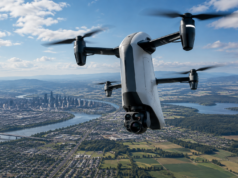
The Skyways V2 drone platform represents a mature generation of autonomous delivery systems engineered specifically for extended-range, payload-intensive operations. The V2 platform combines electric propulsion with advanced autonomous flight systems, enabling reliable performance over water where navigation precision and system redundancy are critical. The aircraft’s design emphasizes durability and weather resistance, essential characteristics for offshore environments where salt spray, UV exposure, and corrosive conditions can rapidly degrade conventional materials and electronics.
Key technical specifications of Skyways’ platform likely include extended battery range to cover the distances between shore and offshore platforms, robust communication systems for reliable telemetry and control over water, and advanced sense-and-avoid capabilities to navigate around other aircraft and maritime operations. The aircraft’s payload capacity determines which supplies and equipment it can transport, a critical factor in the economics of offshore delivery. Higher payload capacity reduces the number of flights required and improves the cost-effectiveness of operations compared to traditional alternatives.
The FAA approval almost certainly required validation of the Skyways V2’s performance in adverse weather, including high winds, salt spray exposure, electromagnetic interference from offshore equipment, and challenging radio propagation over water. The aircraft must also demonstrate reliable command-and-control links even when flying beyond visual line of sight, a fundamental requirement for efficient offshore operations where visibility to shore-based stations may be limited by weather or platform infrastructure.
Broader Implications for eVTOL and Drone Markets
This regulatory approval extends far beyond Shell and Skyways, signaling to investors, manufacturers, and operators that offshore autonomous logistics is a viable and legally permissible commercial sector. The success of these test operations could catalyze investment in competing platforms, accelerate development timelines for specialized offshore-capable eVTOL systems, and inspire regulatory frameworks in other nations to accommodate similar operations. Other energy companies, telecom providers, and maritime enterprises will likely monitor these results closely and begin planning their own autonomous logistics programs.
The approval also demonstrates that regulatory barriers, which have historically constrained drone commercialization, are becoming more navigable as the technology matures and proves its safety record. This trend should encourage additional operators to pursue FAA certifications and to push the boundaries of what autonomous systems are allowed to attempt. As more companies succeed in gaining regulatory approval for novel applications, the FAA’s rule book for unmanned operations will continue to evolve, creating a more permissive environment for next-generation eVTOL companies and innovative logistics providers.
From a market perspective, successful offshore drone operations could open a lucrative segment for specialized eVTOL manufacturers. Offshore operations require different design constraints than urban delivery drones—emphasis on payload capacity, weather resistance, and extended range rather than compact size and urban noise compliance. This could enable niche manufacturers to build defensible market positions by specializing in industrial and offshore applications before competing in the crowded urban air mobility space.
Key Takeaways
- The FAA has approved Skyways to conduct offshore drone delivery tests for Shell, representing a major regulatory milestone for autonomous logistics in challenging marine environments and industrial applications.
- Skyways’ V2 platform brings electric propulsion, extended range, robust redundancy systems, and advanced autonomous flight capabilities specifically engineered to perform reliably over water where traditional delivery methods are costly and inefficient.
- This approval sets a precedent for other operators to pursue specialized eVTOL applications beyond urban delivery, potentially opening significant market opportunities in offshore energy, maritime infrastructure, and industrial logistics sectors worldwide.
The FAA’s clearance for Skyways to test offshore drone deliveries with Shell marks a turning point in the commercialization of autonomous aviation. By validating that unmanned systems can safely operate in complex marine environments, regulators have opened the door to a new category of industrial applications that could transform logistics in offshore industries. As these test operations proceed and generate performance data, expect to see accelerated investment in specialized eVTOL platforms designed for offshore and industrial missions, competitive approvals for rival operators, and expanding regulatory frameworks that enable autonomous systems to solve real-world logistical challenges in environments where conventional solutions are expensive, inefficient, or hazardous. Skyways’ partnership with Shell demonstrates that eVTOL technology has matured beyond theoretical potential into practical, regulatorily-approved commercial operation.