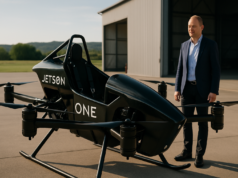

The personal air mobility industry just witnessed a pivotal moment as Chinese manufacturer Skyla unveiled its full-scale V30 eVTOL mockup in Singapore. This announcement marks a significant milestone in the development of electric vertical takeoff and landing aircraft, showcasing the rapid acceleration of innovation from emerging markets in the aerospace sector. The unveiling demonstrates that the race for eVTOL dominance is expanding globally, with Chinese companies positioning themselves as serious contenders alongside established Western manufacturers.
Skyla’s V30 eVTOL: Technical Specifications and Design Philosophy
The V30 represents Skyla’s vision for a next-generation electric aircraft designed to revolutionize urban and regional mobility. With a full-scale mockup now on display, engineers and industry observers can evaluate the tangible design choices that Skyla has incorporated into their flagship model. The aircraft showcases a sophisticated approach to eVTOL architecture, balancing passenger capacity, range, and operational efficiency—three critical factors that define competitive advantage in the PAM sector.
The design philosophy behind the V30 appears to prioritize passenger comfort and practical utility for commercial operations. The mockup reveals careful attention to cabin ergonomics, suggesting that Skyla is targeting not just technical feasibility but also real-world usability for charter and air taxi services. The aircraft’s configuration reflects modern eVTOL trends while incorporating distinctive Chinese engineering perspectives that may offer alternative solutions to problems that Western manufacturers are still solving.
From an engineering standpoint, the V30’s revealed dimensions and layout indicate Skyla’s commitment to building an aircraft that bridges the gap between current helicopter services and future autonomous air mobility networks. The full-scale mockup allows potential customers, regulators, and investors to visualize the operational realities of the V30, moving the conversation from theoretical specifications to tangible engineering reality.
The Competitive Landscape: China’s Growing eVTOL Ambitions
Skyla’s V30 announcement arrives at a critical juncture for the global eVTOL market. While companies like Joby Aviation, Lilium, and Archer have dominated media coverage, Chinese manufacturers have been quietly developing impressive technologies with significant capital backing. Skyla’s public unveiling signals that Chinese companies are ready to compete openly in this transformative market, bringing both technological innovation and manufacturing advantages to the table.
The Chinese aerospace ecosystem possesses unique advantages that Western competitors must respect. Domestic demand for innovative mobility solutions, substantial government support for advanced manufacturing, and established supply chains for electric vehicle components create a favorable environment for eVTOL development. Skyla’s backing and resources suggest that this company is not a token player but rather a serious contender with staying power and the means to reach certification and commercial operation.
This expansion of the competitive field is ultimately beneficial for the entire PAM industry. Multiple viable manufacturers increase the likelihood of rapid certification, diverse design solutions, and accelerated commercialization timelines. The presence of Skyla and other Chinese eVTOL developers ensures that innovation remains robust and that the market will feature multiple pathways to success rather than relying on any single manufacturer or design approach.
Regulatory Pathways and Certification Prospects
The unveiling of the V30 mockup in Singapore provides important signals about Skyla’s regulatory strategy. Rather than pursuing initial certification exclusively in mainland China, the company’s choice to present in Singapore—a hub for Asian aviation commerce and a jurisdiction known for forward-thinking aviation policy—suggests a sophisticated approach to navigating global certification requirements. Singapore’s Civil Aviation Authority has established itself as willing to work with innovative aircraft designs, making it an ideal venue for demonstrating international seriousness.
Certification remains the critical bottleneck for all eVTOL manufacturers, and Skyla’s V30 will need to navigate complex approval processes across multiple jurisdictions. EASA certification in Europe, FAA certification in the United States, and CAAC approval in China will all be necessary for a truly global operator. The company’s visible progress and professional presentation of the mockup suggest they have mapped clear pathways through these regulatory frameworks and are prepared for the extended certification journey ahead.
The timeline for eVTOL certification continues to extend beyond initial industry projections, but companies like Skyla that demonstrate advanced engineering maturity and clear regulatory engagement are most likely to successfully navigate this complex landscape. The V30’s public debut suggests that Skyla understands both the technical requirements and the stakeholder management necessary to achieve certification success.
Market Implications for Personal Air Mobility Operators
For air taxi operators, charter companies, and other potential PAM service providers, Skyla’s V30 represents an additional option to evaluate as they make aircraft acquisition decisions. The availability of multiple certified eVTOL designs will enable operators to select aircraft matched to their specific geographic markets, regulatory environments, and operational requirements. Operators in Asia may find the V30 particularly attractive given potential supply chain advantages and regional regulatory alignment.
The economics of eVTOL operation depend critically on achieving manufacturing scale and operational efficiency. Skyla’s entry as a well-capitalized competitor increases the likelihood that multiple manufacturers will survive to achieve commercial production volumes. This diversity is essential because the PAM industry needs multiple suppliers to ensure competitive pricing, rapid technological iteration, and reliable supply relationships with operators who commit to large fleets.
Service providers should view Skyla’s V30 announcement as confirmation that the eVTOL market is maturing into a genuine competitive ecosystem with real options. The mockup demonstrates that the company has completed substantial design and engineering work and is ready to engage with potential customers on concrete specifications. For operators planning five-to-seven-year timelines for fleet deployment, Skyla’s proven progress represents one additional pathway to commercialization.
Key Takeaways: The V30 Mockup Unveiling
- Skyla’s full-scale V30 mockup demonstrates advanced engineering maturity and professional readiness for the commercial aviation market
- Chinese eVTOL manufacturers are emerging as serious global competitors with technological sophistication and capital resources
- The unveiling in Singapore signals strategic regulatory engagement and sophisticated understanding of international certification requirements
- Multiple viable eVTOL manufacturers increase market viability and accelerate the path to commercial operations
- Operators and investors should monitor Skyla’s regulatory progress and expanded design specifications as the company advances toward certification
Skyla’s unveiling of the V30 eVTOL mockup represents a watershed moment for personal air mobility as an industry. The presence of capable Chinese manufacturers competing at the highest levels of technological sophistication signals that the eVTOL revolution is not a narrow Western phenomenon but rather a truly global transformation of aviation. As Skyla progresses toward certification and commercial production, the company will join a growing ecosystem of manufacturers reshaping how people and cargo move through urban and regional airspace. The personal air mobility market is finally delivering on its promise of diverse options, genuine competition, and the technical maturity necessary for real-world commercial success.