
HIGHLIGHTS
- The AEV A868 is nearing critical transition testing, a key certification milestone for demonstrating safe switching between vertical and forward flight modes.
- Aridge is rapidly expanding certification data collection efforts, accelerating the regulatory approval pathway for XPeng’s urban air mobility platform.
- This progress positions XPeng as a frontrunner in commercial eVTOL deployment, with certification data driving toward operational readiness in major markets.
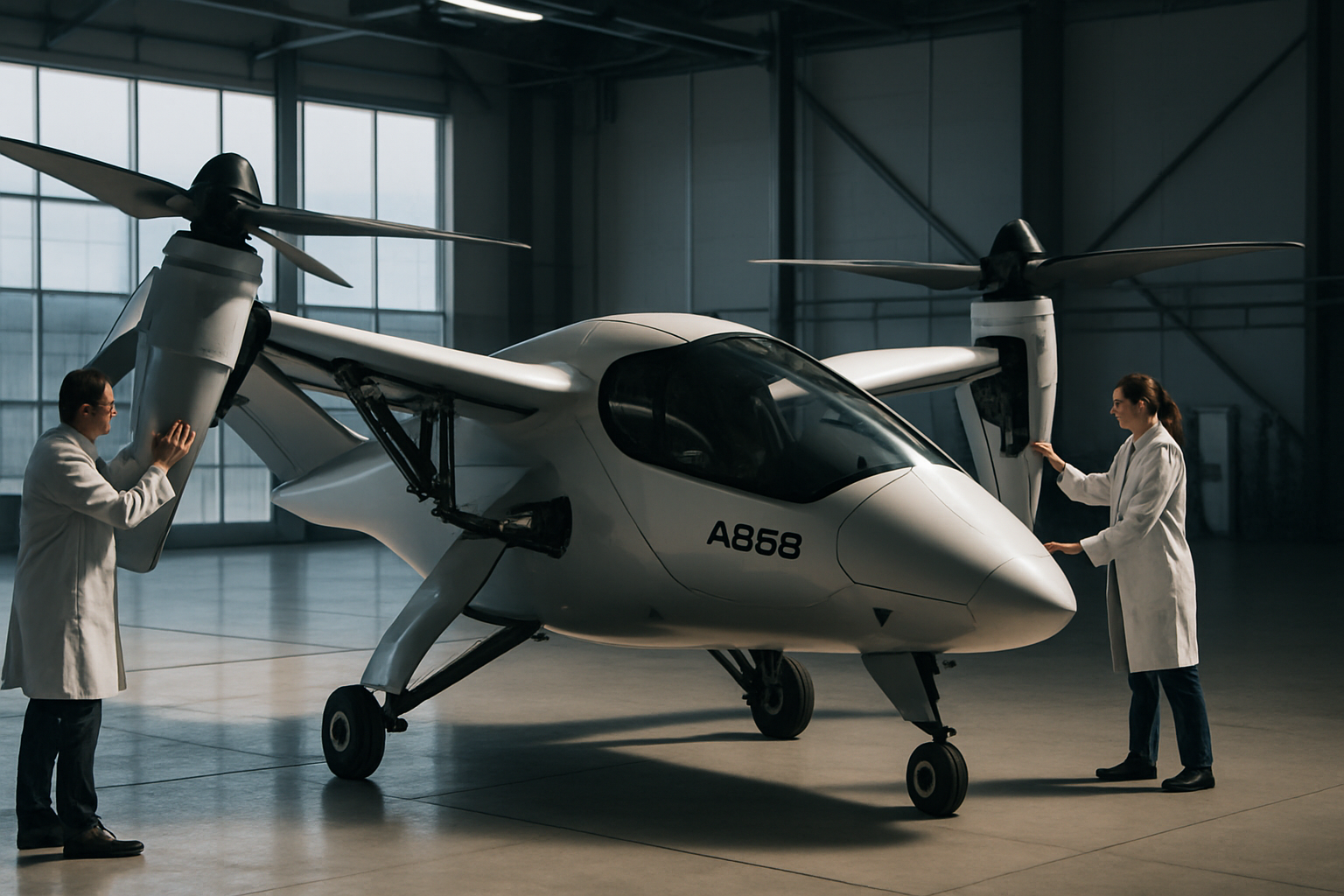
The AEV A868 electric vertical takeoff and landing aircraft is rapidly approaching a critical testing phase that could reshape the trajectory of XPeng’s urban air mobility ambitions. According to Aviation Week’s latest reporting, the transition test—a comprehensive evaluation of the aircraft’s ability to safely shift between vertical takeoff and forward flight configurations—is nearing execution. Meanwhile, Aridge, the engineering partner supporting certification efforts, is expanding its data collection protocols to accelerate regulatory approval. This convergence of advanced testing and expanded documentation represents a significant inflection point in the development of a commercially viable eVTOL platform designed for high-volume urban deployment.
The AEV A868: XPeng’s Next-Generation Urban Air Vehicle
The AEV A868 represents XPeng’s most ambitious venture into personal air mobility, building upon the company’s extensive experience in electric vehicle engineering and autonomous systems. Unlike experimental prototypes operating in niche regulatory environments, the A868 is being developed with explicit certification pathways in mind, reflecting XPeng’s commitment to bringing eVTOL services to mainstream markets. The aircraft integrates cutting-edge propulsion technologies, advanced battery systems, and intelligent flight control algorithms—all critical components for achieving the range, safety, and performance benchmarks required by aviation regulators worldwide.
XPeng’s background as a leading EV manufacturer provides significant competitive advantages in the eVTOL space. The company’s expertise in battery management systems, thermal engineering, and vehicle integration translates directly to eVTOL development, where power density, efficiency, and safety margins are paramount. The A868 incorporates lessons learned from thousands of hours of ground-based testing and earlier flight demonstrations, positioning it as a matured platform rather than a proof-of-concept vehicle entering its first evaluation phases.
The aircraft’s design philosophy emphasizes operational practicality and regulatory compliance. Rather than prioritizing maximum range or passenger count, the A868 is being engineered for reliable, repeatable performance across diverse weather conditions and operational scenarios. This measured approach to development—while potentially conservative compared to some competitors’ marketing claims—significantly increases the probability of achieving timely certification and moving toward revenue-generating operations in the near term.
Understanding the Transition Test: A Critical Certification Barrier
The transition test represents one of the most stringent evaluations in eVTOL certification. This phase requires the aircraft to repeatedly and reliably shift from vertical takeoff mode—where propellers or rotors generate purely vertical thrust—to forward flight mode, where the aircraft transitions to conventional aerodynamic lift. This maneuver involves complex choreography between multiple propulsion systems, flight control surfaces, and navigational algorithms, all operating in concert to maintain structural integrity, aerodynamic stability, and passenger safety.
During transition testing, engineers monitor dozens of parameters simultaneously: blade pitch angles, motor rpm, thrust vector angles, airspeed, altitude, attitude, structural loads, and control surface positions. Any anomalies—even minor deviations from predicted behavior—must be understood, analyzed, and resolved before regulatory authorities will approve the aircraft for commercial operations. This is why transition testing often becomes a bottleneck in eVTOL development timelines; it requires not just a few successful flights, but statistically significant data demonstrating consistent, repeatable performance across a range of environmental conditions and operational scenarios.
For the A868, approaching this critical phase indicates that XPeng and Aridge have successfully completed earlier developmental milestones: basic flight envelope expansion, propulsion system validation, and preliminary stability characterization. The team is now ready to rigorously evaluate the most complex aspect of the aircraft’s operational profile. Success in this phase would represent a major psychological and regulatory milestone—definitive evidence that the A868 is not merely capable of flight, but capable of the specific operational modes required for practical urban air mobility services.
Aridge’s Expanding Role in Certification Data Collection
Aridge, the certification partner supporting the A868 program, is significantly ramping up its data collection and analysis infrastructure. This expansion reflects both the growing maturity of the A868 platform and the accelerating pace of regulatory scrutiny. Modern certification processes generate enormous datasets—terabytes of telemetry from each flight test, all of which must be analyzed, interpreted, and compiled into structured documentation acceptable to aviation authorities. Aridge’s expanded role ensures that this data is collected methodically, archived securely, and processed through validated analysis protocols that regulatory auditors will recognize and trust.
The expansion of certification data collection also signals confidence in the A868’s trajectory. Aridge would not invest in scaling infrastructure unless it believed that the program was progressing toward meaningful regulatory engagement. This resource commitment suggests that both XPeng and Aridge are positioning themselves for rapid certification progression—moving from developmental testing into formal regulatory review and approval processes. The traditional timeline for eVTOL certification has stretched to five to seven years for some competitors; accelerating through this process requires not just technical excellence, but exceptional planning and documentation discipline.
Regulatory authorities—including the FAA in the United States, EASA in Europe, and equivalent agencies in China and other markets—have published specific guidance on what certification data they expect to evaluate. Aridge’s expanded collection efforts likely focus on populating these specific data requirements with high-quality, statistically robust evidence. By front-loading this work now, rather than scrambling to gather documentation during formal certification review, XPeng can substantially reduce regulatory cycle time and move toward operational approval significantly faster than industry precedent would suggest.
Market Context: The Race for eVTOL Certification Leadership
The A868’s progress occurs within an intensifying global competition for eVTOL certification leadership. Companies including Joby Aviation, Archer Aviation, Lilium, and others are advancing their own platforms through certification pipelines worldwide. Each company is investing heavily in regulatory relationships, engineering excellence, and data generation—all essential for moving ahead in this complex approval process. XPeng’s positioning is particularly interesting because the company combines substantial financial resources, proven manufacturing capability, and access to major Chinese markets where regulatory approval pathways may differ from Western standards.
China’s regulatory environment for eVTOL development is evolving rapidly, with authorities attempting to establish certification standards that balance safety rigor with innovation acceleration. XPeng’s domestic advantages in the Chinese market could enable the company to achieve initial certification and operational authorization before competitors with purely Western regulatory focus. Additionally, XPeng’s background as a major EV manufacturer provides credibility with Chinese regulators—the company has demonstrated, over years of production, its commitment to safety, quality control, and regulatory compliance across a demanding, high-volume automotive platform.
International market opportunities also loom large. If the A868 achieves formal regulatory approval in China, the pathway toward mutual recognition agreements with other aviation authorities could accelerate substantially. The FAA and EASA are increasingly open to recognizing foreign certification standards for eVTOL aircraft, particularly from manufacturers in developed aviation markets. This creates potential for the A868 to achieve multi-region certification within a compressed timeframe, enabling simultaneous commercial deployment across Asia, Europe, and potentially North America.
The competitive dynamics underscore the critical importance of the transition test. Success would provide XPeng with definitive technological proof points to communicate to investors, regulatory authorities, and potential customers. In a market where many companies are still in early-stage development, demonstrating consistent, high-performance transition testing represents a form of competitive differentiation that translates directly into regulatory credibility and market confidence.
What Success in Transition Testing Means for Commercial Deployment
If the A868 successfully completes transition testing at the scale and scope Aridge is now preparing to document, the pathway toward initial commercial operations could accelerate dramatically. Most regulatory authorities require 200 to 500 successful transition flights across varying conditions before approving an aircraft for commercial service. The data collection infrastructure Aridge is expanding suggests that XPeng may already be planning for execution of this comprehensive test matrix. Rather than treating transition testing as a narrow developmental hurdle, the company appears to be positioning it as the beginning of the formal certification data generation campaign.
Successful transition testing would also de-risk the A868 platform from an investor and customer perspective. Current eVTOL market dynamics heavily favor companies demonstrating tangible progress toward certification and revenue operations. Joby Aviation’s partnerships with helicopter operators and airport authorities, for instance, reflect confidence that certification is achievable. Similarly, the A868’s progress would enable XPeng to formalize partnerships with airlines, tourism operators, logistics providers, and other potential commercial customers. These partnerships, in turn, accelerate regulatory approval by demonstrating genuine demand and creating additional stakeholder pressure for timely certification decisions.
From a manufacturing perspective, successful transition testing validates the production readiness of the A868’s critical systems. Certification flight tests often reveal manufacturing inconsistencies, supply chain vulnerabilities, or design marginal issues that must be resolved before vehicles can be produced at scale. The fact that Aridge is expanding data collection suggests confidence that such issues have been resolved, and that aircraft emerging from production processes will perform consistently with the transition test prototypes. This manufacturing maturity is often overlooked in media coverage of eVTOL development, but represents perhaps the most significant barrier to actual commercial deployment of any new aircraft category.
Key Milestones Ahead for the A868 Program
- Completion and successful validation of comprehensive transition test matrix across environmental conditions and operational scenarios
- Formal submission of certification application documentation to aviation authorities in China, the United States, or Europe
- Achievement of preliminary type certification or equivalent regulatory milestones indicating substantial progress through formal review process
- Demonstration of production-representative aircraft performance consistency through initial manufacturing runs
- Execution of operational evaluation flights with airline or commercial operator partners prior to revenue service authorization
The A868’s transition testing phase represents more than a technical checkpoint; it marks the moment when XPeng’s eVTOL ambitions transition from engineering development into regulatory certification and commercial deployment preparation. Aridge’s expanded data collection efforts reflect the seriousness with which both companies are pursuing this objective. Success would position the A868 as one of the most mature eVTOL platforms approaching certification globally, potentially enabling XPeng to capture meaningful market share in the emerging urban air mobility sector. Aviation Week’s reporting on these developments underscores growing industry confidence that the transition from speculative promise to operational reality is finally becoming tangible.