HIGHLIGHTS
- Sora Aviation partners with Toray Advanced Composites to accelerate S-1 eVTOL development using next-generation composite materials
- Advanced composite technology enables lightweight airframe design critical for battery-electric aircraft range and performance optimization
- Strategic materials collaboration positions S-1 for competitive advantage in emerging urban air mobility market with reduced weight-to-power ratio
Sora Aviation announced a significant strategic partnership with Toray Advanced Composites on July 21, 2026, marking a pivotal moment in the development of the S-1 electric vertical takeoff and landing (eVTOL) aircraft. This collaboration brings together Sora’s innovative aerospace engineering capabilities with Toray’s world-leading expertise in advanced composite materials, creating a powerful synergy designed to accelerate the commercialization of efficient, sustainable personal air mobility solutions. The partnership underscores the critical importance of materials science in the next generation of electric aviation.
The Strategic Partnership Between Sora Aviation and Toray
The collaboration between Sora Aviation and Toray Advanced Composites represents a deliberate alignment of complementary strengths in the burgeoning eVTOL sector. Sora Aviation, focused on developing practical, certification-ready aircraft for urban air mobility, recognized that advanced composite materials would be essential to achieve the weight targets necessary for battery-electric propulsion. Toray, a global leader in carbon fiber, resin systems, and composite manufacturing technologies, brings decades of aerospace experience and proven production capabilities to the partnership.
This announcement reflects a broader industry trend where eVTOL manufacturers are increasingly partnering with specialized materials suppliers rather than attempting to develop everything in-house. By leveraging Toray’s established research and development infrastructure, Sora Aviation can focus resources on airframe integration, flight controls, and regulatory compliance while benefiting from cutting-edge composite innovations. The July 21 announcement captured significant attention from aviation industry observers at AIN Aviation International News, highlighting the strategic importance of this collaboration.
The partnership is expected to streamline development timelines for the S-1 aircraft, allowing both companies to allocate resources more efficiently and bring the vehicle to market faster. Toray’s involvement signals strong market confidence in Sora’s S-1 program and validates the commercial viability of the company’s design philosophy, which prioritizes practical performance metrics over theoretical capabilities.
Advanced Composite Materials and eVTOL Performance
Advanced composite materials have become the enabling technology for modern eVTOL aircraft. Unlike traditional aluminum fuselages used in conventional helicopters and fixed-wing aircraft, carbon fiber composite structures offer superior strength-to-weight ratios that are absolutely critical for electric propulsion systems. Every kilogram of unnecessary weight directly reduces battery performance, flight duration, and payload capacity—three metrics that determine whether an eVTOL vehicle can achieve commercial viability.
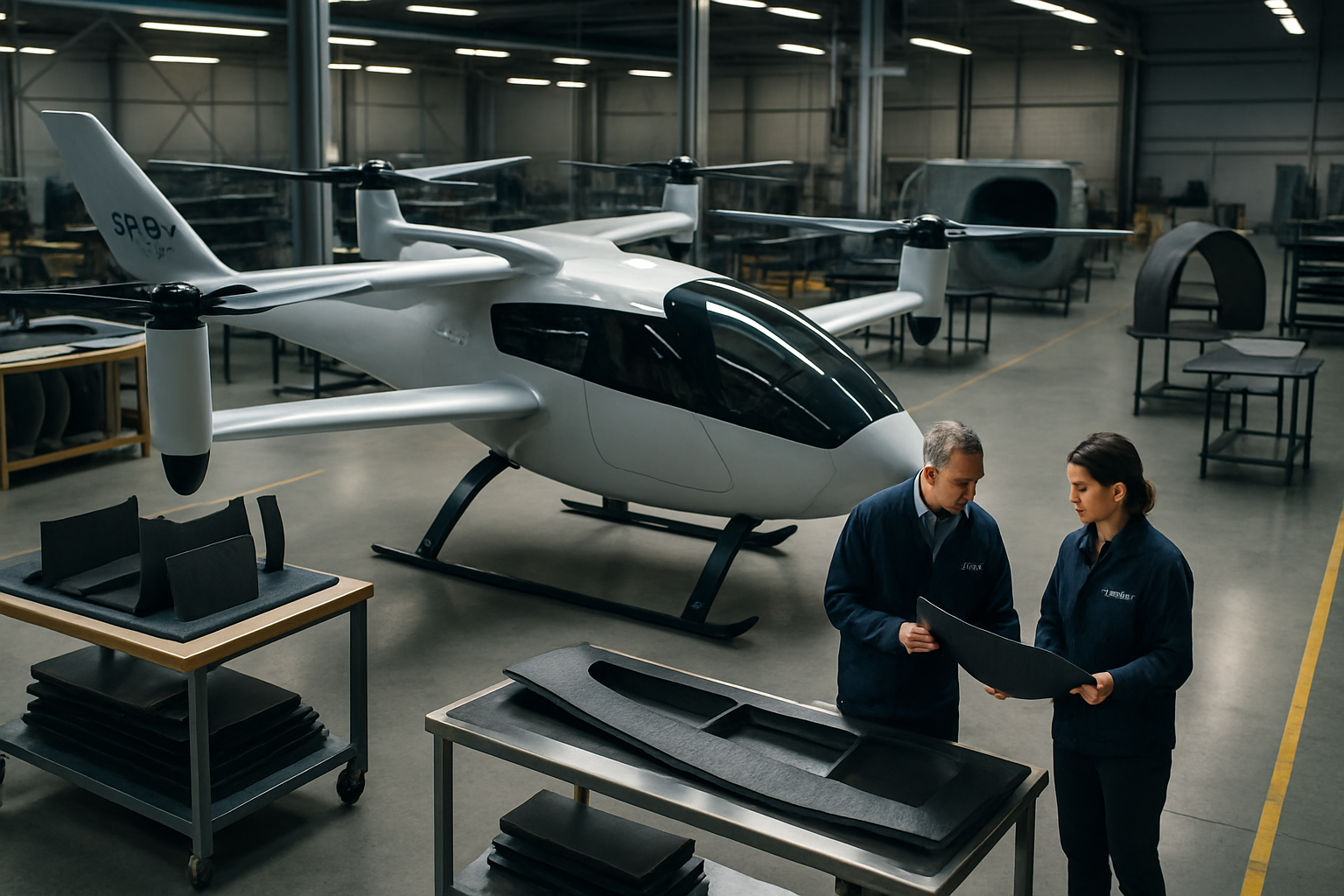
Toray’s portfolio of advanced composites includes high-performance carbon fiber reinforced polymers (CFRP) and specialty resin systems optimized for aerospace applications. These materials can be engineered to meet specific structural requirements while minimizing weight, enabling designers to create airframes that maximize efficiency without compromising safety or durability. For the S-1 program, composite materials will likely be applied to primary structures including the fuselage, rotor blades, booms, and control surfaces.
The integration of advanced composites also provides designers with greater flexibility in achieving aerodynamic optimization. Composite structures can be tailored directionally—strengthening specific areas to resist flight loads while reducing material in less critical zones. This optimization is particularly valuable for eVTOL aircraft, which must transition between helicopter-like vertical flight and airplane-like forward flight, experiencing dramatically different loading conditions during these transitions. Toray’s materials expertise will help Sora engineer composite structures that perform reliably across the full operational envelope of the S-1.
Implications for S-1 Development Timeline and Certification
The Sora Aviation and Toray collaboration has direct implications for the S-1 program’s development schedule and regulatory certification pathway. Obtaining airworthiness certification from the FAA or equivalent authorities requires extensive materials testing, validation, and documentation. By partnering with Toray—a company with extensive history of supplying materials for certified aircraft—Sora Aviation gains access to proven material specifications, test data, and manufacturing processes that already meet rigorous aerospace standards.
Certification authorities will require comprehensive documentation of composite material properties, manufacturing processes, maintenance procedures, and long-term durability characteristics. Toray’s established relationships with regulatory bodies and history of supplying materials for certified aircraft significantly streamline this approval process. Rather than developing new certification data from scratch, Sora can leverage Toray’s existing material certifications and accelerate the approval timeline for the S-1.
The partnership also ensures consistent, scalable manufacturing of composite structures as the S-1 program progresses from development prototypes to production aircraft. Toray operates manufacturing facilities worldwide with established quality control systems and supply chain relationships. As Sora transitions from engineering and testing to commercial production, Toray can scale composite component manufacturing to meet production demands—a capability that many early-stage aerospace companies lack internally.
Market Context and Competitive Positioning
The timing of this announcement in July 2026 reflects an acceleration in the personal air mobility market. Multiple eVTOL manufacturers are advancing toward certification and initial operations, including established aerospace companies and well-funded startups. The competitive landscape is intensifying as investors and operators focus on vehicles that can demonstrate reliable performance, cost-effective operation, and clear paths to profitability. Material science has emerged as a key differentiator among competing designs.
Sora Aviation’s partnership with Toray provides strategic competitive advantages. Companies operating in the eVTOL space face intense pressure to reduce weight, extend battery range, improve operational reliability, and ultimately lower operating costs. Advanced composites directly address all these imperatives. By securing a partnership with a premier materials supplier, Sora Aviation demonstrates commitment to engineering excellence and signals to operators and investors that the S-1 will incorporate industry-leading technology throughout its design.
Other eVTOL manufacturers are pursuing similar materials partnerships, but Sora’s collaboration with Toray—announced during a critical development phase—positions the company favorably within this competitive ecosystem. The announcement also attracts media attention and reinforces market perception of S-1 as a technically sophisticated, well-engineered aircraft backed by credible technology partners.
Key Takeaways from the Partnership
- Advanced composite materials are essential for achieving weight targets necessary for battery-electric propulsion systems in eVTOL aircraft
- Partnerships with established materials suppliers accelerate development timelines, streamline regulatory certification, and enable scalable manufacturing for production aircraft
- The Sora-Toray collaboration demonstrates technical maturity of the S-1 program and positions the vehicle competitively within an increasingly crowded eVTOL marketplace
The collaboration between Sora Aviation and Toray Advanced Composites represents a significant milestone in the development of practical, commercially viable eVTOL aircraft. By combining Sora’s aerospace innovation with Toray’s materials expertise, the partnership accelerates the S-1’s path to certification and production. For the broader personal air mobility industry, this announcement reinforces that successful eVTOL manufacturers will be those that partner strategically with world-class suppliers and prioritize engineering excellence over hype. As the eVTOL market matures, partnerships like this will increasingly define which companies succeed in translating innovative concepts into reliable, cost-effective aircraft that operators can depend on for safe, efficient urban air mobility operations.