HIGHLIGHTS
- Industry executives are convinced pilotless operations represent the future of electric flying taxi services for cost efficiency and safety optimization.
- Passenger trust remains the critical bottleneck, with public acceptance of autonomous aircraft a major barrier to widespread commercialization.
- Regulatory frameworks and technical validation must advance significantly before pilotless electric air taxis can operate in urban airspace.
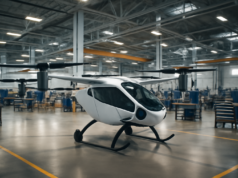
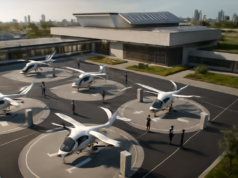
The electric vertical takeoff and landing (eVTOL) industry is at a critical crossroads. While manufacturers race to deploy electric flying taxis in cities worldwide, industry executives are already looking beyond the first generation of crewed aircraft toward a fundamentally different operational model: fully autonomous, pilotless vehicles. According to recent statements from leading CEOs in the sector, the future of urban air mobility belongs to aircraft that operate without human pilots on board. But this vision raises a pressing question that could determine the success or failure of the entire industry—will passengers actually trust flying without a pilot?
The CEO Vision for Pilotless Electric Flying Taxis
Top executives across the eVTOL industry have increasingly voiced confidence that autonomous operations represent the inevitable evolution of electric flying taxis. Their reasoning is compelling from a business perspective: removing the pilot reduces operational costs, eliminates human error, and allows for more efficient flight paths and scheduling. Several major players in the space have publicly committed to developing autonomous capabilities as a core part of their long-term strategy.
The push toward pilotless operations is being framed as a natural progression in aviation technology. Just as commercial aviation evolved from basic piloted aircraft to highly automated systems like the Boeing 787 and Airbus A380, eVTOL manufacturers see autonomous electric air taxis as the logical endpoint of this evolution. CEOs argue that autonomous systems, combined with advanced artificial intelligence and sensor fusion, can provide equal or superior safety margins compared to human-piloted operations.
This strategic direction is also being influenced by competitive pressures within the industry. Companies that can achieve reliable autonomous operations at scale will have a significant cost advantage and operational flexibility. Early movers in pilotless technology could establish market dominance and set industry standards. The race is on, with billions in capital invested in autonomous flight systems, machine learning algorithms, and redundant safety architectures designed to prevent catastrophic failures.
The Passenger Acceptance Challenge
Despite the CEO enthusiasm for pilotless operations, there is a fundamental disconnect between industry ambitions and public sentiment. Passenger acceptance of flying without a pilot on board represents perhaps the most significant hurdle to autonomous eVTOL commercialization—one that money and technology alone cannot overcome. Consumer research consistently shows that a substantial percentage of potential passengers express discomfort or outright fear at the prospect of boarding an aircraft with no human pilot.
The psychological barriers are deeply rooted. Air travel has been synonymous with the presence of an experienced pilot for over a century, and that expectation is hardwired into public consciousness. Passengers view pilots as reassuring human presence who can respond to unexpected situations, make judgment calls, and provide direct communication. Removing the pilot entirely from the equation requires a fundamental shift in how people conceptualize safety in the air, a shift that cannot happen overnight.
Building passenger confidence will require sustained effort in education, transparent communication about safety systems, and visible demonstrations of reliability. Some potential passengers may never fully accept pilotless operations, representing a permanent segment of the market that remains out of reach for fully autonomous services. Operators will likely need to offer hybrid options—perhaps piloted premium services and autonomous economy services—to capture the broadest possible market during the transition phase.
Regulatory and Technical Hurdles
Beyond passenger psychology, the regulatory landscape presents massive technical and bureaucratic challenges to pilotless eVTOL operations. Aviation authorities like the FAA, EASA, and national regulators in each deployment market are only beginning to develop certification frameworks for autonomous aircraft. These regulations must address fail-safe requirements, cybersecurity protocols, airspace integration, and emergency response procedures—all with zero tolerance for catastrophic failure.
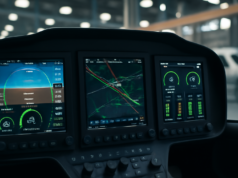
The technical requirements for pilotless eVTOLs are extraordinarily complex. The vehicles must operate reliably in diverse weather conditions, navigate dense urban airspace with multiple other aircraft, detect and avoid obstacles, and handle emergency situations—all without human intervention. Redundant systems for propulsion, avionics, and sensors add significant weight and cost. Battery technology must be advanced enough to support these additional systems while maintaining the energy density required for commercial operations.
Testing and validation will take years, with manufacturers needing to demonstrate thousands of autonomous flight hours in diverse conditions before regulators grant approval for passenger operations. Insurance companies will also play a critical gatekeeping role, requiring proof that autonomous eVTOLs present acceptable risk profiles. The combination of regulatory approval, technical validation, and insurance underwriting could easily delay pilotless operations by a decade or more.
The Transition Timeline and Market Implications
Most industry experts anticipate that pilotless eVTOL operations will not become mainstream until the 2030s at the earliest, with some estimates pushing that timeline into the 2040s. In the near term, all commercial electric flying taxi services will operate with human pilots on board. This intermediate phase is critical for building public familiarity with eVTOL technology, establishing operational procedures, and accumulating safety data.
The transition will likely be gradual and market-dependent. Some markets, particularly those with strong automation cultures and high-tech adoption rates, may embrace pilotless operations faster than others. China and northern European countries might lead the way, while the United States and Europe could move more cautiously due to stricter regulatory frameworks and different cultural attitudes toward automation in transportation.
From a business perspective, the shift to pilotless operations could fundamentally reshape the economics of urban air mobility. Operational costs would decline dramatically, potentially reducing passenger fares to levels that compete with ground transportation. This could unlock exponentially larger addressable markets. However, the upfront investment required to develop and certify autonomous systems is enormous, and only the largest, best-capitalized companies may survive the transition.
Key Takeaways for the eVTOL Industry
- CEOs unanimously see pilotless electric flying taxis as the future, citing cost reduction and safety optimization as primary drivers of autonomous operations.
- Passenger trust and regulatory approval represent the two most significant barriers, with acceptance likely requiring years of visible operational success.
- The transition to commercial pilotless operations will unfold unevenly across markets and may not reach mainstream adoption until the 2030s or 2040s.
The vision of pilotless electric flying taxis is compelling, and CEO conviction in this future is real and deepening. But the path from vision to reality is long and uncertain. Success will require not just technological excellence and regulatory approval, but also a fundamental transformation in how the public perceives the relationship between safety, technology, and human presence in aviation. The companies that can navigate this balance—delivering reliable autonomous operations while building genuine passenger confidence—will define the future of urban air mobility.