HIGHLIGHTS
- Eve Air Mobility successfully completes first transition flight, validating critical shift from vertical to horizontal flight modes essential for commercial eVTOL operations
- Backed by Embraer’s aerospace expertise and resources, Eve’s methodical development approach is accelerating regulatory certification pathways with major aviation authorities
- Distributed electric propulsion system with redundant fail-safe mechanisms demonstrates technical maturity advancing urban air mobility infrastructure planning globally
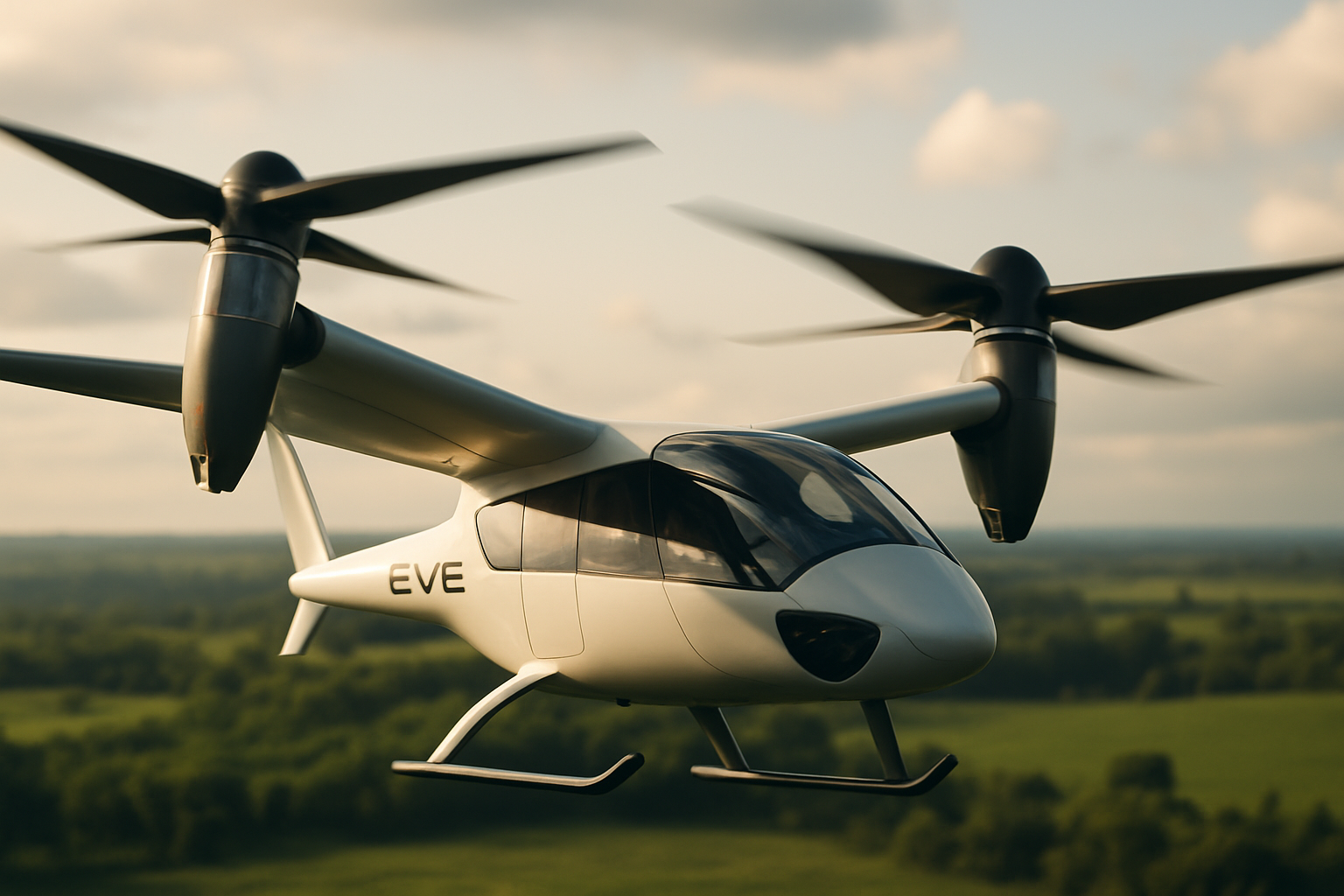
Eve Air Mobility has achieved a significant breakthrough in the development of its electric vertical takeoff and landing (eVTOL) aircraft, successfully completing its first transition flight. This milestone represents a crucial validation of the company’s technology and design philosophy, bringing the aircraft closer to certification and commercial deployment. The achievement demonstrates that Eve’s innovative approach to personal air mobility is progressing on schedule and meeting critical performance benchmarks.
Understanding the Transition Flight Achievement
A transition flight represents one of the most critical milestones in eVTOL development. This type of flight validates the aircraft’s ability to smoothly shift from vertical takeoff mode—where it rises straight up like a helicopter—to forward flight mode, where it transitions to traditional airplane-like horizontal movement. This maneuver requires precise control of multiple propulsion systems, weight distribution, and aerodynamic surfaces working in perfect coordination.
Eve Air Mobility’s successful execution of this transition demonstrates the maturity of their control systems and the effectiveness of their aerodynamic design. The aircraft must maintain stability while gradually shifting thrust from vertical lift-generating rotors to forward-propulsion systems. Any instability or miscalibration during this phase could jeopardize the entire program, making this achievement a testament to the engineering team’s expertise and rigorous testing protocols.
The first transition flight also provides invaluable real-world data that engineers can use to refine the aircraft’s handling characteristics, sensor systems, and autonomous flight management software. This information will inform subsequent test flights and help identify any areas requiring optimization before the aircraft enters commercial service.
Eve Air Mobility’s Strategic Position in the eVTOL Market
Eve Air Mobility has emerged as one of the most credible players in the competitive eVTOL industry, backed by significant financial support and strategic partnerships. The company benefits from Embraer’s extensive aerospace heritage and manufacturing expertise, providing it with resources and knowledge that many competitors lack. This backing has enabled Eve to pursue a methodical, well-funded development approach that prioritizes safety and reliability.
The company’s aircraft design incorporates cutting-edge features including distributed electric propulsion, advanced materials, and sophisticated flight control systems. Eve’s focus on creating a scalable, certifiable platform positions it well for the anticipated commercial launch of urban air mobility services in major metropolitan areas across North America, Europe, and Asia-Pacific regions.
By achieving this transition flight milestone ahead of many competitors, Eve has demonstrated its commitment to timely product development and validated its technical approach. This success is likely to strengthen investor confidence and accelerate discussions with potential operators and airspace authorities regarding certification timelines and operational approvals.
Regulatory Pathways and Certification Progress
The successful transition flight brings Eve Air Mobility significantly closer to the regulatory certifications required for commercial operations. Aviation authorities in the United States, Europe, and other regions are actively developing certification standards for eVTOL aircraft, and real-world flight data like this helps refine those standards and demonstrates that the technology is mature enough for safe operations.
Eve has been actively engaging with the Federal Aviation Administration (FAA) and the European Union Aviation Safety Agency (EASA) throughout its development process. This collaborative approach ensures that the company’s design meets regulatory requirements and that authorities understand the aircraft’s capabilities and limitations. The transition flight represents tangible evidence of technical progress that regulatory bodies can evaluate.
Certification is expected to proceed through several phases, including initial airworthiness certification, operational approval for pilot-operated flights, and eventually special conditions for autonomous or reduced-crew operations. Each milestone achieved in the flight test program accelerates the timeline toward these certifications, potentially bringing commercial operations closer to reality.
Implications for Urban Air Mobility Infrastructure
As Eve Air Mobility advances its eVTOL program, the aviation industry is simultaneously working on the infrastructure necessary to support commercial operations. This includes the development of vertiport facilities, air traffic management systems specifically designed for low-altitude operations, and charging or refueling infrastructure for electric aircraft.
Cities around the world are beginning to plan for the integration of eVTOL services into their transportation networks. Companies are evaluating potential vertiport locations, working with municipal authorities on airspace coordination, and developing business models for point-to-point urban transportation. Eve’s progress toward a certified, operational aircraft accelerates these planning efforts and demonstrates that urban air mobility is transitioning from concept to concrete reality.
The successful transition flight also signals to potential operators, investors, and infrastructure developers that eVTOL technology is advancing faster than some skeptics predicted. This confidence is crucial for mobilizing the capital and planning resources needed to build a sustainable urban air mobility ecosystem that can safely and efficiently serve major metropolitan areas.
Technical Innovation and Flight Control Systems
Key Technical Achievements in This Milestone
- Seamless transition from vertical lift to forward propulsion with stable flight envelope control across all operational modes
- Advanced distributed electric propulsion system managing multiple rotors and propellers with redundant fail-safe mechanisms
- Autonomous flight management systems and sensor fusion validating real-time control stability during mode transitions
The transition flight demonstrates Eve’s mastery of one of the most technically challenging aspects of eVTOL development. Modern aircraft rely on sophisticated flight control systems that blend data from multiple sensors and execute precise control inputs to maintain stability across different flight regimes. Eve’s successful demonstration indicates that their engineering team has solved these complex problems effectively.
The distributed electric propulsion architecture—where multiple smaller electric motors drive multiple rotors and propellers—offers inherent redundancy and efficiency benefits compared to traditional single-engine designs. If one electric motor fails, others can compensate, enhancing safety. This architecture also enables more optimized performance across different flight phases, with different propulsion elements optimized for vertical takeoff, transition, and cruise flight.
The flight control systems must continuously adapt to changing aerodynamic conditions as the aircraft transitions between flight modes. Eve’s successful transition flight proves that their software algorithms and hardware systems can manage this complexity reliably. This validation is crucial for building confidence among regulators, operators, and the flying public that eVTOL aircraft are as safe or safer than conventional aviation.
Eve Air Mobility’s achievement of its first successful transition flight represents a watershed moment for the eVTOL industry and personal air mobility broadly. This milestone validates years of engineering development and brings commercial urban air mobility services measurably closer to reality. As Eve continues its flight test campaign and works toward regulatory certification, the company is simultaneously advancing the entire industry’s progress toward safe, efficient, and sustainable transportation in three-dimensional urban environments. The successful transition flight is not just a technical achievement—it’s a statement that electric vertical takeoff and landing technology is ready for the world.