HIGHLIGHTS
- Joby Aviation retraced America’s first commercial airline route from St. Petersburg to Tampa, honoring 1914 aviation history while demonstrating modern electric air taxi technology
- The 30-mile regional route typically requires 45+ minutes by car but could be completed in minutes by eVTOL, addressing a real market need for premium inter-city mobility
- Successful demonstrations accelerate FAA certification and commercial deployment timelines, with Joby planning revenue operations in Florida by the mid-2020s
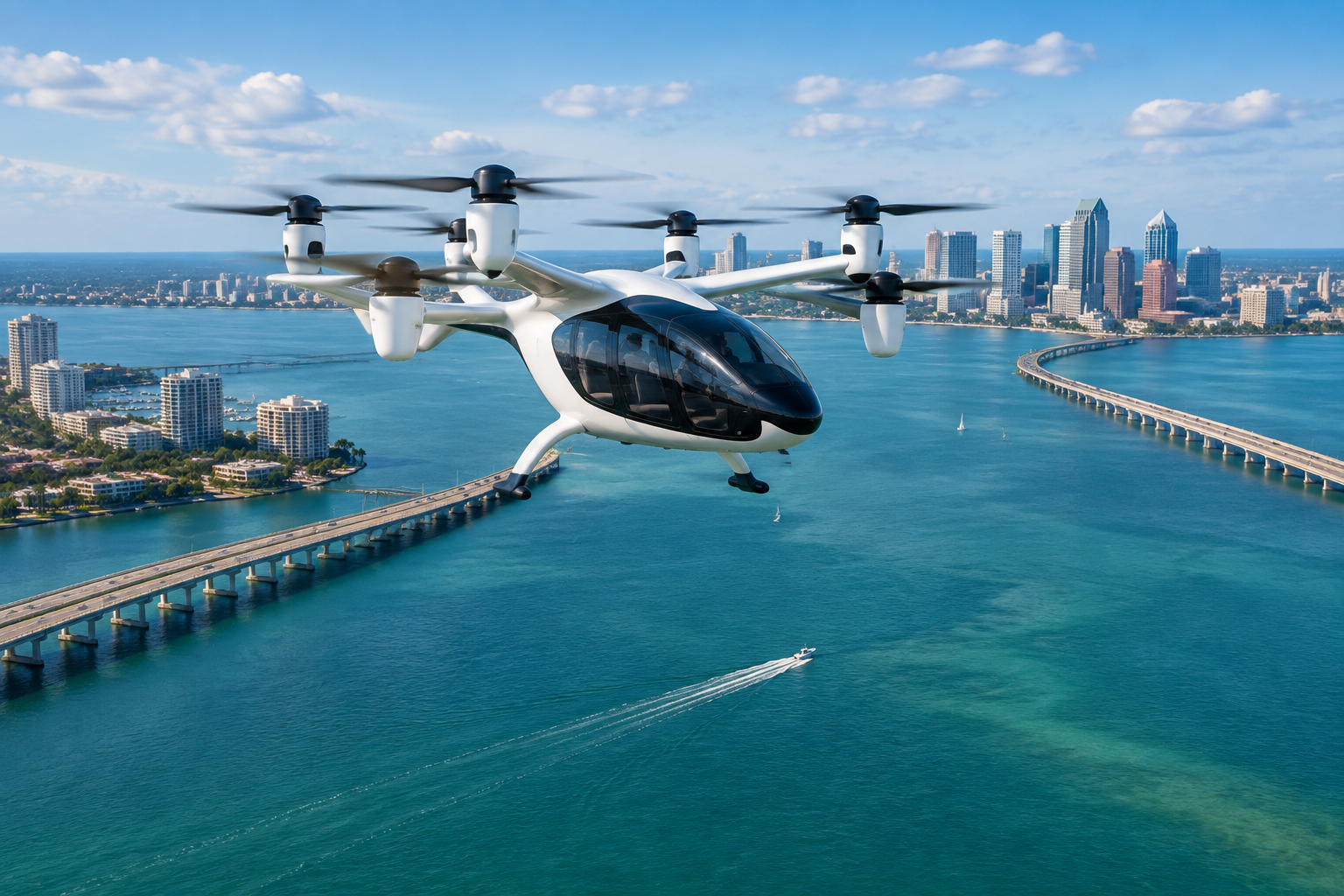
Joby Aviation has achieved a significant milestone in the personal air mobility industry by successfully operating its electric air taxi along the historic route between St. Petersburg and Tampa, Florida—the same corridor that once hosted the nation’s first commercial airline service. This symbolic flight represents more than just a technical achievement; it demonstrates how modern eVTOL technology is poised to revolutionize regional air transportation in the same corridors that pioneered aviation a century ago. The demonstration underscores the potential of electric vertical takeoff and landing aircraft to reshape how Americans travel between nearby cities.
A Century of Aviation Innovation on the St. Pete-Tampa Route
The St. Petersburg-to-Tampa corridor holds a unique place in American aviation history. In 1914, the first scheduled commercial airline service in the United States operated along this exact route, with the St. Petersburg-Tampa Airboat Line making brief but groundbreaking flights across the Florida coastline. That pioneering service, though short-lived, established the foundation for the commercial aviation industry that would transform global transportation over the following decades.
By retracing this historic route with its electric air taxi, Joby Aviation creates a powerful narrative connection between aviation’s past and its sustainable future. The parallel is intentional and meaningful—just as the original airboat service demonstrated the feasibility of commercial air travel, Joby’s eVTOL demonstration shows that the next chapter of aviation can be cleaner, quieter, and more efficient.
The Florida market holds special significance for emerging air mobility companies. With dense urban corridors, frequent traffic congestion, and a tourism-driven economy, the St. Pete-Tampa region represents an ideal testbed for electric air taxi services. The geography and infrastructure challenges that made this route attractive in 1914 remain relevant today, but modern technology offers solutions that were previously impossible.
Joby’s Electric Air Taxi Technology and Capabilities
Joby Aviation’s electric air taxi is specifically engineered for point-to-point urban and regional mobility. The aircraft features vertical takeoff and landing capabilities, eliminating the need for traditional runway infrastructure and allowing operations from vertiports located near downtown areas. This design philosophy directly addresses the inefficiencies of ground transportation in congested metropolitan regions like the Tampa Bay area.
The aircraft’s electric propulsion system produces zero direct emissions, addressing growing environmental concerns in urban areas. With noise levels significantly lower than traditional helicopters, Joby’s eVTOL is designed to integrate into metropolitan environments without creating the acoustic pollution associated with conventional aircraft. These characteristics make it an attractive option for inter-city routes where environmental impact and noise considerations are increasingly important regulatory and public relations factors.
The flight from St. Petersburg to Tampa showcases the aircraft’s capability to cover the approximately 30-mile distance efficiently. For ground transportation, this journey typically requires 45 minutes to over an hour depending on traffic conditions. An electric air taxi capable of completing this route in a fraction of that time could fundamentally change commuting and business travel patterns in the region, though operational pricing and regulatory approval remain critical variables for commercial deployment.
Regulatory Progress and Commercial Deployment Timelines
Joby Aviation has been actively pursuing FAA certification for its aircraft, a complex process involving extensive testing, safety validations, and operational protocols. Demonstrations like the St. Pete-Tampa flight serve multiple purposes: they generate operational data for regulatory submissions, showcase technology readiness to investors and customers, and build public awareness and acceptance of eVTOL aircraft. The FAA’s Special Airworthiness Certification program provides a pathway for these new aircraft categories to enter service before full Type Certification is completed.
The company has publicly stated ambitious timelines for commercial service launches, with plans to begin revenue operations in multiple markets during the mid-2020s. Florida has emerged as a priority market, with Joby establishing operations, partnerships, and infrastructure development initiatives across the state. The retracing of the historic St. Pete-Tampa route sends a clear message about the company’s commitment to serving this specific corridor commercially.
Several factors support Joby’s Florida-focused deployment strategy. The state government has been supportive of advanced air mobility initiatives, the weather patterns generally favor consistent operations compared to northern regions, and the tourism economy creates natural demand for premium transportation options. Additionally, demonstrated technology and public demonstrations in established routes help build the regulatory confidence and public acceptance necessary for commercial operations.
Market Implications and the Future of Regional Air Mobility
The St. Petersburg-Tampa demonstration carries significance beyond Joby’s individual development timeline. It signals to investors, regulators, and the public that commercial electric air taxi service is transitioning from concept to near-term reality. Other eVTOL companies are pursuing similar demonstration flights and commercial partnerships, creating momentum across the industry toward actual revenue operations.
Regional routes like St. Pete-Tampa represent the most viable near-term market for electric air taxi services. These corridors have sufficient demand to support regular operations, the geographic distance is optimal for current aircraft capabilities, and the congestion on ground routes creates genuine value for speed-focused premium travelers. Unlike ultra-long-range transcontinental routes that remain technically unfeasible for eVTOL aircraft, regional services can achieve operational viability within the next few years.
The successful demonstration also attracts attention from potential business partners. Airlines, ground transportation companies, logistics providers, and ride-sharing platforms are all exploring how electric air mobility might integrate into their service portfolios. A proven aircraft capability, demonstrated safety record, and clear regulatory pathway make Joby a compelling partner for these discussions. The commercial implications extend beyond passenger transport to potential cargo and emergency services applications.
Key Takeaways from Joby’s Historic Flight
- Joby Aviation flew its electric air taxi along Florida’s first commercial airline route, connecting 1914 aviation history with modern sustainable technology and sustainable air mobility innovation
- The demonstration showcases eVTOL capabilities for regional routes where ground transportation creates 45+ minute trips that aircraft could complete in minutes, addressing a genuine market need
- Successful demonstrations accelerate FAA certification timelines and commercial deployment plans, with Joby targeting mid-2020s operations in Florida and other major metropolitan markets
The retracing of the St. Petersburg-Tampa route by Joby Aviation’s electric air taxi represents a symbolic and practical milestone in the development of personal air mobility. By connecting aviation’s pioneering past with its sustainable future, Joby demonstrates not just technological capability but also market vision and regulatory commitment. As eVTOL aircraft move closer to commercial deployment, demonstrations like this one build the public acceptance, regulatory confidence, and operational understanding necessary for successful market entry. The next chapter of aviation may indeed follow the same routes that pioneered commercial flight a century ago, but with cleaner, quieter, and more efficient technology that addresses the transportation and environmental challenges of the twenty-first century.