HIGHLIGHTS
- Archer acquires Boeing’s Wisk Aero, Insitu, and SkyGrid, creating unprecedented vertical integration across autonomous aircraft, unmanned operations, and airspace management.
- Wisk’s proven autonomous flight systems and FAA relationships de-risk Archer’s certification pathway and accelerate time to commercial operations.
- SkyGrid’s airspace management technology gives Archer unique control over infrastructure critical for scaling eVTOL operations safely in shared urban environments.
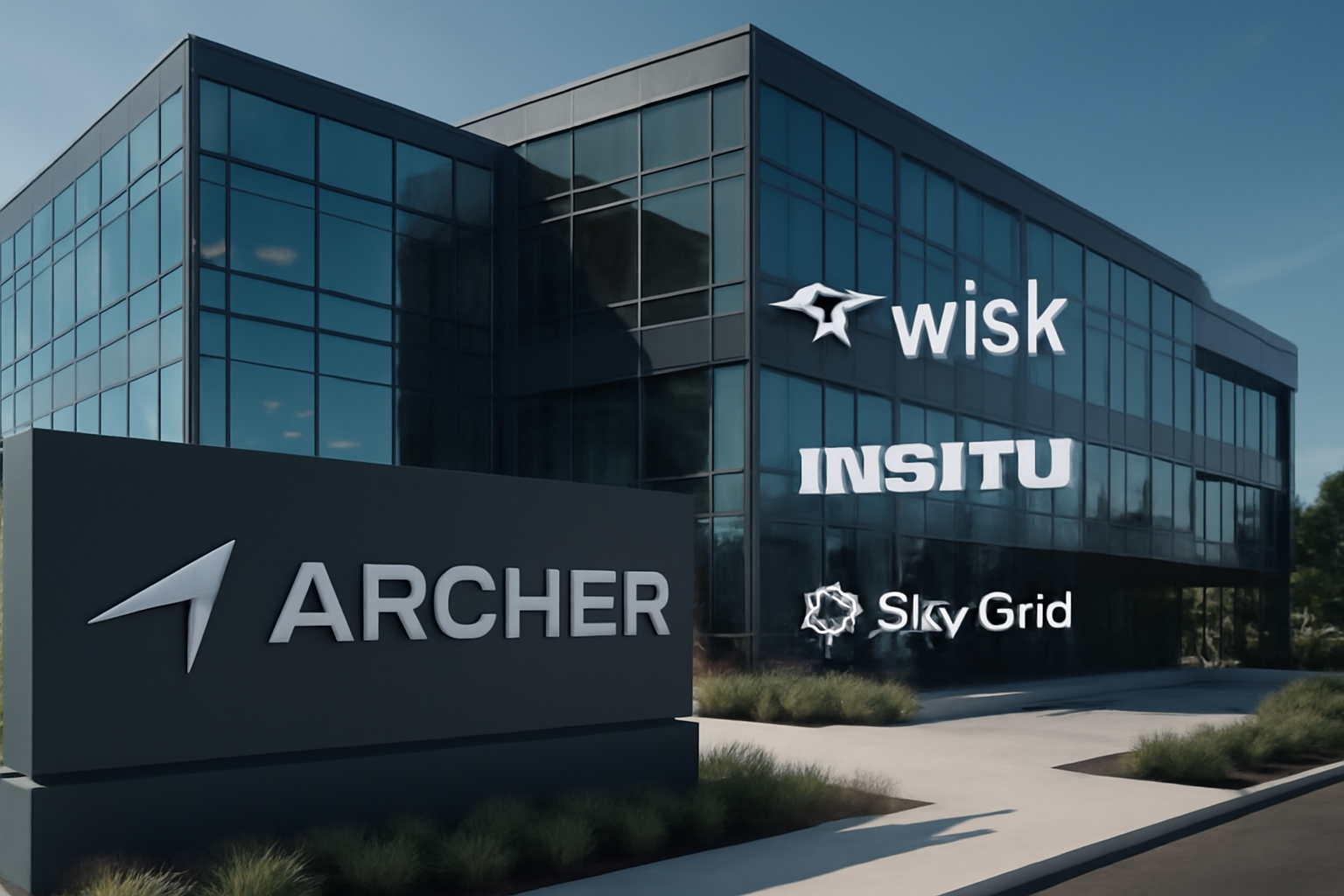
In a stunning move that reshapes the autonomous aviation landscape, Archer Aviation has announced its acquisition of three critical Boeing subsidiaries: Wisk Aero, Insitu, and SkyGrid. This unprecedented consolidation brings together complementary technologies and expertise spanning autonomous flight systems, unmanned aircraft operations, and air traffic management—positioning Archer as a comprehensive player in the next generation of aviation.
The Strategic Significance of Archer’s Triple Acquisition
Archer’s acquisition of Wisk Aero, Insitu, and SkyGrid represents far more than a simple technology purchase. By acquiring these three Boeing subsidiaries simultaneously, Archer gains vertical integration across the entire autonomous aviation ecosystem. Each company brings distinct, non-competing capabilities that create a formidable competitive moat around Archer’s operations.
The timing is critical. As regulators worldwide establish frameworks for advanced air mobility, companies with end-to-end solutions—from aircraft design and autonomous systems to airspace management—will dominate the market. This acquisition accelerates Archer’s timeline to becoming a one-stop-shop for autonomous aviation infrastructure.
Boeing’s decision to divest these subsidiaries signals a strategic pivot within the aerospace giant. Rather than compete directly in the crowded eVTOL market, Boeing is consolidating resources around core commercial aviation and defense programs. For Archer, it’s a windfall of mature technology and proven engineering talent that would have taken years to develop independently.
Wisk Aero: Autonomous eVTOL Excellence
Wisk Aero stands as one of the most advanced autonomous aircraft developers globally, having pioneered fully electric vertical takeoff and landing technology without pilot intervention. The company has demonstrated multiple generations of autonomous eVTOL aircraft and accumulated decades of flight test data. Wisk’s expertise in autonomous flight control systems, fail-safe architectures, and certification pathways is invaluable to Archer’s core business.
The acquisition of Wisk brings proven autonomous capabilities that Archer can integrate into its own aircraft design pipeline. Wisk’s history of successful flight testing and regulatory cooperation—particularly with the FAA and international aviation authorities—provides a roadmap for accelerating Archer’s certification efforts. The company’s technical team represents some of the most experienced engineers in autonomous aviation.
With Wisk under its roof, Archer can eliminate redundancy in autonomous systems development while accelerating innovation cycles. Archer’s existing aircraft platform can now leverage Wisk’s battle-tested autonomy stack, reducing development risk and shortening the path to commercial operations.
Insitu: Unmanned Operations and Airspace Intelligence
Insitu, a subsidiary Boeing acquired years ago, specializes in small unmanned aircraft systems (UAS) and has operated in diverse environments from military operations to commercial surveying. The company’s expertise in autonomous flight operations, beyond-visual-line-of-sight (BVLOS) flight, and unmanned traffic management (UTM) integration is directly applicable to large-scale eVTOL deployment.
Insitu’s operational experience managing autonomous aircraft in complex airspace environments provides Archer with institutional knowledge about real-world deployment challenges. This includes insights into regulatory compliance, pilot training for autonomous systems, and operational procedures for unmanned aircraft in shared airspace.
The acquisition also grants Archer access to Insitu’s established relationships with government agencies, military branches, and international aviation authorities. These relationships are essential for navigating the regulatory landscape that eVTOL operators will face during the critical transition period to commercial service.
SkyGrid: Air Traffic Management Infrastructure
SkyGrid represents the third pillar of this acquisition—a company focused on digital infrastructure, airspace management, and automation platforms for lower-altitude airspace. As eVTOL operations scale, managing thousands of autonomous aircraft sharing urban and regional airspace becomes a fundamental challenge. SkyGrid’s software and systems are designed precisely for this problem.
SkyGrid’s technology enables dynamic airspace management, conflict resolution, and real-time traffic coordination—capabilities essential for safe eVTOL operations in cities. Rather than relying on third-party air traffic management platforms, Archer now controls its own destiny in integrating aircraft with airspace infrastructure.
This vertical integration is a competitive advantage. Archer can co-develop aircraft systems and airspace management tools simultaneously, ensuring seamless interoperability. For regulators and customers, Archer can present a fully integrated, end-to-end autonomous aviation solution rather than a patchwork of external dependencies.
Market Impact and Competitive Landscape Shift
The acquisition immediately elevates Archer’s standing among eVTOL developers. While competitors like Joby, Lilium, and others focus primarily on aircraft development, Archer now encompasses autonomous systems, unmanned operations expertise, and airspace management. This breadth is exceptionally rare in the eVTOL industry.
Boeing’s divestiture also signals industry consolidation. The aerospace giant recognized that sustaining parallel autonomous aviation initiatives alongside a core commercial aircraft business creates organizational complexity and capital constraints. By transferring these assets to a focused autonomous aviation company, Boeing potentially unlocks value while allowing Archer to deploy resources more efficiently.
For potential customers—including airlines, logistics companies, and mobility operators—Archer becomes a more attractive partner. Rather than assembling solutions from multiple vendors, buyers can work with a single company responsible for aircraft, autonomy, and airspace coordination. This reduces integration risk and creates clearer accountability for performance and safety.
Key Takeaways from Archer’s Transformative Move
- Archer gains integrated autonomous aircraft, unmanned operations, and airspace management capabilities in a single acquisition, creating unprecedented vertical integration in eVTOL.
- Wisk Aero’s proven autonomous flight systems and regulatory relationships dramatically de-risk Archer’s path to FAA certification and commercial deployment.
- SkyGrid’s airspace management technology gives Archer unique control over the critical infrastructure needed for safe, scalable eVTOL operations in urban environments.
The acquisition of Wisk Aero, Insitu, and SkyGrid represents a watershed moment for Archer Aviation and the broader autonomous aviation industry. By consolidating complementary technologies under one roof, Archer has created a uniquely positioned company with end-to-end capabilities in aircraft, autonomy, and airspace management. As the eVTOL industry matures and regulatory pathways crystallize, integrated solutions will likely command premium valuations and customer loyalty. Archer’s bold move positions it not just as an aircraft manufacturer, but as a comprehensive autonomous aviation platform company—a distinction that could prove decisive in determining which companies lead the air mobility revolution.