
HIGHLIGHTS
- Archer Aviation stock trades at historically depressed valuations, presenting potential value opportunities for investors willing to bet on eVTOL commercialization
- Low stock price reflects significant execution risks including regulatory approval timelines, manufacturing scale-up, and uncertain demand for urban air mobility services
- Success depends on Archer achieving key milestones: FAA certification, airport infrastructure partnerships, and demonstrated passenger demand in early commercial routes
Archer Aviation has emerged as one of the more compelling value stories in the aerospace sector, with its stock trading at valuations that would make traditional investors take notice. But in the rapidly evolving world of electric vertical takeoff and landing (eVTOL) aircraft, a cheap price tag alone doesn’t guarantee investment success. Understanding the true risk-reward profile of Archer requires examining the company’s market position, technological progress, and the broader obstacles facing the personal air mobility industry.
Understanding Archer’s Valuation Discount
Archer Aviation’s stock price reflects a significant discount to many aerospace and aviation peers, driven by market skepticism about near-term profitability and the nascent state of the eVTOL market. The company trades at valuations that price in substantial execution risk, making it attractive to value investors seeking exposure to the emerging urban air mobility (UAM) sector. However, this discount should be understood as compensation for real, measurable risks rather than simply a bargain waiting to be claimed.
The valuation gap between Archer and more established aerospace manufacturers widens when considering traditional metrics like price-to-sales and enterprise value relative to assets under development. This reflects Wall Street’s current uncertainty about whether eVTOL operators can achieve the passenger volume and fare structures necessary to sustain profitable operations. Investors must weigh whether Archer’s lower valuation represents a buying opportunity or reflects legitimate concerns about market adoption timelines.
Comparative analysis with other eVTOL developers shows Archer maintaining a competitive valuation position despite ambitious production targets. The company’s ability to maintain investor backing through a capital-intensive development phase suggests market confidence in its technology and business model, even if stock prices haven’t reflected that confidence in market terms.
Regulatory Pathway and Certification Progress
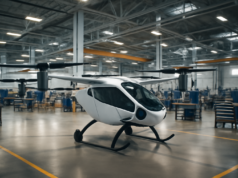
A critical determinant of Archer’s investment thesis is the company’s progress toward Federal Aviation Administration (FAA) certification of its Midnight aircraft. The regulatory pathway for novel eVTOL designs represents one of the most significant and unpredictable variables affecting the entire industry. Archer has been working with the FAA to establish special conditions and certification specifications for its electric aircraft, a process that requires extensive testing and documentation of novel systems.
The certification timeline for eVTOL aircraft remains uncertain, with different manufacturers pursuing varied approaches and facing different technical challenges. Archer’s dual-propulsion architecture and distributed electric propulsion systems require regulatory scrutiny that has no exact precedent. Any delays in certification would directly impact the company’s ability to launch commercial operations, affecting revenue timelines and cash burn rates that investors depend upon for valuation models.
Beyond FAA certification, Archer must navigate airworthiness requirements from additional regulatory bodies as it pursues international operations. The company’s partnerships with strategic investors and operators provide some confidence that regulatory pathways are being actively managed, but uncertainty remains. Successful certification would represent a material de-risking event for the stock, while delays would reinforce bearish sentiment.
Manufacturing Scale and Production Targets
Archer’s long-term investment case depends heavily on the company’s ability to scale manufacturing from prototype production to commercial volumes. The company has announced ambitious production targets for its Midnight aircraft, projecting volumes that would require establishing robust supply chains, manufacturing facilities, and quality control systems. These operational challenges mirror those faced by traditional aerospace manufacturers, but compressed into a much shorter timeline with an unproven vehicle.
The capital requirements for manufacturing scale-up represent a significant risk factor for equity investors. While Archer has secured partnerships and investment commitments, additional funding rounds may be necessary to achieve the company’s production roadmap. Each subsequent capital raise dilutes existing shareholders and raises questions about the company’s path to positive cash flow and independence from continuous external funding.
Manufacturing execution in aerospace is notoriously difficult and capital-intensive. Archer must establish supplier relationships, implement quality management systems, and achieve production efficiency targets without the decades of experience that legacy aircraft manufacturers possess. Supply chain disruptions, labor challenges, and manufacturing complexity could delay the path to profitability significantly beyond current projections.
Market Demand and Commercial Viability
Perhaps the most fundamental question underlying Archer’s valuation is whether sufficient market demand exists for eVTOL services at prices customers can afford and operators can profit from. Current projections suggest initial routes will serve high-value use cases like airport ground transportation in congested urban markets. However, the business model requires achieving service costs competitive with existing transportation options while maintaining profitability.
Several factors affect demand visibility: infrastructure availability at urban vertiports, regulatory restrictions on flight paths and operating hours, noise concerns in populated areas, and the actual willingness of consumers to pay premium fares for faster travel times. Early commercial services will test these assumptions in real-world conditions, providing crucial data for the viability of the broader UAM market. Archer’s stock price will likely experience significant volatility as early operational results emerge.
The company’s operator partners and market development agreements provide some validation of commercial interest, but these don’t guarantee sustained demand. Early adopters in major urban markets may indeed embrace eVTOL services, but scaling to broader markets and achieving the volumes necessary for profitability represents a substantial leap. Investor confidence in Archer’s ability to achieve profitable operations at scale remains uncertain.
Key Considerations for Potential Investors
Critical Takeaways for Evaluating Archer as an Investment
- Cheap valuations reflect real execution risks including regulatory approval timelines, manufacturing scale challenges, and unproven commercial demand for eVTOL services
- Success metrics include FAA certification achievement, demonstrated manufacturing efficiency, and early commercial service results that validate market demand assumptions
- Investors should assess their risk tolerance for a long-duration, capital-intensive venture with multiple go/no-go decision points before reaching profitability
- Competitive positioning relative to other eVTOL developers and traditional aerospace entrants will determine long-term market share and valuation multiples
- Dilution risk from additional capital raises and timeline extensions should be factored into position sizing and return expectations
Archer Aviation’s depressed valuation creates a potential entry point for investors who believe the eVTOL market will eventually achieve meaningful scale and that Archer will capture a valuable position in that market. However, the low stock price exists for valid reasons—the company faces genuine risks in regulation, manufacturing, and market adoption that could prevent it from achieving profitable operations. Whether the risk-reward profile makes Archer a compelling investment depends entirely on an individual investor’s conviction in the eVTOL market’s eventual success and belief in Archer’s competitive advantages within that market. Conservative investors should await demonstrated regulatory progress and early commercial results before committing capital, while venture-oriented investors may find the current valuation attractive for exposure to a transformative transportation trend.