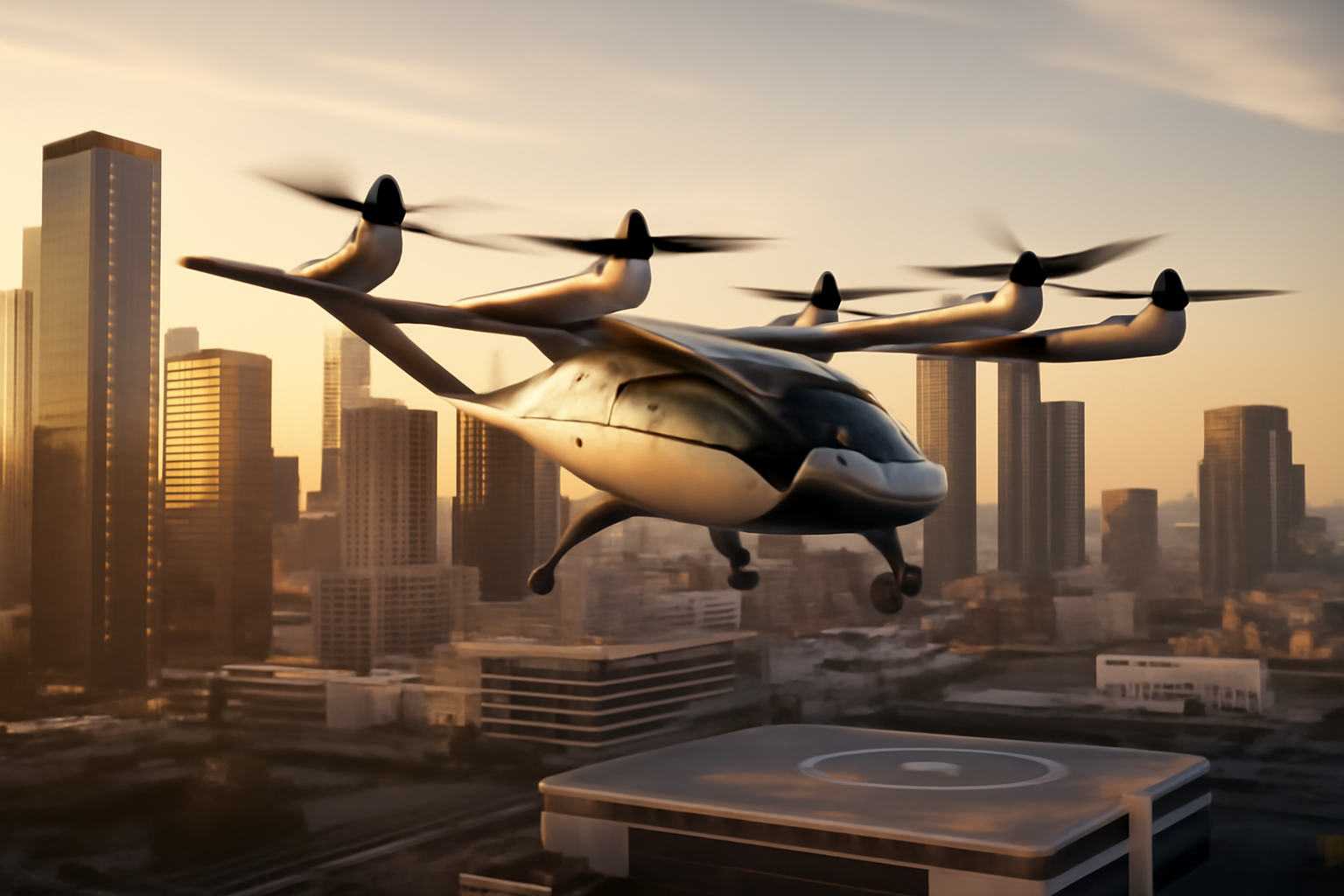
HIGHLIGHTS
- Archer Aviation’s disciplined regulatory strategy and FAA engagement position the company for commercial eVTOL operations within 3-5 years, reducing certification risk compared to competitors.
- Advanced battery and electric propulsion technology have reached commercial maturity, delivering improved range, zero emissions, and lower operating costs than rotorcraft alternatives.
- Vertiport infrastructure and binding customer interest validate robust market demand for premium urban air mobility services, establishing realistic revenue prospects for near-term commercial deployment.
Urban air mobility (UAM) stands at a critical inflection point as companies race to bring electric vertical takeoff and landing (eVTOL) aircraft to commercial operations. Among the frontrunners, Archer Aviation has emerged as a significant force in this rapidly evolving landscape, making substantial progress toward realizing the vision of electric air transportation in dense urban environments. The company’s milestones and technological advances are reshaping expectations about how cities will move people in the coming years.
Archer Aviation’s Leadership in eVTOL Development
Archer Aviation has positioned itself as a critical innovator in the personal air mobility sector through sustained investment in next-generation electric aircraft technology. The company’s approach combines cutting-edge engineering with a clear path to regulatory certification, establishing a foundation for scalable commercial operations. Archer’s focus on practical, certifiable designs sets it apart from competitors still navigating early-stage development phases.
The company has demonstrated consistent progress in aircraft design, manufacturing partnerships, and operational planning. By aligning its development roadmap with regulatory frameworks, Archer has reduced uncertainty around certification timelines—a critical factor for investors and potential customers evaluating market entry. This disciplined approach reflects deep industry expertise and a pragmatic understanding of the requirements for bringing new aircraft to market.
Archer’s partnerships with leading manufacturers and infrastructure providers have strengthened its supply chain resilience and accelerated development cycles. These strategic collaborations extend beyond component suppliers to include vertiport operators and urban mobility integrators, creating an ecosystem capable of supporting commercial UAM services within the next few years.
Technological Innovations Driving the eVTOL Revolution
Electric propulsion systems represent the core technological advantage of modern eVTOL aircraft, and Archer has invested heavily in optimizing battery chemistry, motor efficiency, and power management systems. These innovations directly translate to improved range, reduced noise emissions, and lower operating costs compared to rotorcraft powered by conventional combustion engines. The environmental and economic benefits position eVTOL vehicles as genuine alternatives to ground-based transportation in congested urban corridors.
Battery technology remains the single most critical factor limiting eVTOL performance and economics. Archer’s focus on energy density, thermal management, and cycle life has yielded measurable improvements in aircraft endurance and payload capacity. As battery technology continues its exponential cost decline trajectory, the business case for urban air mobility strengthens substantially, making commercial services economically viable across increasingly diverse route networks.
Advanced flight control systems and autonomous technologies integrated into Archer’s aircraft design enhance safety margins and operational flexibility. These systems enable efficient mission planning, reduce pilot workload, and support future progression toward higher levels of autonomy. The sophistication of Archer’s control architecture positions the company advantageously as regulators develop operational standards for urban airspace.
Regulatory Pathways and Certification Milestones
Navigation of aviation regulatory requirements represents one of the most significant barriers to market entry for eVTOL manufacturers. Archer has actively engaged with Federal Aviation Administration (FAA) officials and international regulatory bodies to define certification standards for electric aircraft. This proactive approach has positioned the company to meet regulatory requirements as frameworks crystallize, reducing certification delays that might otherwise impede commercial launch timelines.
The FAA’s development of Special Conditions and type certification pathways specifically tailored to eVTOL characteristics has created clearer runway for companies like Archer. By participating in regulatory working groups and submitting technical data supporting certification positions, Archer has influenced the development of realistic, achievable standards. This collaborative relationship with regulators accelerates the path from development to approved commercial operations.
International regulatory harmonization efforts, particularly coordination between the FAA, EASA (European Union Aviation Safety Agency), and national authorities in key markets, will determine the global scalability of Archer’s business model. The company’s awareness of these international frameworks and early engagement with global regulators positions it to operate efficiently across multiple jurisdictions as commercial services expand geographically.
Market Readiness and Commercial Deployment Timeline
The transition from development programs to revenue-generating commercial services requires extraordinary coordination across manufacturing, infrastructure, regulatory, and operational domains. Archer’s timeline for initial commercial deployment reflects realistic assessment of these complex dependencies while maintaining momentum toward market entry. The company’s focus on near-term certifications and operational launches demonstrates confidence in its technical solutions and execution capability.
Vertiport infrastructure development has progressed in parallel with aircraft certification efforts, addressing a critical enabler for commercial UAM services. Archer has secured partnerships and locations for vertiport facilities in strategic urban markets, establishing the ground-based infrastructure necessary for customer access to air mobility services. These early infrastructure commitments reduce execution risk and establish tangible proof of market demand.
Customer interest in Archer’s aircraft remains robust, reflecting genuine demand for premium mobility options in congested metropolitan areas. Potential operators—including ride-sharing platforms, emergency medical services, and corporate shuttle providers—have identified compelling use cases that justify investment in electric air transportation. Archer’s ability to convert this interest into binding commitments signals healthy market fundamentals and realistic revenue prospects.
The Broader Urban Air Mobility Ecosystem
Key Takeaways for Industry Watchers
- Archer Aviation’s disciplined development approach and regulatory engagement position the company as a credible near-term market entrant in the eVTOL sector, potentially achieving commercial operations within the next 3-5 years.
- Technological advances in battery systems, electric propulsion, and flight control have reached maturity levels sufficient to support initial commercial services on specific high-demand urban routes with strong economics.
- Successful integration of aircraft certification, vertiport infrastructure, and regulatory approval across multiple jurisdictions will determine whether Archer’s expansion extends beyond initial launch markets to create a globally scaled urban air mobility network.
The emergence of viable eVTOL manufacturers like Archer signals the maturation of urban air mobility from speculative concept to near-term commercial reality. As regulatory frameworks solidify, infrastructure develops, and manufacturing scales, the industry trajectory becomes increasingly certain. Archer Aviation’s progress demonstrates that the technical, operational, and business challenges inherent in launching a new transportation category are surmountable with sufficient capital, expertise, and strategic discipline. The personal air mobility revolution is no longer a distant future scenario—it’s an imminent reality taking shape today.