HIGHLIGHTS
- Chery unveiled two distinct eVTOL designs targeting both cargo delivery and premium passenger transport, leveraging its extensive electric vehicle manufacturing expertise.
- China now hosts dozens of eVTOL developers, with Chery’s entry signaling that legacy automakers are credibly treating urban air mobility as a long-term commercial opportunity, not speculation.
- Regulatory certification and infrastructure development remain multi-year challenges, with commercial operations unlikely before late 2020s, but Chery’s capital and manufacturing scale provide advantages through extended pre-revenue phases.
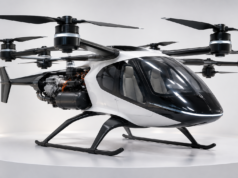
Chinese automotive manufacturer Chery has officially entered the burgeoning urban air mobility (UAM) market by unveiling two new eVTOL aircraft designs. This strategic expansion marks a significant milestone for the carmaker, which has leveraged its extensive experience in electric vehicle development to venture into personal air mobility. Chery’s move adds yet another major player to China’s increasingly crowded roster of eVTOL developers, signaling the automotive industry’s confidence in the long-term viability of electric vertical takeoff and landing aircraft as a transportation solution for congested urban centers.
Chery’s Entry Into Urban Air Mobility
Chery’s decision to develop eVTOL aircraft represents a natural extension of its existing EV expertise. With years of experience manufacturing battery electric vehicles for the Chinese market and beyond, the company possesses critical knowledge in battery technology, electric drivetrains, and lightweight materials engineering. This foundation provides Chery with a competitive advantage as it navigates the complex technical and regulatory challenges inherent to eVTOL development. By bringing its automotive engineering prowess to the aerospace domain, Chery demonstrates how traditional carmakers are successfully transitioning into the emerging air mobility ecosystem.
The company’s eVTOL program reflects a broader industry trend where established automotive manufacturers are hedging their bets against potential disruption from pure-play aerospace startups. Rather than ceding the UAM market entirely to new entrants, legacy automakers like Chery are leveraging their supply chain relationships, manufacturing expertise, and capital resources to develop competitive products. This dual-track strategy allows companies to maintain leadership in ground transportation while capturing early-mover advantages in what could become a trillion-dollar industry in the coming decades.
Chery’s entry also underscores China’s determination to lead global UAM innovation. Chinese policymakers have explicitly prioritized the development of low-altitude aviation infrastructure, and state-owned enterprises alongside private companies are investing heavily in eVTOL technology. Chery’s involvement elevates the sophistication of China’s eVTOL ecosystem, introducing a company with established manufacturing networks, international distribution experience, and substantial R&D capabilities.
Technical Specifications and Design Philosophy
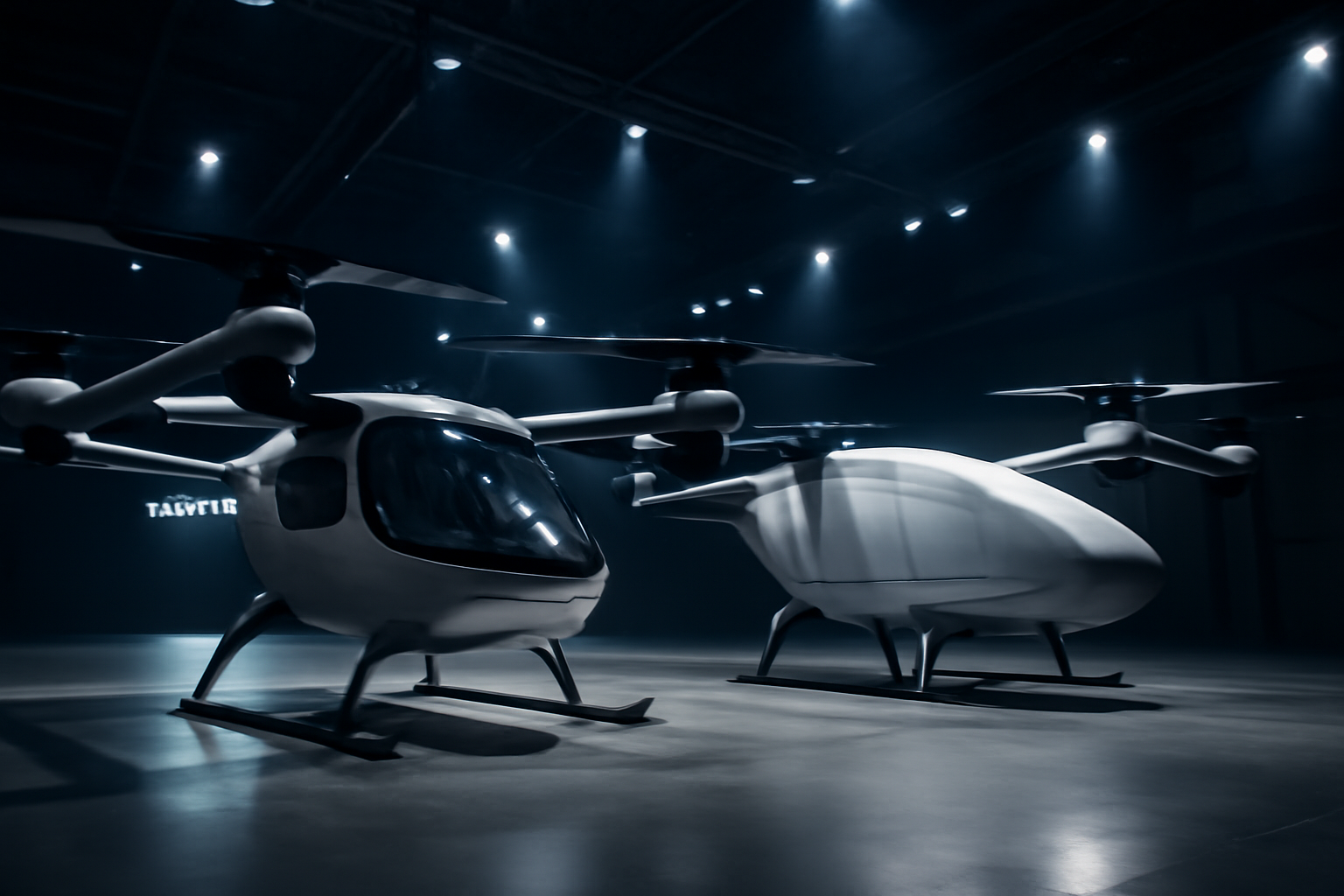
While detailed technical specifications for Chery’s two eVTOL designs remain limited in initial announcements, the company’s revealed concepts showcase distinct design philosophies addressing different market segments. One aircraft appears optimized for cargo delivery applications, featuring a streamlined fuselage designed to maximize payload capacity while minimizing energy consumption. The second design targets premium passenger transport, with emphasis on passenger comfort, safety systems, and operational flexibility. This diversified approach allows Chery to address multiple revenue streams within the UAM ecosystem simultaneously.
Chery’s engineering teams have incorporated lessons learned from its successful electric vehicle development into both aircraft designs. Advanced battery management systems, redundant power distribution architectures, and lightweight composite construction reflect best practices from automotive electrification applied to aerial platforms. The company’s focus on energy efficiency—critical for extending flight range and reducing operating costs—demonstrates mature understanding of the constraints that limit eVTOL commercialization today. By prioritizing practical engineering solutions over speculative technology promises, Chery positions its aircraft as near-term viable commercial products rather than distant concepts.
The design philosophy emphasizes modularity and scalability, enabling Chery to develop related models from a shared platform architecture. This approach mirrors successful strategies in the automotive industry, where platform sharing reduces development costs, accelerates time-to-market, and simplifies supply chain management. Such efficiency gains are critical in eVTOL development, where capital requirements are substantial and path to profitability uncertain. Chery’s platform-based strategy suggests the company is committed to building a viable business rather than pursuing a one-off technological showcase.
China’s Crowded eVTOL Landscape
Chery’s entry adds significant weight to an already densely populated field of Chinese eVTOL developers. China now hosts dozens of companies actively developing electric vertical takeoff and landing aircraft, ranging from startup ventures backed by venture capital to subsidiaries of major industrial conglomerates. This concentration of activity reflects China’s strategic focus on emerging technologies and the availability of patient capital willing to fund long-development-cycle projects with uncertain near-term returns. The competitive intensity suggests that Chinese market forces—rather than regulatory restrictions or capital scarcity—will ultimately determine which eVTOL designs succeed commercially.
The proliferation of Chinese eVTOL programs creates both opportunities and risks for the ecosystem. Competition drives innovation, as companies race to develop superior performance, safety features, and operational efficiency. However, overcrowding can also lead to market fragmentation, where limited consumer demand becomes divided among dozens of competing products, preventing any single company from achieving scale economies. This dynamic mirrors historical patterns in Chinese industries like solar panel manufacturing and battery production, where intense competition initially drove technological advancement but eventually consolidated around a handful of dominant players.
Chery’s established brand recognition and manufacturing infrastructure position it relatively well to survive potential industry consolidation. Unlike pure-play startups that may struggle to fundraise or achieve profitability, Chery has existing revenue streams from automotive sales that subsidize eVTOL development during the pre-commercialization phase. This financial resilience could prove decisive as the UAM market sorts out which business models, designs, and regulatory approaches ultimately prove viable at scale.
Regulatory and Infrastructure Challenges Ahead
Despite technological progress, significant regulatory and infrastructure hurdles remain before Chery’s eVTOL aircraft can enter regular commercial service. Chinese aviation authorities must establish certification standards specifically designed for eVTOL operations, including safety requirements, pilot training protocols, and operational procedures. This regulatory framework development process has already begun in China, but moving from pilot programs to full-scale commercial deployment will require years of testing, validation, and iterative refinement. Chery must work closely with regulators to ensure its aircraft designs comply with emerging standards while also advocating for rules that are technically feasible and economically viable.
Infrastructure development represents an equally formidable challenge. Urban air mobility requires not just aircraft and pilots, but also a network of vertiports, charging stations, maintenance facilities, and air traffic management systems. Chinese cities are beginning to establish this infrastructure, but progress remains uneven. Chery’s success will partly depend on its ability to partner with urban planners, transportation authorities, and infrastructure operators to create operational ecosystems supporting routine eVTOL flights. The company’s existing relationships with Chinese automakers and governments may provide advantages in securing space for vertiports and integrating eVTOL services into broader urban mobility networks.
Market development timelines remain uncertain. Industry analysts project that meaningful commercial eVTOL operations—serving customers beyond government and corporate pilots—may not begin until the late 2020s or 2030s. Chery’s long-term viability in this space depends on maintaining investor patience and company commitment through this extended pre-revenue phase. Automotive companies have greater tolerance for multi-year development cycles than venture-backed startups, providing potential advantages as the industry matures.
Strategic Implications for the Global eVTOL Market
Chery’s eVTOL initiative carries significance extending beyond China’s borders. The entry of a major automotive manufacturer into eVTOL development signals that legacy automakers globally are taking personal air mobility seriously as a long-term business opportunity. Chery’s success or failure will influence investment decisions by other traditional carmakers considering similar moves. If Chery successfully transitions from prototype to commercial aircraft, it may validate the automotive-to-aerospace pivot model for other companies. Conversely, if the initiative stalls or fails to achieve meaningful commercialization, it could dampen enthusiasm among peers.
Chery’s approach also demonstrates how Chinese industrial policy and capital availability are accelerating technology development cycles in strategic sectors. The company’s willingness to commit substantial resources to an uncertain market reflects confidence that Chinese markets will eventually support viable eVTOL operations. This aggressive push by Chinese companies may ultimately force the broader global eVTOL industry to accelerate development timelines and reduce product development costs, increasing competitive pressure on startups and legacy manufacturers in Western markets.
The unveiling of Chery’s aircraft represents a moment of inflection in the eVTOL sector’s maturation. What was once an industry dominated by startups with aspirational designs has increasingly become a space where established industrial powers are directly engaged. Chery’s participation signals that urban air mobility is transitioning from speculative concept to pragmatic engineering challenge—one that companies with capital, manufacturing expertise, and market access believe they can address profitably within definable timeframes.
Key Takeaways
- Chery’s two-aircraft unveiling marks a major automotive manufacturer’s formal entry into China’s densely populated eVTOL sector, leveraging its EV expertise to develop passenger and cargo aircraft designs.
- The company’s platform-based engineering approach and focus on practical efficiency over speculative features position its aircraft as near-term commercial products rather than distant concepts.
- Chery’s participation accelerates the eVTOL industry’s transition from startup-dominated speculation to established manufacturer competition, with implications for global development timelines and cost reduction.
Chery’s entry into the eVTOL market marks a significant inflection point in the maturation of urban air mobility technology. By combining automotive engineering expertise with strategic commitment to emerging technologies, Chery is positioning itself as a serious contender in an increasingly crowded but potentially transformative market. The coming years will reveal whether traditional automotive manufacturers can successfully replicate their ground-based success in the skies above congested cities. Chery’s journey through this complex ecosystem will provide crucial insights into how legacy industries adapt to disruptive technologies and emerging transportation paradigms.